Ukraine is asking international partners for €40 billion in defense funding to cover unfunded needs in 2027, Ministry of Defence officials told the 18th meeting of the Ukraine Donor Platform Steering Committee in Lviv on November 10, 2026. The meeting drew more than 100 delegates from partner countries and international organizations, and Kyiv placed drones and air defense at the top of the list.
The €40 billion figure is the unfunded share of an estimated €70 billion in total defense requirements for 2027, according to Ukraine’s Ministry of Finance. Prime Minister Sergii Koretskyi has described it as an off-budget requirement for the Defense Forces that sits on top of a separate external budget financing need of more than $52 billion, of which over $32.6 billion has yet to be secured. The draft 2027 state budget already allocates UAH 4.89 trillion, roughly $110 billion, to defense, about two-thirds of total spending of UAH 7.27 trillion, and the government projects defense and security outlays at nearly 44% of GDP.
Inside Ukraine Defense Funding Request: Drones and Air Defense First
Oleksandr Plachynta, Head of the Main Directorate of International Defense Resources, framed the request as the price of holding and improving Ukraine’s position. “This is the amount needed to consolidate progress and achieve stronger positions by 2027,” he said. “The lion’s share of these funds goes to two areas: drones and air defense. We have a vision of how to meet this need.”
The ministry did not publish a breakdown of the €40 billion by category, by donor, or by delivery schedule. It did, however, set out a short list of urgent requests covering the next four months:
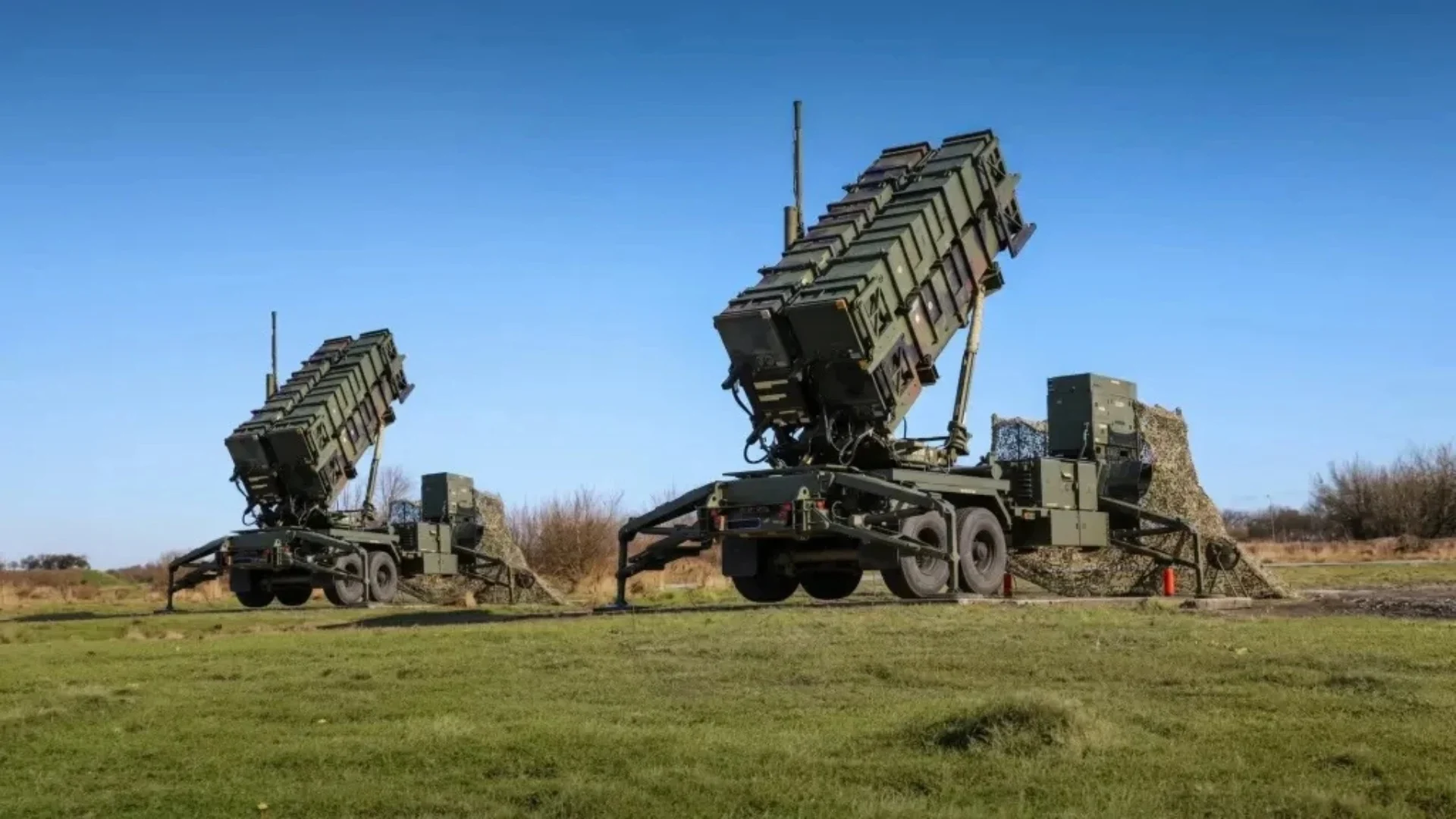
- Deliveries of interceptor missiles for Patriot, IRIS-T, NASAMS, SAMP/T, and other air defense systems.
- Large-scale funding for the production of interceptor drones, as well as middle-strike and deep-strike capabilities.
Kyiv says it is pursuing three parallel tracks: recruiting new donor countries, increasing existing aid budgets, and improving the quality of assistance so it more closely matches frontline needs. The 2027 request follows a strained 2026. Defense Minister Evgeniy Khmara has put the current defense budget shortfall at €23 billion, and President Volodymyr Zelensky told partners in August that the ministry had already drawn on funds allocated for the end of the year.
Patriot, IRIS-T, NASAMS, and SAMP/T: The Interceptor Bottleneck
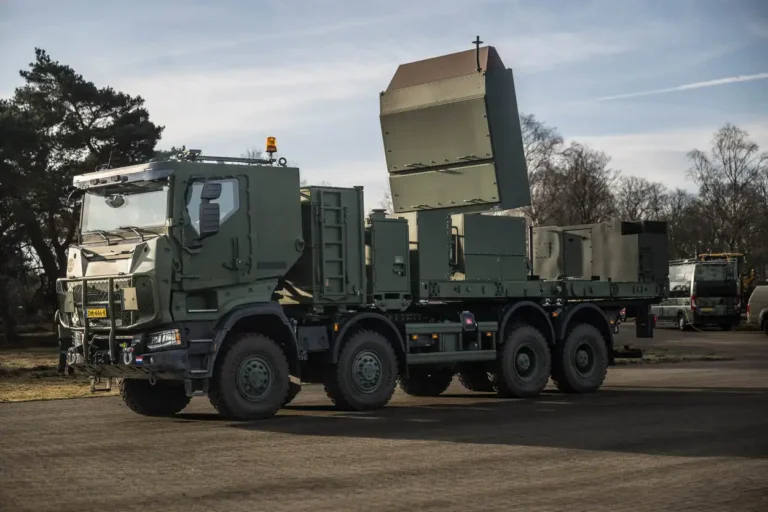
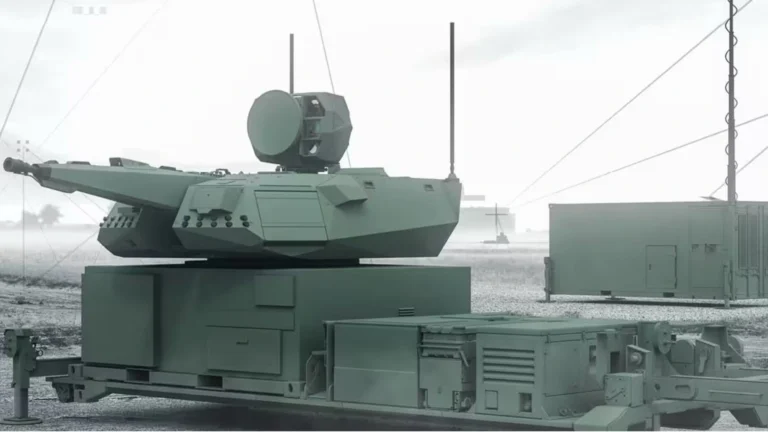
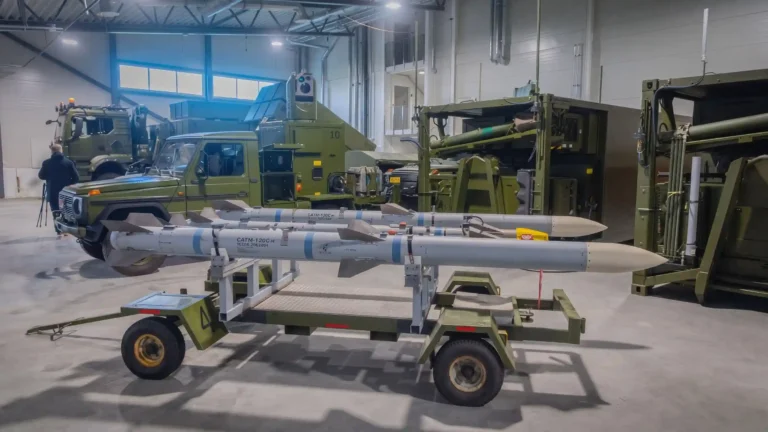
The four systems named in the request cover different layers of Ukraine’s integrated air defense. Patriot, firing PAC-2 GEM-T and PAC-3 MSE interceptors, remains Kyiv’s primary answer to Russian ballistic missiles. Diehl Defence’s IRIS-T SLM, which publicly available specifications credit with roughly 40 km of range and 20 km of altitude coverage, protects cities and infrastructure against cruise missiles and drones. NASAMS, built by Kongsberg and RTX, launches AIM-120 AMRAAM missiles at medium range. The Franco-Italian SAMP/T, fielded by Eurosam, fires Aster 30 interceptors with an engagement range publicly cited at up to 120 km against aircraft and a limited anti-ballistic capability.
Each system draws on a separate production line, which makes the four-month window as much an industrial problem as a financial one. Money alone does not produce interceptors on that timeline, so Kyiv is also pressing for transfers from existing stocks. On October 26, Khmara asked the E5 group, comprising Germany, the United Kingdom, France, Poland, and Italy, to transfer 10% of their Patriot and IRIS-T interceptor inventories, offering in return future deliveries already contracted and financed through a European Union loan. Khmara has said Ukraine is signing contracts for around 1,000 Patriot missiles with partner support and the EU loan.
The ministry has also flagged an urgent need for man-portable air defense systems (MANPADS) and air-to-air missiles to counter jet-powered Shahed drones, a threat that pushes cheap targets into the speed bands where expensive interceptors were previously reserved for cruise missiles.
Interceptor Drones and Deep Strike Reshape the Spending Mix
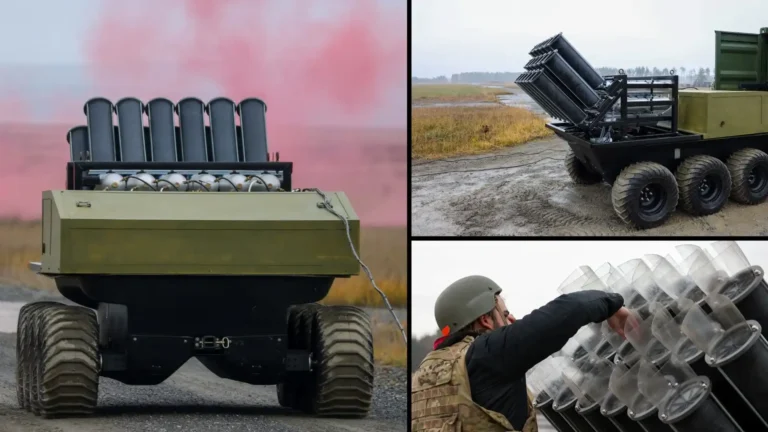
The second funding pillar targets Ukraine’s own industry. Interceptor drones are Kyiv’s main tool for restoring a favorable cost exchange against Russia’s mass-produced one-way attack drones, freeing surface-to-air missiles for ballistic and cruise threats. Khmara told E5 partners on October 26 that Ukrainian manufacturers have the capacity to double drone production in 2027, provided funding arrives on time.
The middle-strike and deep-strike line refers to Ukrainian long-range drones and missiles used against logistics, airfields, and energy and defense-industrial targets inside Russia. The ministry did not specify which systems would be funded or at what volume. Kyiv has also proposed scaling up joint production of Ukrainian drones in partner countries, a model that would place part of the output, and part of the industrial benefit, on allied territory.
Analysis: The request marks a shift in how Ukraine finances its war. Kyiv is no longer asking primarily for donated hardware but for cash to buy interceptors and to fund its own production base, and it is bringing that ask into the Donor Platform, a body built mainly around budget support and reconstruction. That blurs the line between fiscal and military aid and places most of the burden on European capitals, which are already financing Ukraine through the EU’s €90 billion mechanism for 2026 and 2027. The interceptor component is the hardest to satisfy: the same Patriot and IRIS-T rounds Kyiv needs are the ones allies must replenish for their own air defense, and production rates, not budgets, set the ceiling.
Koretskyi has said Ukraine needs clear agreements on 2027 financial support by late November, while parliament must adopt the 2027 budget by December 1. The next Steering Committee meeting is scheduled for January 2027 on the sidelines of the Ukraine Recovery Conference in Tallinn, Estonia. Key unknowns remain the split of the €40 billion between air defense and drones, which donors will commit, and whether partners will accept the E5 stock-transfer model before winter strikes intensify.