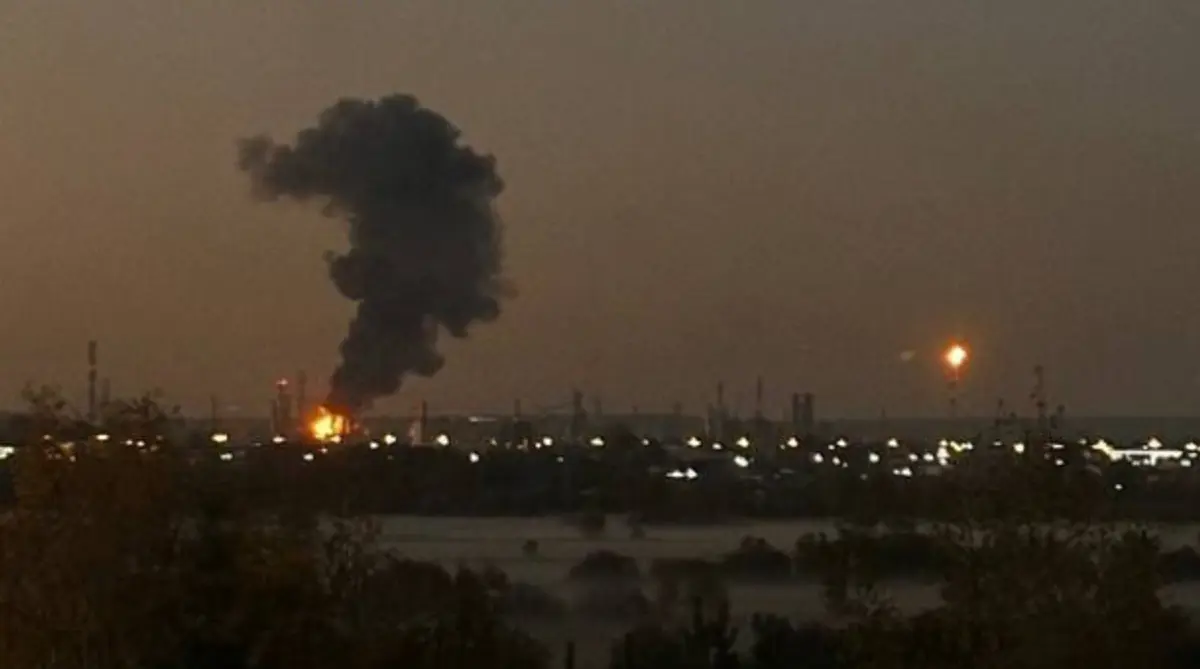
Ukraine’s Unmanned Systems Forces struck the Ilsky and Afipsky oil refineries in Russia’s Krasnodar Krai overnight on September 26, 2026, igniting fires at both facilities, Ukraine’s General Staff confirmed. The two refineries, located roughly 500 kilometers and 200 kilometers respectively from Ukrainian-controlled territory, carry a combined design capacity of nearly 13 million tonnes of crude oil per year and supply fuel to Russian military logistics across southern Russia.
The strikes extend a systematic campaign that Ukraine’s Defense Forces have waged against Russia’s refining base since 2024, aimed at degrading the fuel and revenue streams sustaining Moscow’s war effort. Both refineries are repeat targets. Ilsky has been struck at least 17 times since 2023, and Afipsky at least six times since February 2025, according to strike-tracking records, making Friday’s raid the latest in a long pattern of hits on both facilities. Ukraine’s General Staff said the operation involved units of the Unmanned Systems Forces working alongside other components of the Defense Forces, consistent with the institutional structure Kyiv has built around long-range strike operations over the past year.
Russian Oil Refineries Ilsky and Afipsky Face Repeat Strikes
The Ilsky refinery, operated by INPZ in the Seversky District settlement of Ilsky, carries a design capacity of 6.6 million tonnes of crude oil annually. Publicly available specifications indicate the plant receives feedstock through a Transneft pipeline connection and runs six primary processing units, producing and shipping petroleum products that Ukraine’s General Staff says supply Russian armed forces. A fire was recorded on the facility’s premises after the overnight strike, though the extent of the damage had not been independently assessed as of this writing.
Afipsky, also in Krasnodar Krai and jointly held with the Krasnodar refinery under Russian conglomerate SAFMAR, carries a design capacity of 6.25 million tonnes a year and produces gasoline, diesel and aviation fuel. Ukraine’s General Staff said the strike targeted the facilities of the Afipsky refinery as part of an effort to reduce the enemy’s offensive potential and complicate the supply of fuel and ammunition to Russian military units. The General Staff confirmed the hit and resulting fire, while noting the extent and details of the damage were still being clarified. The combined output of the Afipsky-Krasnodar entity has reportedly fallen from 7.2 million tonnes in 2024 to roughly 3 million tonnes in the first half of 2025, according to Russian refinery-tracking data, though current post-strike output remains unconfirmed.
Regional governor Veniamin Kondratyev said falling drone debris caused fatalities and left two people injured in Seversky District, and that fires broke out at two enterprises there. Ukrainian officials did not comment on the Russian casualty figures, which could not be independently verified.
Deep Strike Campaign Cuts Into Russia’s Fuel Output
The overnight raid adds to a broader effort that Ukraine’s General Staff estimated in July had disabled 42.74 percent of Russia’s oil refining capacity, an assessment the International Energy Agency placed more conservatively at above 20 percent. Independent assessments have put the figure higher still, estimating that more than half of Russia’s refineries had sustained damage by August 2026 since the campaign intensified. Finnish President Alexander Stubb said in July that Ukrainian strikes had cut Russia’s oil production and export capacity by 40 percent.
The campaign has matured institutionally alongside its material effects. Ukraine activated a dedicated Long-Range Strike Command on July 10, 2026, formalizing what had been an ad hoc mix of Unmanned Systems Forces missions, special-operations raids and naval unmanned surface vessel strikes into a standing structure for operations against targets 500 to 2,000 kilometers behind the front line. By June 2026, Ukraine was launching 200 to 300 long-range drones against Russian territory on an average night, with 2,359 deep-strike missions recorded that month alone.
Analysis: The Ilsky and Afipsky strikes illustrate the attritional logic underpinning Ukraine’s deep strike campaign. Individual raids rarely knock a refinery permanently offline, but repeated hits compound faster than Russia can complete repairs, particularly as Moscow has reportedly redirected air defense assets, including S-300 and S-400 batteries that satellite imagery analysis suggested were withdrawn from Arctic installations, toward protecting higher-value refining infrastructure elsewhere. Ilsky’s strike count without permanent closure suggests a facility Russia has prioritized for repair, while Afipsky’s reported capacity collapse alongside the merged Krasnodar refinery points to a target where sustained pressure, not any single strike, has done the structural damage. For US and NATO planners, the campaign offers a working case study in how inexpensive, long-range one-way attack drones can impose disproportionate costs on an adversary’s energy and logistics base without contesting its airspace directly, a dynamic increasingly cited in Western debates over magazine depth and unmanned systems procurement.
Damage assessments for both refineries remain unconfirmed, and Ukraine’s General Staff has not specified expected repair timelines. With Russia’s winter heating and transport fuel demand approaching, the interaction between reduced refining capacity and seasonal consumption will be a key indicator to watch in the coming weeks, as will the operational tempo of Ukraine’s Long-Range Strike Command as it approaches its first full quarter of standing operations.