Sweden’s government submitted a bill to the Riksdag on October 19, 2026, proposing to deploy armed units across the land, maritime and air domains for NATO’s collective deterrence and defense in 2027. The package covers ground forces for NATO’s Forward Land Forces in Finland and Latvia, naval units, and continued Patriot air defense operations in Poland through the first half of 2027.
The bill is Stockholm’s third annual force contribution since joining NATO on March 7, 2024. The Riksdag approved the 2026 framework on December 10, 2025, authorizing up to 1,700 ground and special forces personnel, 700 maritime personnel and 600 air and air defense personnel. Foreign Minister Maria Malmer Stenergard tied the new package directly to the threat picture: “Russia is the most serious threat to Sweden and the security of our Allies.”
Patriot in Poland: Extending Sweden’s First NATO Air Defense Mission
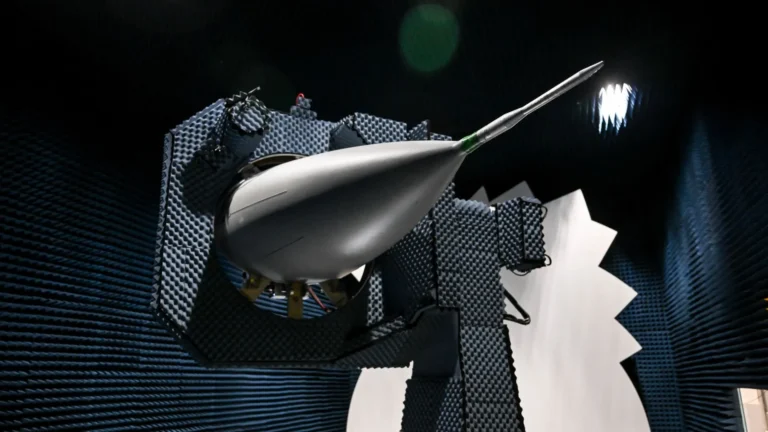
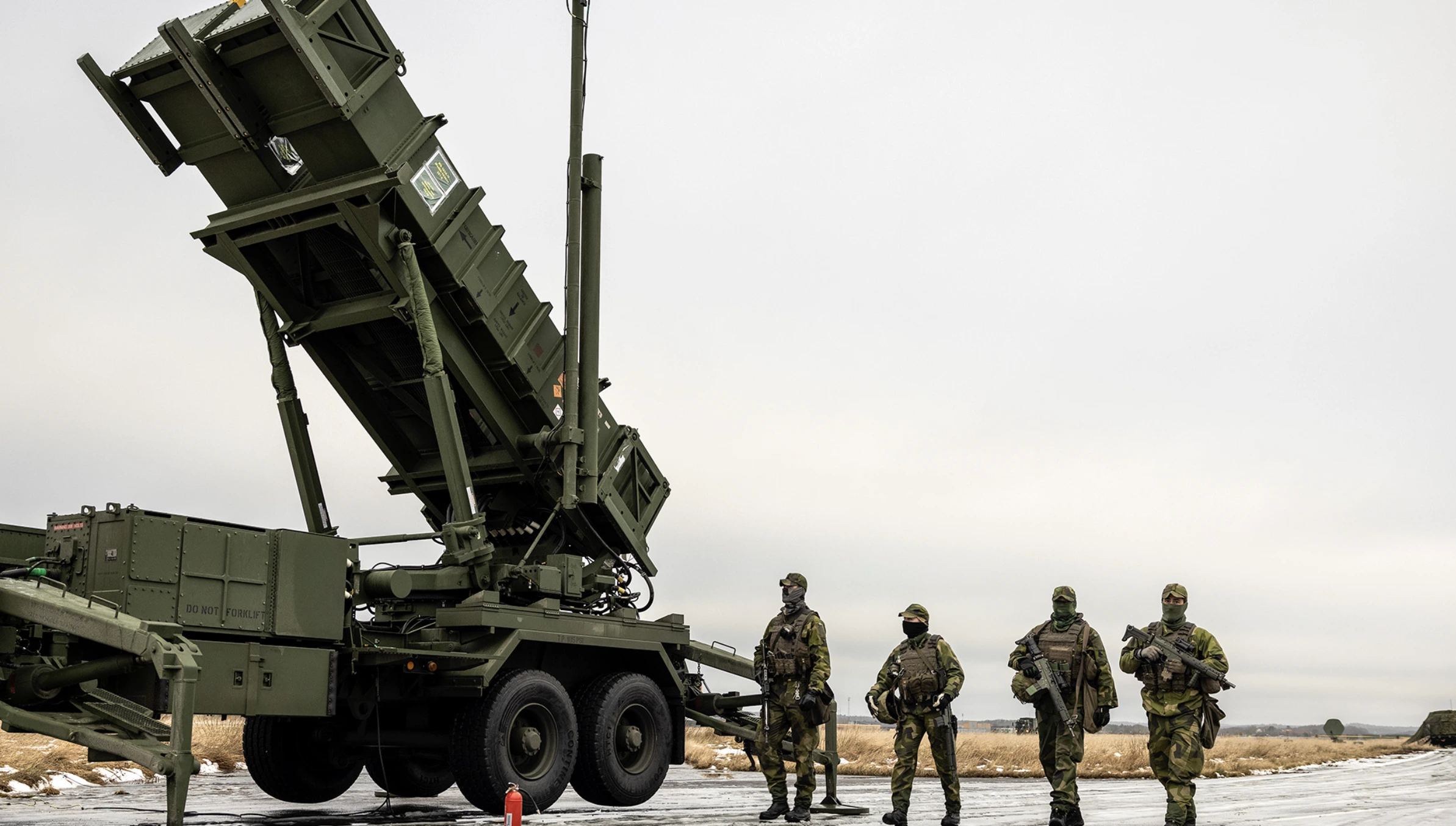
The most operationally consequential line item is air defense. Sweden plans to deploy its Patriot system, designated Luftvärnssystem 103 (LvS 103), to NATO air defense operations in Poland in December 2026, and the bill seeks authority to keep it there during the first half of 2027. About 100 personnel from the Air Defense Regiment (Lv 6) in Halmstad, supported by the Blekinge Wing (F 17), will operate under NATO Allied Air Command to protect the NATO Security Assistance and Training for Ukraine (NSATU) logistics hub at Rzeszów-Jasionka, the main transit node for military and civilian aid to Ukraine. The Swedish unit relieves Dutch Patriot batteries deployed there since December 2025. The government has not disclosed how many fire units will deploy.
Sweden’s Patriot inventory consists of four Configuration-3+ fire units, all delivered by December 2022 under a 2018 Foreign Military Sale agreement. Each Swedish fire unit pairs an AN/MPQ-65 multifunction radar and an AN/MSQ-132 engagement control station with three M903 launching stations. The original US approval covered up to 100 GEM-T and 200 PAC-3 MSE interceptors; Sweden’s actual stocks are not public. That mix matters at Rzeszów. The blast-fragmentation GEM-T is suited to aircraft and cruise missiles, while the hit-to-kill PAC-3 MSE, with its dual-pulse solid rocket motor, is optimized against tactical ballistic missiles, a threat class Russia has repeatedly fired at Ukraine.
Swedish Patriot crews completed their first independent live firing through Germany’s Surface-to-Air Missile Operations Centre (SAMOC) on Crete during NATO exercise Spartan Arrow 26, which also connected German IRIS-T SLM to the same command post. The firing, announced on October 14, 2026, was an early test of the multinational fire-control integration the Rzeszów mission will demand.
Sweden as Framework Nation in Finland, Battalion Contributor in Latvia
On land, the bill sustains two different models of forward presence. Sweden is the framework nation for FLF Finland, NATO’s ninth multinational battlegroup and its first in the High North, established on June 6, 2026. Unlike the Baltic formations, its core is a Swedish battalion battlegroup of around 600 personnel prepositioned at the Norrbotten Regiment base in Boden, northern Sweden, with an option to expand to 1,200. A Multinational Staff Element in Rovaniemi completes the structure under the Supreme Allied Commander Europe. Denmark, France, Iceland, Italy, Norway and the United Kingdom have announced participation. The concept trades permanent stationing on Finnish soil for Arctic specialization and rapid reinforcement across the North Calotte, covering Finland’s roughly 1,340-kilometer border with Russia.
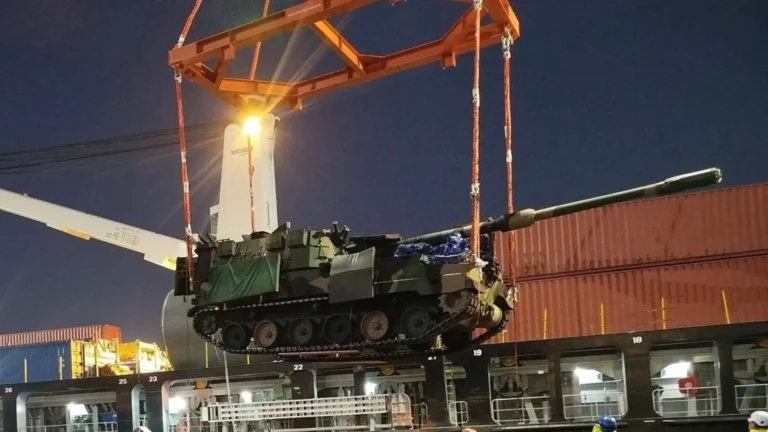
In Latvia, Swedish ground units serve in the Canadian-led Multinational Brigade Latvia, a 14-nation formation centered on Camp Ādaži. Sweden’s first rotation, a mechanized infantry battalion of about 550 troops from the South Skåne Regiment (P 7), landed in Riga in January 2025 with CV90 infantry fighting vehicles and Stridsvagn 122 main battle tanks. Stockholm has since alternated six-month rotations with Denmark, which committed up to 850 troops for the second half of 2026. The bill does not specify which 2027 window or force package Sweden will fill.
Naval, Gripen and Contingency Forces Round Out the 2027 Package
At sea, the bill makes naval units available to NATO’s maritime forces without naming hulls or task groups. Sweden has previously assigned vessels to Standing NATO Maritime Group 1 (SNMG1) and Standing NATO Mine Countermeasures Group 1 (SNMCMG1), concentrating on mine countermeasures and maritime surveillance in the Baltic, where protection of undersea infrastructure has become a standing Alliance task.
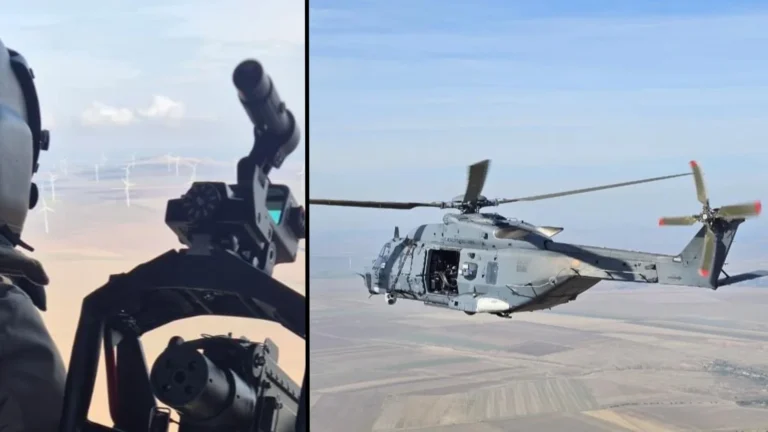
In the air, Swedish Air Force units remain available to NATO Integrated Air and Missile Defense (IAMD). Gripen fighters from the Blekinge Wing (F 17) began the wing’s second mission over the Rzeszów hub on October 1, 2026, flying mainly from Swedish bases with a small forward operating base in Poland; aircraft numbers have not been disclosed. Pairing Gripen and Patriot over the same node gives NATO a layered defense: fighters intercept drones and cruise missiles across a wide area, while Patriot holds the terminal layer against ballistic threats.
A final clause covers ground, special forces, naval, air and ground-based air defense units for other operations and activities that may arise during the year. Timelines and scope will follow NATO planning, and the government has not published 2027 personnel ceilings.
Analysis: The 2027 bill shows Sweden operating on three axes at once: the High North, the Baltic and the logistics backbone of NATO support to Ukraine. That breadth matches the government’s argument that Europe must assume far greater responsibility for its own security, but it exposes a depth problem. Sweden’s upper-tier air defense rests on four Patriot fire units, so even a single-unit rotation to Rzeszów places a substantial share of that capacity abroad for up to seven months, while the Army simultaneously generates a framework-nation battlegroup and a Latvia rotation.
The Riksdag must now approve the framework; last year’s equivalent passed on December 10, 2025. The Patriot unit is due at Rzeszów in early December under the current 2026 mandate, and no decision yet covers the mission beyond June 2027. Still undisclosed: 2027 personnel ceilings, the naval order of battle, Sweden’s Latvia rotation window and whether FLF Finland moves toward its 1,200-person option.