The Missile Defense Agency (MDA) on October 21, 2026, awarded Raytheon a non-competitive, two-year extension of its operations and sustainment contract for the Army Navy/Transportable Radar Surveillance and Control Model 2 (AN/TPY-2), raising the ceiling of the indefinite-delivery/indefinite-quantity (IDIQ) vehicle from $2.605 billion to $2.999 billion. The modification, P00038, pushes the ordering period from October 31, 2026, to October 31, 2028, and obligates $112.3 million in fiscal 2027 funds at award.
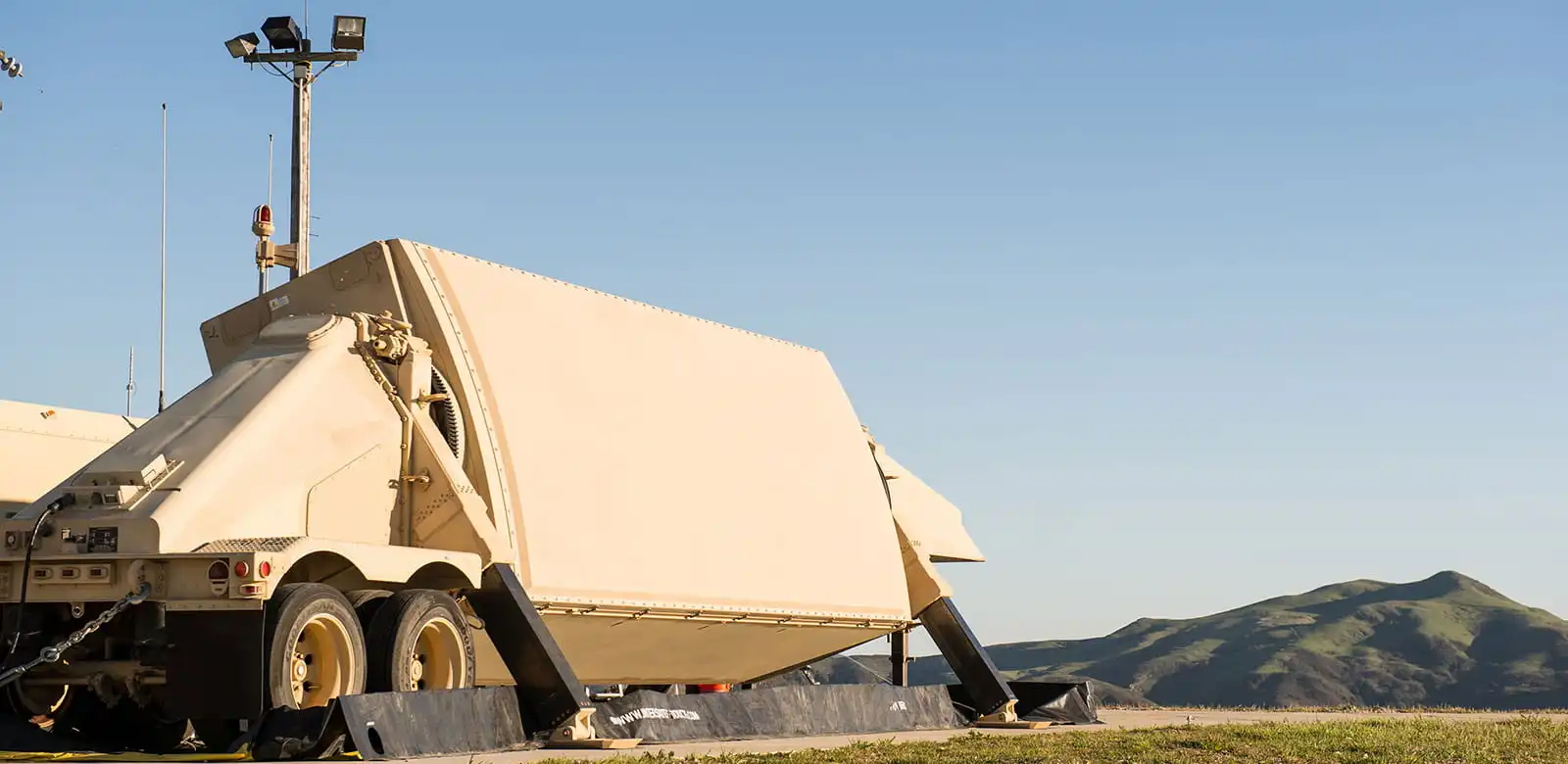
The AN/TPY-2 is the X-band fire control radar of the Terminal High Altitude Area Defense (THAAD) system and, in its forward-based mode, a long-range early-warning sensor for the wider US ballistic missile defense architecture. The extension lands seven months after the fleet suffered a reported combat loss. US officials quoted in March press reports said Iranian strikes destroyed the AN/TPY-2 supporting a THAAD battery at Muwaffaq Salti Air Base in Jordan, while commercial satellite imagery showed damage at radar-related facilities in the United Arab Emirates and near Prince Sultan Air Base in Saudi Arabia.
AN/TPY-2 Radar Sustainment Contract Grows to Nearly $3 Billion
Contract HQ0147-18-D-0001 dates to October 2017, when the MDA awarded Raytheon a $1.5 billion follow-on IDIQ to sustain both the AN/TPY-2 fleet and the Sea-Based X-Band (SBX) radar. A 2024 extension lifted the ceiling from $1.7 billion to $2.6 billion and stretched the ordering period to nine years. The latest action doubles the vehicle’s original value and extends its life to 11 years, all on a sole-source basis.
Raytheon will continue operations and sustainment support from Woburn, Massachusetts, and at multiple radar sites inside and outside the continental United States. The work is split across cost-plus-incentive-fee, cost-plus-fixed-fee, and firm-fixed-price contract line items, with associated task order extensions awarded alongside. The $112,309,403 obligated at award mixes fiscal 2027 operations and maintenance; research, development, test and evaluation (RDT&E); and procurement funds. Unlike the 2024 action, the October 21 announcement does not mention SBX, and it does not specify whether SBX support now runs through a separate vehicle.
The sustainment task is technically demanding. The AN/TPY-2 is an X-band active electronically scanned array built around four principal units: the antenna, electronics, cooling, and prime power units. Publicly available estimates place its tracking range between roughly 870 and 3,000 kilometers, depending on target and mode. The fleet is also mid-transition between semiconductor technologies. MDA budget documents describe replacing obsolete gallium arsenide transmit/receive integrated microwave modules (TRIMMs) with gallium nitride (GaN) units, at roughly 3,200 per radar. In May 2025, Raytheon delivered the first radar with a fully GaN-populated array, the 13th AN/TPY-2 built for the agency. A mixed fleet effectively requires parallel spares and depot processes, sustaining engineering demand through the late 2020s.
Combat Damage and the Army Transfer Reshape THAAD Radar Support
The extension covers a fleet whose operating tempo has risen sharply. Forward-based AN/TPY-2s run continuously at fixed sites, including Shariki and Kyogamisaki in Japan, as well as sites in Türkiye and Israel. THAAD-configured terminal-mode radars deployed to the US Central Command (CENTCOM) area of responsibility were engaged against Iranian ballistic missiles during the 2026 war. Even before that conflict, the MDA’s fiscal 2026 budget justification sought funds for THAAD battery equipment reset and accelerated repairs, including replacement of GaN TRIMM components and subarray modules, to support CENTCOM operations.
Combat damage compounds the strain. Each AN/TPY-2 is a low-density, high-demand asset, with published estimates putting the cost of a single radar at roughly $250 million to $300 million. The October 21 announcement does not reference replacement of destroyed or damaged radars, and the MDA has not publicly tied the extension to battle damage.
The contract also straddles a shifting organizational boundary. Beginning in fiscal 2027, the THAAD program transfers from the MDA to the US Army, which requested $132 million for AN/TPY-2 in its fiscal 2027 budget. The extension nonetheless remains an MDA vehicle, and the announcement refers to AN/TPY-2 radar systems generally without separating forward-based from terminal-mode work.
Analysis: The extension is less a new investment than a marker of dependency. With AN/TPY-2 development work locked to Raytheon through October 2030 under a separate $2.246 billion vehicle, and sustainment now running to 2028, the Pentagon has committed to a single-source radar ecosystem for the rest of the decade. That choice is defensible given the absence of a fielded alternative X-band discrimination radar, but it leaves the government with limited cost leverage at the moment demand, attrition, and the Army handover peak together.
Key milestones include how the Army structures its own AN/TPY-2 sustainment once THAAD moves into its accounts, whether new production orders emerge to replace radars lost or damaged in the war with Iran, and whether SBX sustainment surfaces under a different contract. The ordering period now expires October 31, 2028, setting up a recompetition or a further sole-source decision during the fiscal 2029 budget cycle.