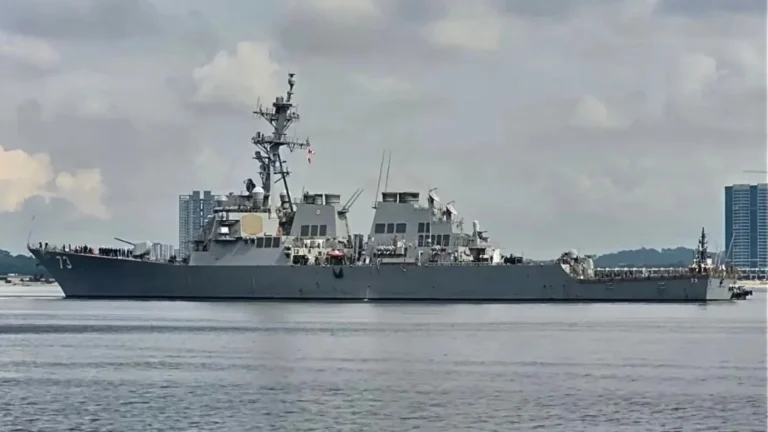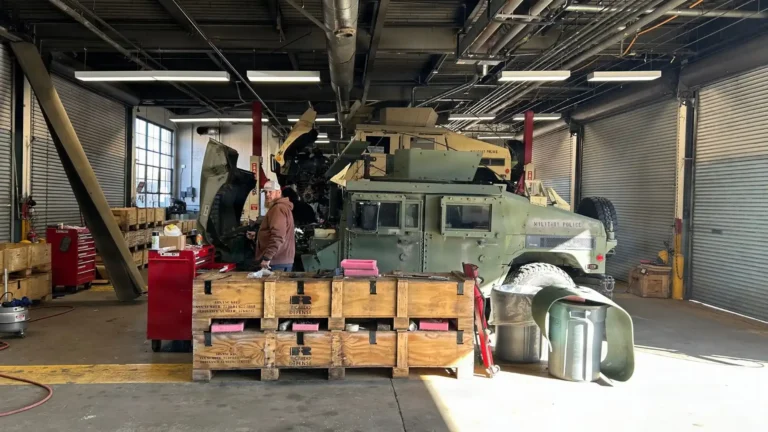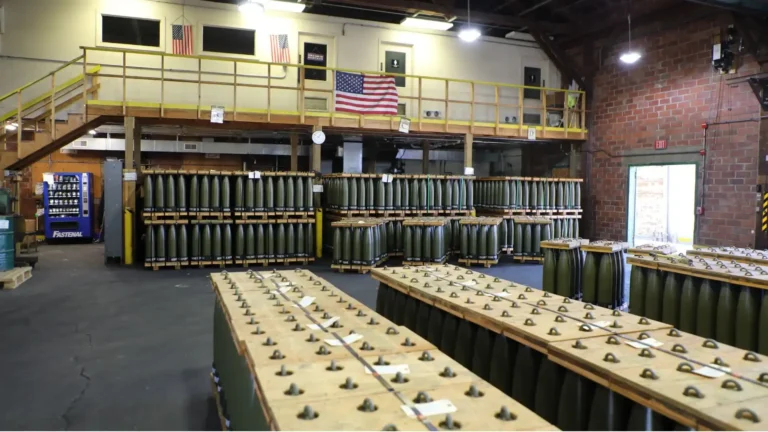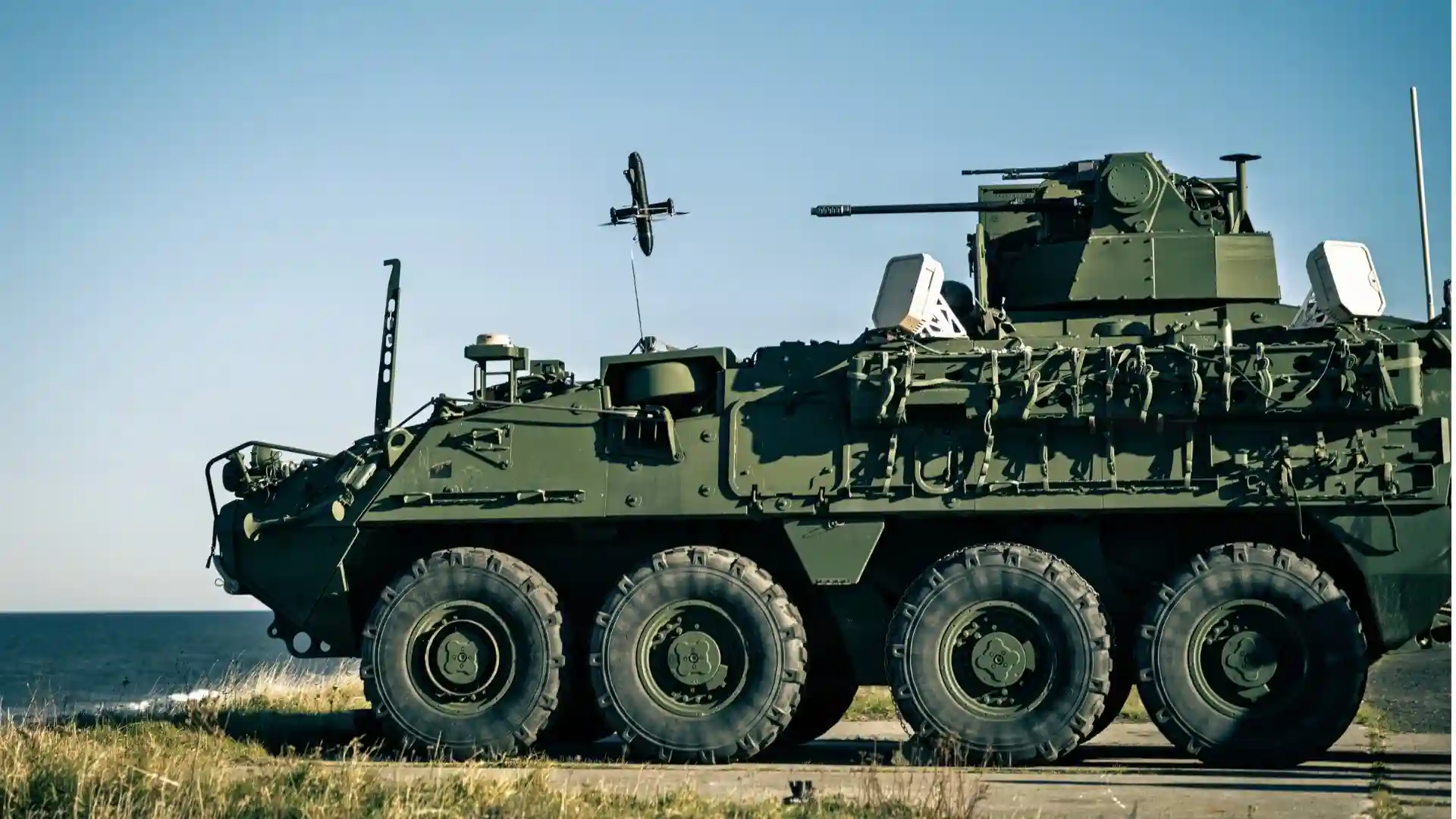
The U.S. Army launched an FD-1 drone interceptor from an SGT Stout short-range air defense vehicle on November 6, 2026, at the Ustka Training Area on Poland’s Baltic coast, during Operation Audacious Fury, an assessment that ran from November 2 to 6. The Tactics, Integration and Employment (TIE) Battery of the 5th Battalion, 4th Air Defense Artillery Regiment (5-4 ADA), 52nd Air Defense Artillery Brigade, 10th Army Air and Missile Defense Command, led the trials, according to the Army. The stated objective was to build cost-effective, lower-tier kinetic magazine depth against Group 1 to 3 and massed unmanned aircraft systems (UAS).
The assessment caps a compressed acquisition cycle. The Army’s Global Tactical Edge Acquisition Directorate (G-TEAD) bought an initial 300 FD-1s earlier in 2026, then awarded a second order for 385 interceptors on October 8, 2026, under an Other Transaction Agreement. Contract values have not been disclosed. The FD-1 won first prize in the Army’s xTech Counter Strike competition in November 2025, and the Army Test and Evaluation Command (ATEC) has completed its technical review. 5-4 ADA serves as U.S. Army Europe and Africa’s theater divisional air defense battalion.
FD-1 Drone Interceptor Specifications and Pixel-Lock Guidance
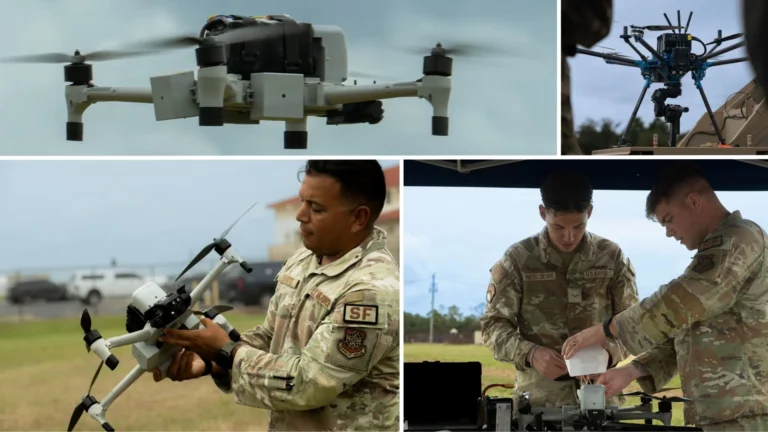
Developed by Florida-based Mountain Horse Solutions, a Global Ordnance subsidiary, the FD-1 is a compact quadcopter first-person-view (FPV) interceptor designed to destroy Group 1 to 3 drones and to strike ground targets, including armored vehicles. Manufacturer figures put cruise speed at roughly 72 km/h (45 mph) and terminal speed above 265 km/h (165 mph), with test flights reportedly reaching about 314 km/h. Reported range is around 6 km in a basic FPV configuration and beyond 20 km with an external antenna. These are company claims, not independently verified, and the Army has not released warhead type, endurance, or unit cost.
Terminal guidance relies on a Pixel-Lock function: the operator designates the target visually, then image-based tracking carries the interceptor through the final approach. That eases manual control at high closing speeds, but the system still depends on external cueing, a resilient datalink, and trained operators. An FD-1 can be emplaced and airborne in under two minutes, according to the company, which says it delivered user-driven upgrades within five weeks of the Army’s initial operational assessment.
How 5-4 ADA Is Pairing FD-1 With SGT Stout Air Defense
The SGT Stout, the Maneuver Short-Range Air Defense (M-SHORAD) Increment 1 system, mounts a Leonardo DRS Reconfigurable Integrated-weapons Platform turret on a Stryker A1 8×8. Publicly available specifications list an XM914 30 mm cannon, a coaxial M240 7.62 mm machine gun, four Stinger missiles, and two Longbow Hellfire missiles, cued by an RPS-42 radar and electro-optical sensors. Each effector is finite, and a Stinger costs far more than the small drones it would most often face.
Launching FD-1s from the vehicle gives the crew an expendable layer for lower-tier drones while holding its missiles in reserve for threats that require them. Battalion commander Lt. Col. John Verwiel framed the effort around staying on the right side of the cost curve and preserving high-end munitions. The TIE Battery also wrote tactics, techniques, and procedures (TTPs) and a training and certification pipeline meant to turn soldiers with no FPV experience into qualified operators, according to platoon sergeant Staff Sgt. Felix Aguilar. Those soldiers will train and certify operators across U.S. Army Europe and Africa.
Analysis: The airframe matters less than the institutional work around it. The Army is converting the FPV interceptor, a capability Ukrainian units developed through improvisation, into a standardized, certified battery-level task inside NATO’s eastern theater. If the certification model scales, magazine depth grows through trained operators and low-cost airframes rather than through constrained missile production lines. The unanswered question is integration: the Army has not detailed how FD-1 engagements tie into SGT Stout fire control or the Forward Area Air Defense Command and Control (FAAD C2) network, the factor that decides performance against a saturation raid.
The Army has released no intercept results from Ustka. Mountain Horse Solutions says the next operational assessment will run with the 10th Mountain Division and focus on ground strike. Pending decisions include theater-wide fielding numbers, a possible third G-TEAD order, and allied buys.