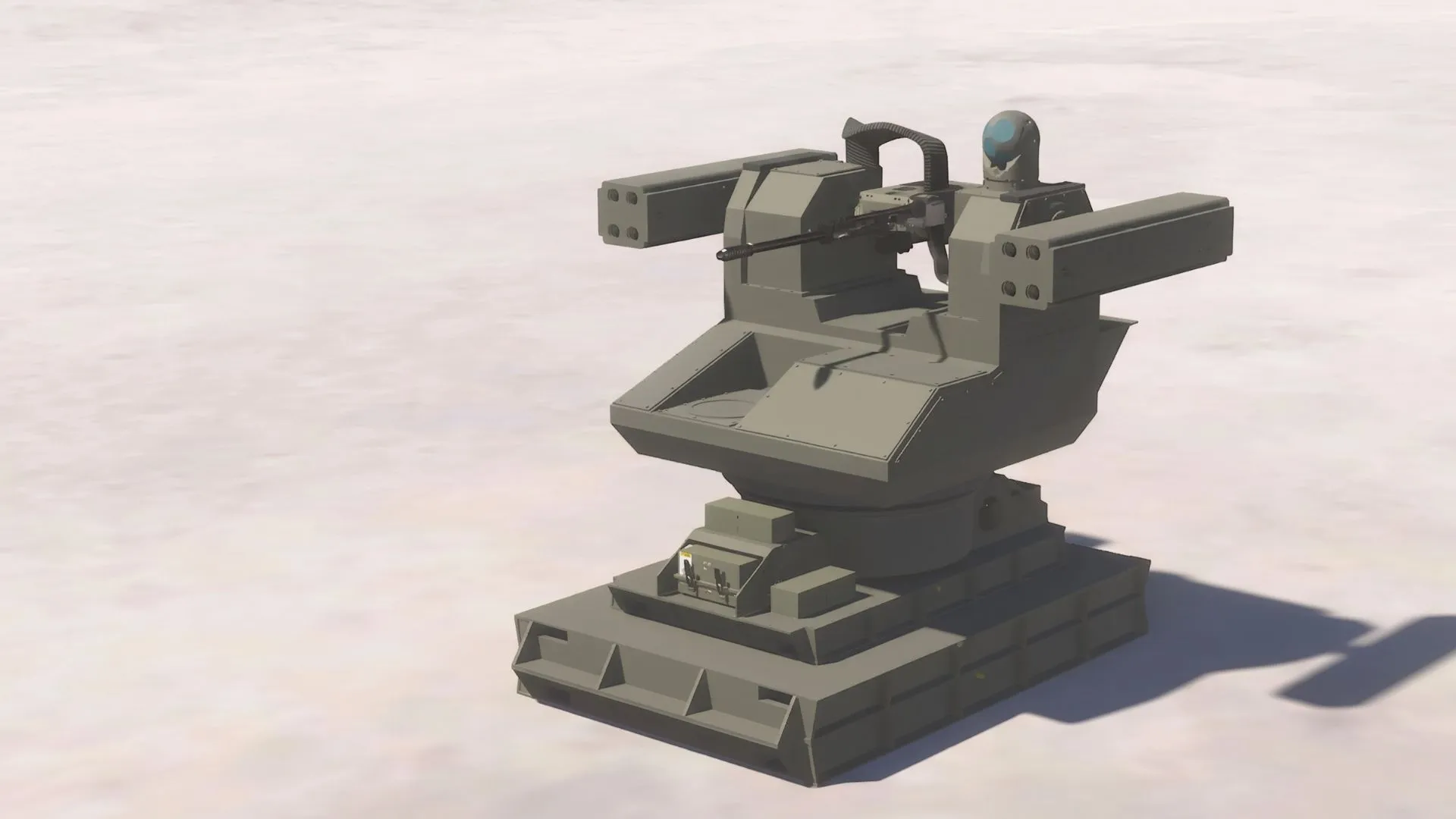
The U.S. Army plans to field its first battalion of M-SHORAD Increment 4 palletized air defense systems in the first quarter of Fiscal Year 2030, between October 1 and December 31, 2029, according to industry day briefing charts the service released on November 6, 2026. The vehicle-agnostic system will protect light maneuver forces against Group 1 to 3 unmanned aircraft systems, helicopters and fixed-wing aircraft. Vendor prototype firing units are due within roughly two years.
The charts, posted under notice W31P4Q-27-RFI-0001 alongside an attendee list of 71 organizations, were presented at an Industry Day held October 27 and 28, 2026, at the Von Braun Center in Huntsville, Alabama. Increment 4 answers a capability gap the Army identified in air defense for Mobile Brigade Combat Teams (MBCT) and Joint Forcible Entry (JFE) forces, formations too light to bring along the Stryker-based SGT STOUT fielded under Increment 1. Requests for information went out in May 2024 and March 2026, and an Army Requirements Oversight Council memorandum validated the approach in October 2025. The effort sits under Portfolio Acquisition Executive (PAE) Fires, led by Lt. Gen. Frank J. Lozano.
Palletized Air Defense Requirements for Light and Airborne Forces
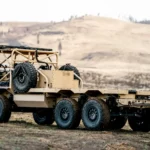
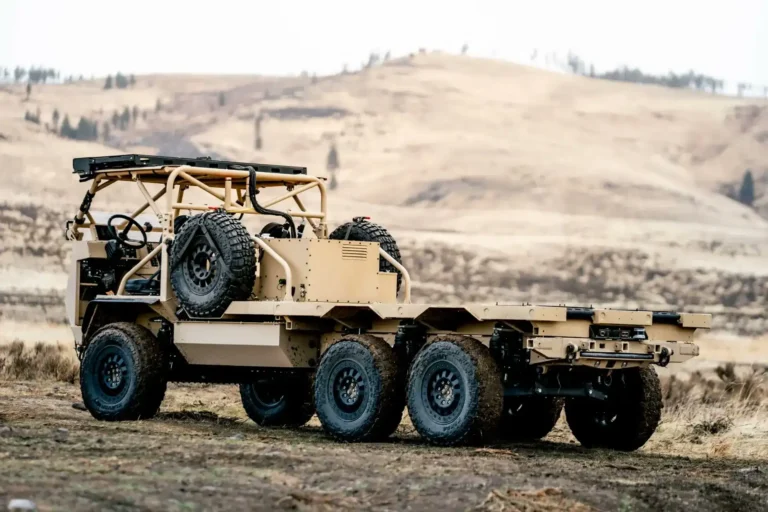
Increment 4 is built around a Self-Loading Equipment Dock, or SLED, that mounts on the Infantry Squad Vehicle in its utility (ISV-U) and heavy (ISV-H) variants, the Joint Light Tactical Vehicle (JLTV) and future robotic platforms. Towed trailers are ruled out. For JFE missions, the system must load onto a C-130 in both SLED and vehicle configurations without special equipment, be air droppable and sling-loadable, and support dismounted operation.
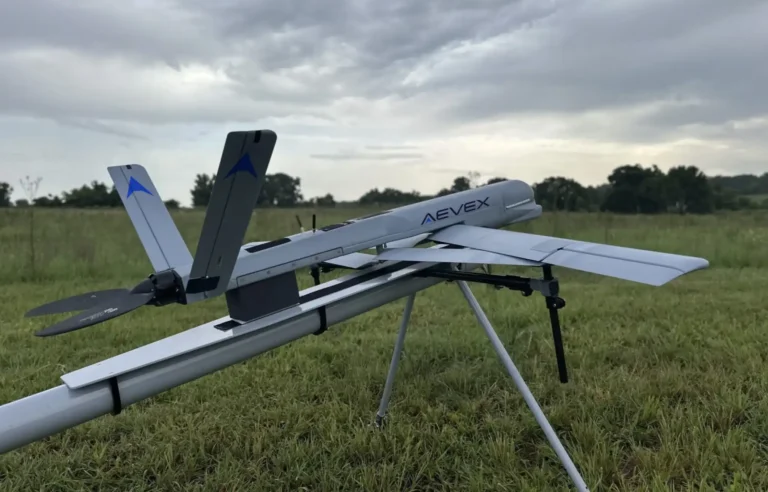
The threat set covers small UAS Groups 1 through 3, including swarms, as well as rotary-wing and fixed-wing aircraft flying close air support. Under Pentagon classification, Group 3 covers aircraft up to 1,320 pounds flying below 18,000 feet, a band that includes one-way attack drones. Increment 4 must also deliver direct fire against dismounted troops and light vehicles, then transition quickly back to defending against Group 1 and 2 drones.
The system must operate independently for 72 hours and semi-independently with its supported force for three to seven days. It must run its mission equipment package (MEP) on battery or auxiliary power with the host engine off, require no new power from a JLTV, and survive chemical, biological and radiological exposure as well as cyber and electromagnetic attack. Target identification relies on multi-sensor active and passive combat ID paired with AI-enabled automated target cueing and engagement pairing, with controls common to SGT STOUT.
Open Architecture and Government-Owned Interfaces Shape Industry Bids
The Army is prescribing architecture more than hardware, flagging four priorities: a platform-agnostic design, reconfigurability, a Modular Open Systems Approach (MOSA) covering electrical, mechanical and logical interfaces, and Government Purpose Rights to intellectual property. The proposed software architecture places government-controlled gunner station software at the center, linking vendor-supplied sensors, effectors and command and control through interfaces owned by the U.S. government. The Army also wants source code, technical data and right-to-repair documentation so units can sustain the system without contractor logistics support.
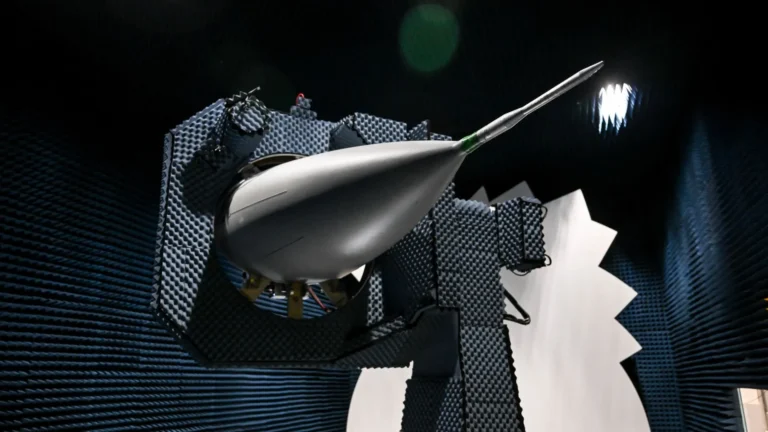
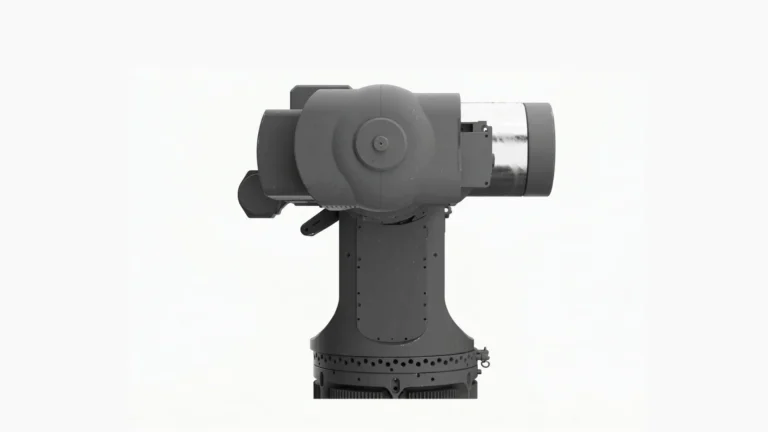
The briefing leaves the effector mix open, calling only for a reconfigurable multi-effector MEP combining missiles, direct-fire guns and non-kinetic defeat, fed by active and passive sensors. Designs already shown publicly in this class, as The War Zone (TWZ) has noted, typically pair 30mm cannons or 7.62mm Miniguns with Stinger or AGM-114 Hellfire missiles and 70mm Advanced Precision Kill Weapon System II laser-guided rockets, now widely used as a low-cost counter-drone interceptor. Command and control must integrate with the Army Integrated Air and Missile Defense architecture, including IBCS-M, with commonality sought with the Marine Air Defense Integrated System (MADIS).
M-SHORAD Increment 4 Schedule Runs on Test-Driven Development
The approved schedule runs in three phases. Phase 1, covering Fiscal Years 2027 and 2028, runs as a Middle Tier of Acquisition rapid prototyping effort with multiple vendors under Other Transaction Authority (OTA) agreements, with the award shown in the second quarter of FY2027. Prototype firing units receive five software deliveries between the third quarter of FY2027 and the fourth quarter of FY2028, while a designated test unit moves from new equipment training through gunnery and a combined arms live fire exercise to an Army exercise and the IOC decision point in the fourth quarter of FY2028.
Phase 2, spanning FY2029 and FY2030, narrows to a single vendor for design maturation, materiel release and First Unit Equipped with one battalion. An enduring capability track runs alongside it, with an open-competition shoot-off and OTA awards to two vendors in FY2030. Phase 3 then fields a second battalion in FY2031, a third in FY2032, a fourth in FY2033 and a fifth in FY2034, closing with a Milestone C decision.
Attendees included Raytheon, Northrop Grumman, L3Harris, Leidos, BAE Systems, General Dynamics Land Systems and American Rheinmetall, alongside counter-UAS specialists such as D-Fend Solutions, Echodyne and Allen Control Systems. Sierra Nevada Corporation and MSI Defense Solutions, which have publicly shown palletized air defense launchers, also took part.
Analysis: Increment 4 shifts the Army from buying a closed turret to buying a government-controlled architecture. By owning the interfaces and the gunner station software, the service can swap radars, interceptor pods and jammers as drone threats evolve without returning to a single integrator, a priority given how fast drone technology has turned over in Ukraine. The cost falls on industry: vendors with proprietary fire control must open their designs, and a two-year prototyping window leaves little margin. For MBCT and airborne formations, the result would be an organic, C-130 transportable layer able to engage Group 3 drones and attack aircraft from one mount.
Next comes a MOSAIC Call for Solutions posting, industry visits and a request for proposals to selected partners. The briefing does not disclose funding, the number of Phase 1 OTA awards, systems per battalion or a preferred effector set, and every chart is marked subject to change. The OTA award planned for January to March 2027 will show how many teams the Army keeps in the race.