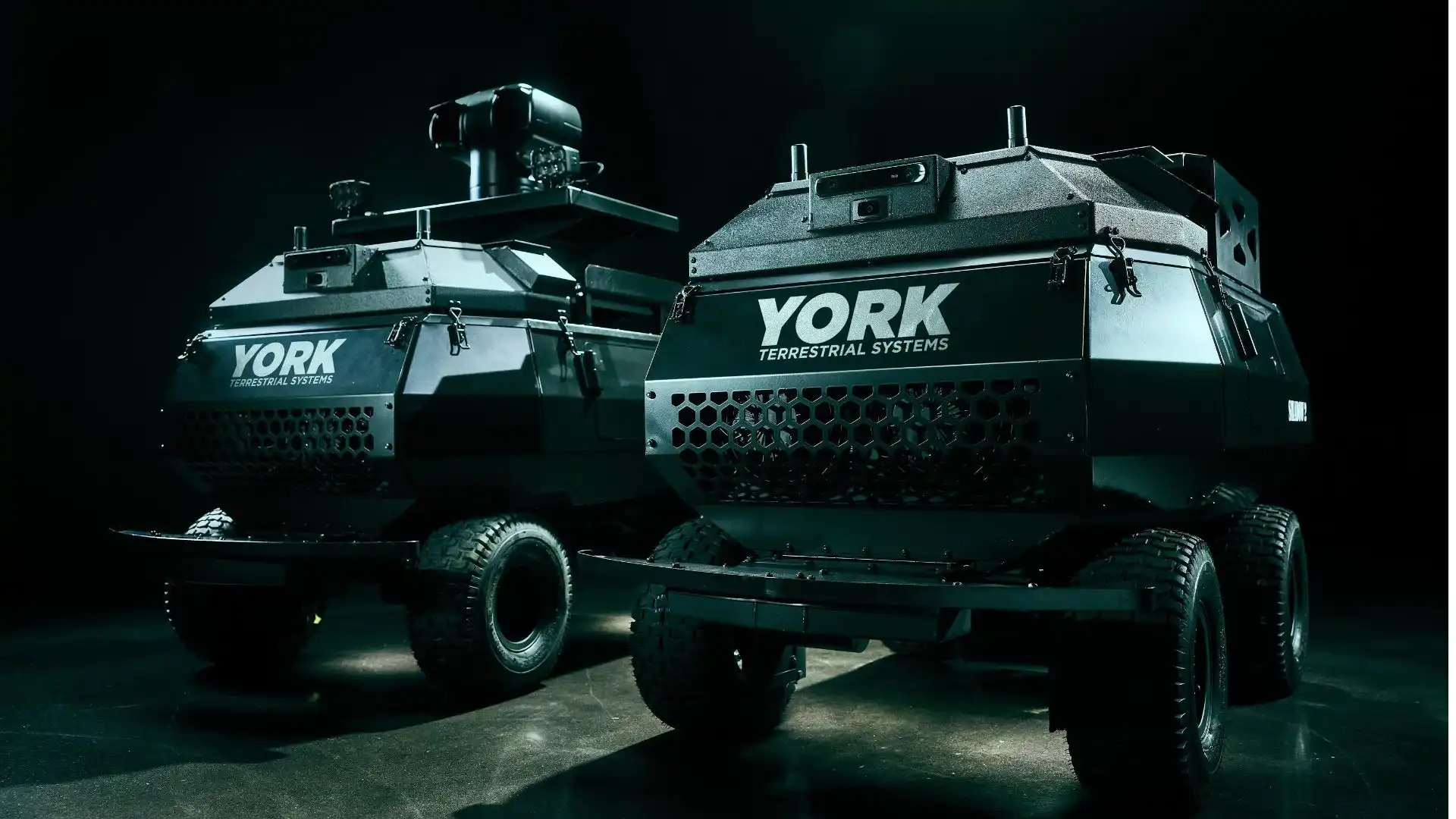
York Space Systems announced on November 12, 2026, that it intends to acquire Outlook Industries, a developer of unmanned systems for defense applications, and make it the foundation of a new business unit, York Terrestrial Systems. The Denver-based space and defense prime, listed on the New York Stock Exchange as YSS, did not disclose the price. The first product planned for the unit is Shadow, a long-endurance unmanned ground vehicle (UGV) designed for persistent intelligence collection and mobile communications.
The deal extends an acquisition run that has turned York from a satellite bus manufacturer into a vertically integrated defense supplier. York bought ATLAS Space Operations and its global ground antenna network in 2025, acquired electric propulsion maker Orbion Space Technology in March 2026, and in July 2026 closed the purchase of ALL.SPACE, a builder of multi-orbit satellite terminals, in a cash-and-stock deal announced at about $355 million and valued at about $300 million at closing. York also builds spacecraft for the Space Development Agency (SDA) Proliferated Warfighter Space Architecture. Outlook would give that space-to-ground chain its first platform operating at the tactical edge.
Outlook Industries Acquisition Builds Out York Terrestrial Systems
York estimates the Outlook Industries acquisition opens an additional addressable market of $3.08 billion in unmanned ground systems. The company also argues that pairing Outlook platforms with ALL.SPACE terminals and the ATLAS network positions it to enter unmanned surface and underwater vessel markets, which it sizes at $10.31 billion. Both figures are company estimates.
The infrastructure York intends to plug Outlook into is already operating. York cites approximately 50 ATLAS ground antennas worldwide and runs five missions across three constellations from three operations centers. The company has invested $755 million in production capacity and spacecraft inventory, and says York itself will manufacture Shadow in the United States.
Chief Executive Officer Dirk Wallinger framed the deal around command of large unmanned fleets, arguing that future defense will hinge on coordinating them “while keeping the people commanding them farther from danger.” York tied the move to recent statements from Department of War leadership prioritizing autonomous and unmanned systems at scale.
Key details remain undisclosed: Outlook’s headquarters, workforce, revenue, existing customers, and whether any of its systems are under contract with US or allied forces. The transaction requires regulatory approvals and customary closing conditions, and York gave no target closing date.
Shadow UGV Endurance and Multi-Orbit Satellite Connectivity
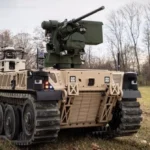
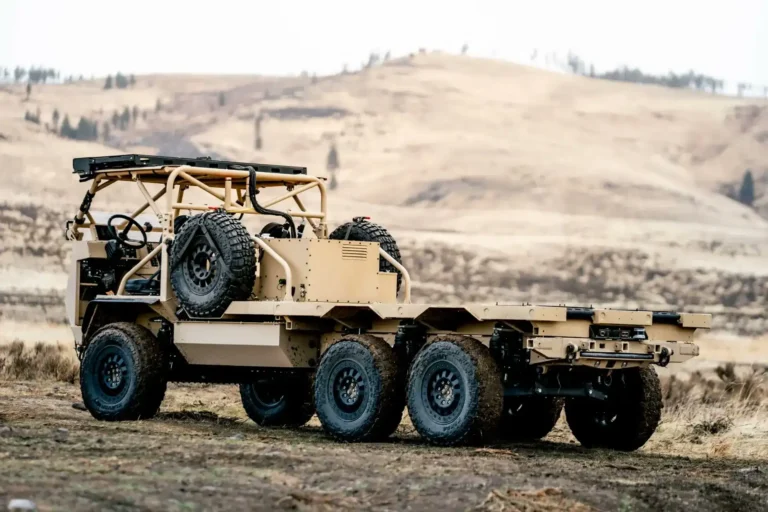
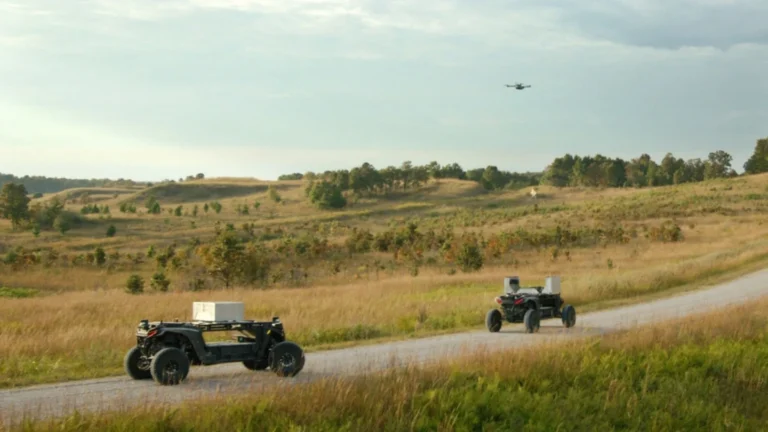
The published Shadow specifications are limited but point to a clear design priority. The vehicle combines battery power with an automatic fuel-powered generator, giving it an operational endurance of 30 to more than 45 days. York says Shadow is built to withstand gunfire and harsh environmental conditions, although no ballistic protection standard has been published.
Endurance on that scale shifts the platform’s role. A vehicle able to hold position for six weeks or more functions less as a robotic scout and more as a persistent sensor and communications node, cutting the resupply and recovery runs that expose crews to fire.
York plans to fit Shadow with ALL.SPACE multi-link, multi-orbit terminal technology. ALL.SPACE terminals use electronically steered phased-array antennas that hold simultaneous links to multiple satellite networks, so the UGV would not depend on a single path back to its operators. York says the architecture is meant to support increasingly autonomous operations where terrestrial communications are disrupted and GPS is degraded or denied.
York has not released Shadow’s dimensions, weight, mobility configuration, speed, payload capacity, sensor suite, or autonomy level, nor whether it carries armament. Those parameters will determine whether Shadow competes for tactical robotic requirements or serves a narrower ISR and relay niche.
Analysis: York is betting that the binding constraint on unmanned warfare at scale is connectivity, not vehicles. Electronic warfare in Ukraine has pushed forces toward fiber-optic control links because radio links are so easily jammed, a pressure York cited when it closed the ALL.SPACE deal. Owning the spacecraft, ground network, terminal, and now the vehicle lets York offer a closed architecture with a single integrator accountable for the link. The risk is execution: York has no track record building ground vehicles, the UGV field is crowded with established land systems suppliers, and the announcement names one platform and no customer.
York will detail the transaction on an investor call on November 19 at 5 PM ET, a week after reporting third-quarter 2026 results following the market close on November 12. The items to watch are the purchase price, Outlook’s engineering team and production footprint, a closing timeline, and whether Shadow enters a US Army or Marine Corps evaluation that would turn an architecture pitch into a funded requirement.