The U.S. Army launched a group of drones from an unmanned ground vehicle and struck a target autonomously during a live-fire technology demonstration at Grafenwoehr Training Area, Germany, on November 12, 2026. The U.S. Army Combat Capabilities Development Command (DEVCOM) Armaments Center ran the event with U.S. Army Europe and Africa and the 7th Army Training Command to evaluate how unmanned air and ground systems could extend strike range, reduce Soldier exposure and give commanders lower-cost options.
The demonstration comes five weeks after the Army released How the Army Fights, its operational warfighting guidance, on October 7, 2026. The framework organizes land power around four elements: convergence, strike, close battle and endurance. Army officials tied the Grafenwoehr event to strike and endurance, and to NATO integration under the Eastern Flank Deterrence Initiative (EFDI), which U.S. Army Europe and Africa describes as built around low-cost uncrewed systems, AI-enabled targeting, layered defenses and an integrated mission command network.
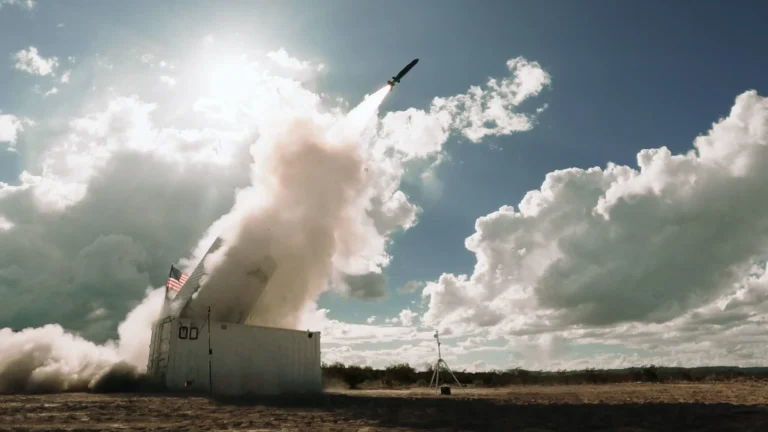
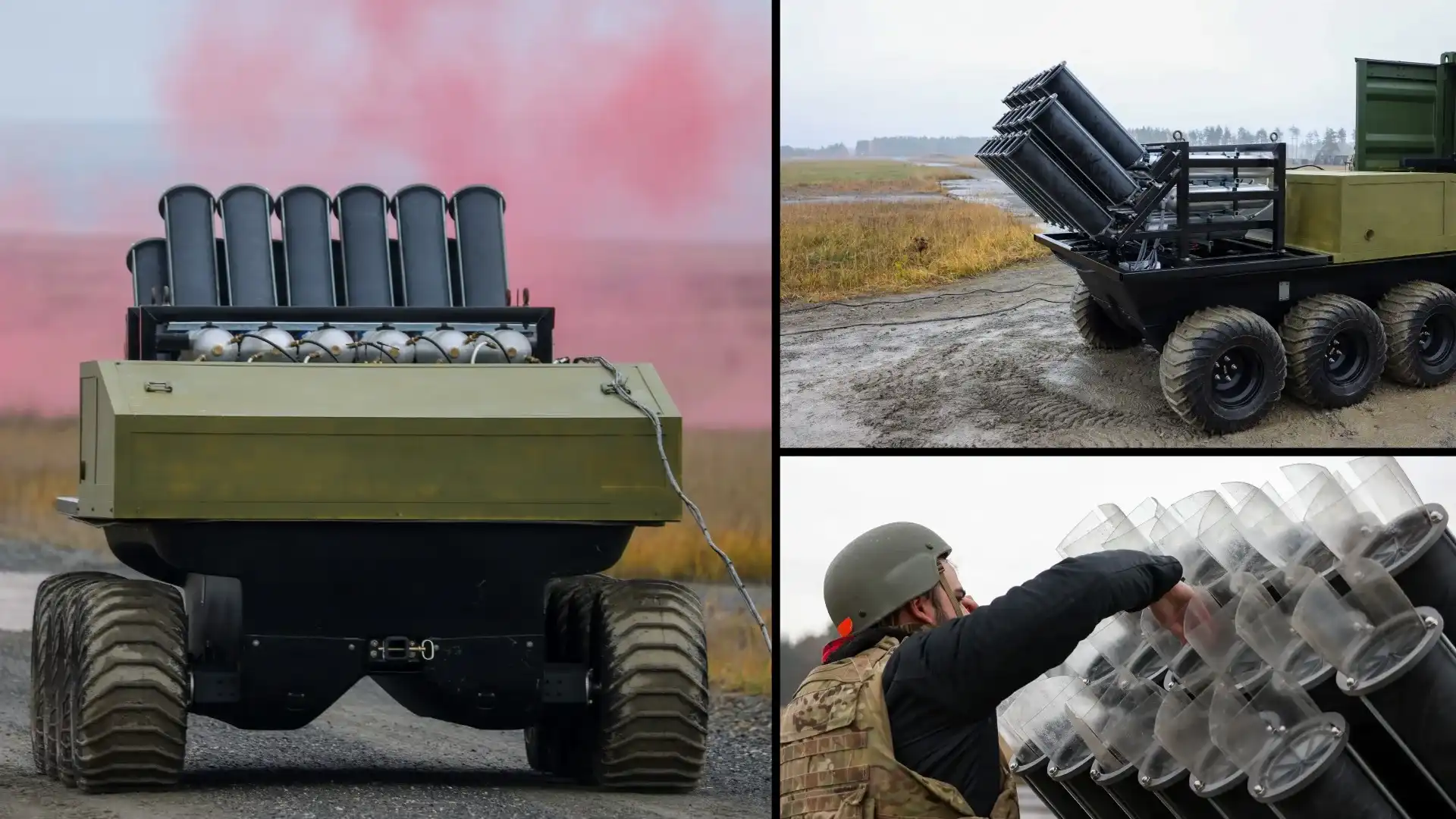
R3NEGADE Unmanned Ground Vehicle Launches HIV3 Drone Swarm Strike
The live-fire sequence opened with a TRV-150 drone dropping smoke onto the target. A group of drones then launched from an HIV3 swarm drone launcher mounted on an R3NEGADE unmanned ground vehicle and conducted an autonomous strike on the same target. Soldiers from the 173rd Airborne Brigade followed with a separate strike using a first-person-view (FPV) drone, flown through the video feed of an onboard camera.
A second R3NEGADE carried a remotely operated weapon system armed with a Javelin anti-tank missile, presenting the vehicle as a modular carrier for either a drone magazine or a direct-fire anti-armor weapon. The Army has not released the R3NEGADE’s base platform, mobility or payload, the HIV3 launcher’s capacity, the type of drones fired, or where the human operator sat in the engagement decision.
Publicly available specifications indicate the TRV-150 is a militarized variant of the Malloy Aeronautics T-150, an electric heavy-lift quadcopter from a BAE Systems subsidiary adapted by SURVICE Engineering, with a maximum payload of 68 kg (150 lb) and a manufacturer-listed maximum range of 13 to 37.5 km. The same airframe fired 70 mm Advanced Precision Kill Weapon System (APKWS) rockets at Fort Rucker, Alabama, in May 2026 and engaged several aerial targets at Eglin Air Force Base, Florida, in late September. Its marking role at Grafenwoehr confirms a multi-role carrier, not a resupply asset alone.
TRV-400, FIR3FLY and Containerized Drones for Distributed Strike
A static display featured a TRV-400 aircraft fitted with the developmental FIR3FLY anti-armor capability, part of a containerized system designed to store drones and deploy them remotely. Manufacturer data for the T-400 prototype airframe indicate a maximum payload of 165 kg, roughly 2.4 times the lift of the TRV-150. The Army has disclosed no FIR3FLY specifications, including warhead type, guidance mode or engagement range.
“The purpose of this effort is to place modular air and ground platforms inside containerized systems so commanders can pre-position capabilities and deploy unmanned assets where they are needed,” said Alex Tomosieski, program manager for the Remote Rapid Response Autonomous Contingency Team (R3ACT). “This gives formations more adaptable options while helping shift risk away from Soldiers.” The Defense Innovation Unit sought similar containerized drone systems in February 2026.
Cost shaped the approach. Developers are pairing commercially available technology with weapons and equipment already in the Army inventory so the systems can spread across more units instead of relying on expensive, specialized platforms. “We need scalable, cheap, affordable, lethal options for our warfighters,” said Troy Brannon, strategic adviser for the Expanded Maneuver-Air portfolio at DEVCOM Armaments Center, who led the demonstration. Command Sgt. Maj. Thinh Huynh, DEVCOM’s senior enlisted leader, said Soldiers need to be involved from the beginning, because their feedback improves the equipment and gets better capabilities into their hands faster.
Analysis: The Grafenwoehr event matters less for any single platform than for the layered kill chain it assembled from modular, low-cost components: an air vehicle marks, a ground vehicle launches a swarm, an infantry operator finishes with an FPV drone, and a container pre-positions the next salvo. That architecture maps onto the strike and endurance elements of How the Army Fights. On NATO’s eastern flank, where allied forces must cover wide frontages with limited manpower, distributed unmanned strike could extend coverage at lower cost. Electronic warfare resilience and the reliability of autonomous targeting against real, cluttered targets remain untested in public.
The Army has announced no procurement decision, fielding timeline or follow-on test for the R3NEGADE, the HIV3 launcher, FIR3FLY or the R3ACT containerized system. The next indicators will be whether units in Europe, starting with the 173rd Airborne Brigade, receive these systems for extended evaluation, and whether the concepts appear in upcoming Sword-series exercises built around the Eastern Flank Deterrence Initiative.