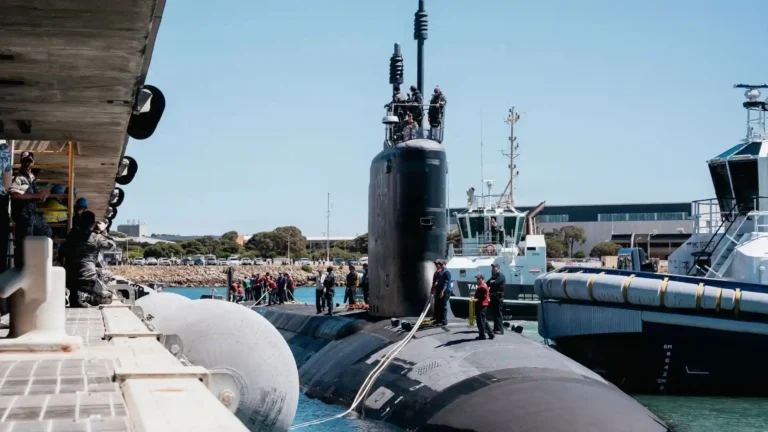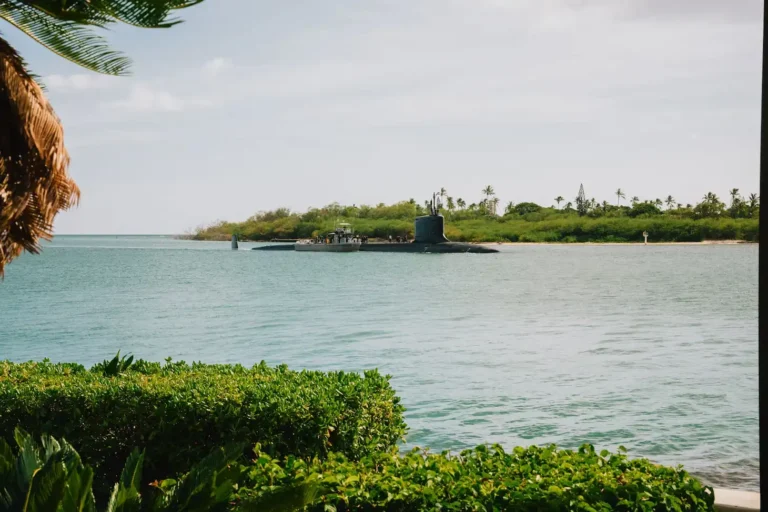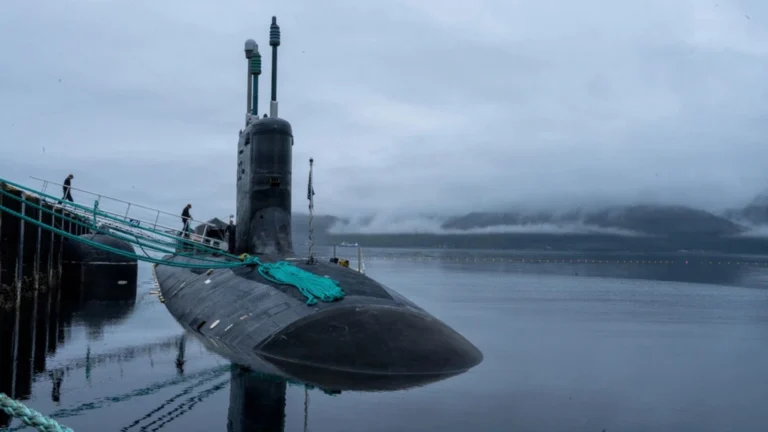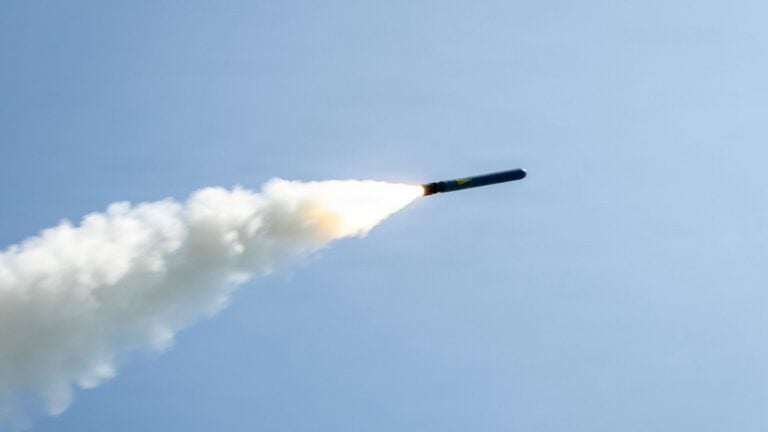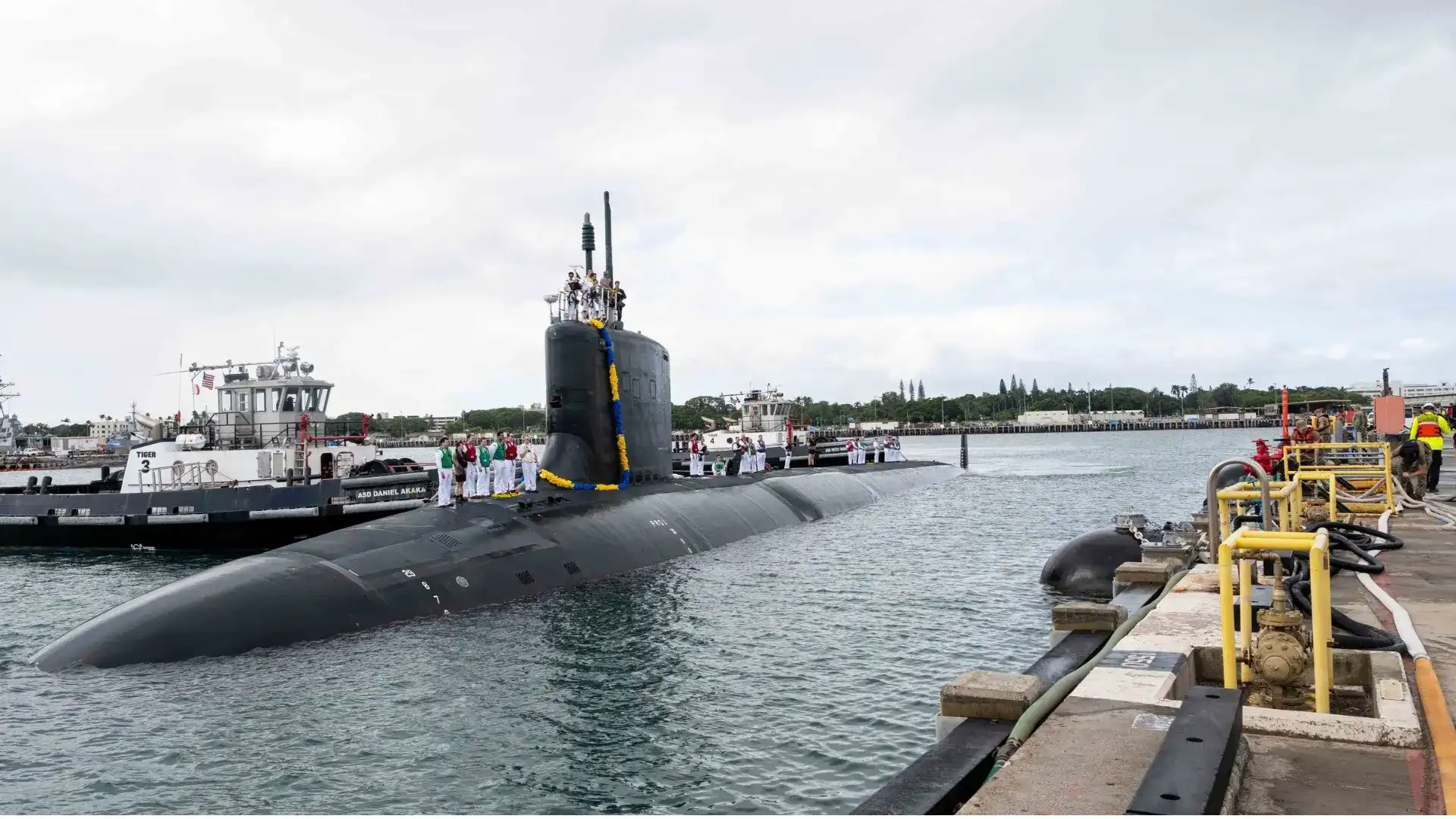
Virginia-class fast-attack submarine USS North Dakota (SSN 784) arrived at its new homeport of Joint Base Pearl Harbor-Hickam, Hawaii, on November 13, 2026, completing its transfer from the Atlantic to the Pacific Fleet. The boat joins Submarine Squadron 1 as the squadron’s sixth Virginia-class attack submarine, according to the U.S. Navy, after finishing an Extended Drydocking Selected Restricted Availability (EDSRA) at Portsmouth Naval Shipyard in Kittery, Maine. As the lead boat of the Block III flight, North Dakota carries two Virginia Payload Tubes for 12 Tomahawk land-attack missiles.
The move adds to a broader realignment of attack submarines under Commander, Submarine Force, U.S. Pacific Fleet (SUBPAC). The Los Angeles-class USS Jefferson City (SSN 759) moved from Guam to Pearl Harbor on July 9, 2026, to join Submarine Squadron 7, and SUBPAC reestablished Submarine Squadron 3 at HMAS Stirling in Western Australia on June 10 to support Submarine Rotational Force-West under AUKUS, with rotations scheduled to begin in 2027. North Dakota previously operated from Naval Submarine Base New London in Groton, Connecticut, under Submarine Squadron 2.
USS North Dakota Block III Design and Portsmouth Overhaul
Commissioned on October 25, 2014, North Dakota is the 11th Virginia-class boat and the lead ship of the eight-hull Block III flight, built by General Dynamics Electric Boat in partnership with HII’s Newport News Shipbuilding. Block III redesigned roughly 20 percent of the submarine, concentrated in the bow. The air-backed spherical sonar array gave way to a water-backed Large Aperture Bow (LAB) array, a conformal, horseshoe-shaped sensor designed to need fewer parts and less maintenance. That change freed volume to replace the 12 individual 21-inch Vertical Launch System tubes of Blocks I and II with two 87-inch Virginia Payload Tubes (VPTs), each holding six Tomahawk land-attack missiles.
Publicly available specifications indicate a length of 377 feet (114.8 meters), a beam of 34 feet, and a submerged displacement of about 7,800 tons. An S9G pressurized water reactor drives a pump-jet propulsor to speeds the Navy lists as more than 25 knots, and the boat carries a crew of about 132. Four 21-inch torpedo tubes handle Mk 48 Advanced Capability heavyweight torpedoes.
North Dakota arrived at Portsmouth on April 28, 2023, entered Dry Dock No. 2 that September, undocked on February 26, 2026, and returned to the fleet in late August 2026. The Navy described it as the first Virginia-class Block III availability ever completed at the yard. Cmdr. Christopher Marolt, the commanding officer, said his Sailors worked “through the shortest availability in Portsmouth Naval Shipyard history.” Measured from arrival to completion, the period still spanned roughly 40 months. The crew earned the Retention Excellence award in 2024 and the Submarine Force Atlantic Battle Efficiency award in 2024 and 2025.
Submarine Squadron 1 and the Pacific Undersea Force Posture
North Dakota joins a Pearl Harbor squadron that includes its Block III sister USS Illinois (SSN 786). The Navy lists the boat’s mission set as anti-submarine warfare, anti-surface warfare, strike warfare, special operations forces support, and intelligence, surveillance, and reconnaissance.
Basing in Hawaii removes the long transit from New England and places North Dakota inside the Pacific Fleet’s training, maintenance, and deployment cycle, with Pearl Harbor Naval Shipyard as one of the four public yards that service nuclear submarines. Squadron 1 boats already operate deep into the theater: USS Hawaii completed a submarine tendered maintenance period at HMAS Stirling, a model that SRF-West is meant to make routine. Capt. Christopher Hedrick, commodore of Submarine Squadron 1, said the crew joins the waterfront “supporting our strategic advantage in the Pacific.”
Analysis: North Dakota adds no new strike capacity, since its two VPTs carry the same 12 Tomahawks as earlier boats, but it adds an available hull, and availability is the binding constraint. A Government Accountability Office report released on August 27, 2026, found the Navy lost more than 15,000 operational days to attack submarine maintenance delays and idle time between fiscal years 2016 and 2025. North Dakota’s 40 months at Portsmouth, even with an accelerated finish, shows how depot throughput rather than fleet size determines how many boats SUBPAC can actually put forward. Moving recently overhauled Atlantic hulls west is the fastest lever the Navy has while Virginia-class production and shipyard capacity lag requirements.
Next steps include integration with Submarine Squadron 1 and the certification workups that precede a first Pacific deployment; the Navy has not announced a deployment date. The broader markers to watch are the start of SRF-West rotations at HMAS Stirling in 2027 and whether additional Atlantic-based Virginia-class boats follow North Dakota to Hawaii.