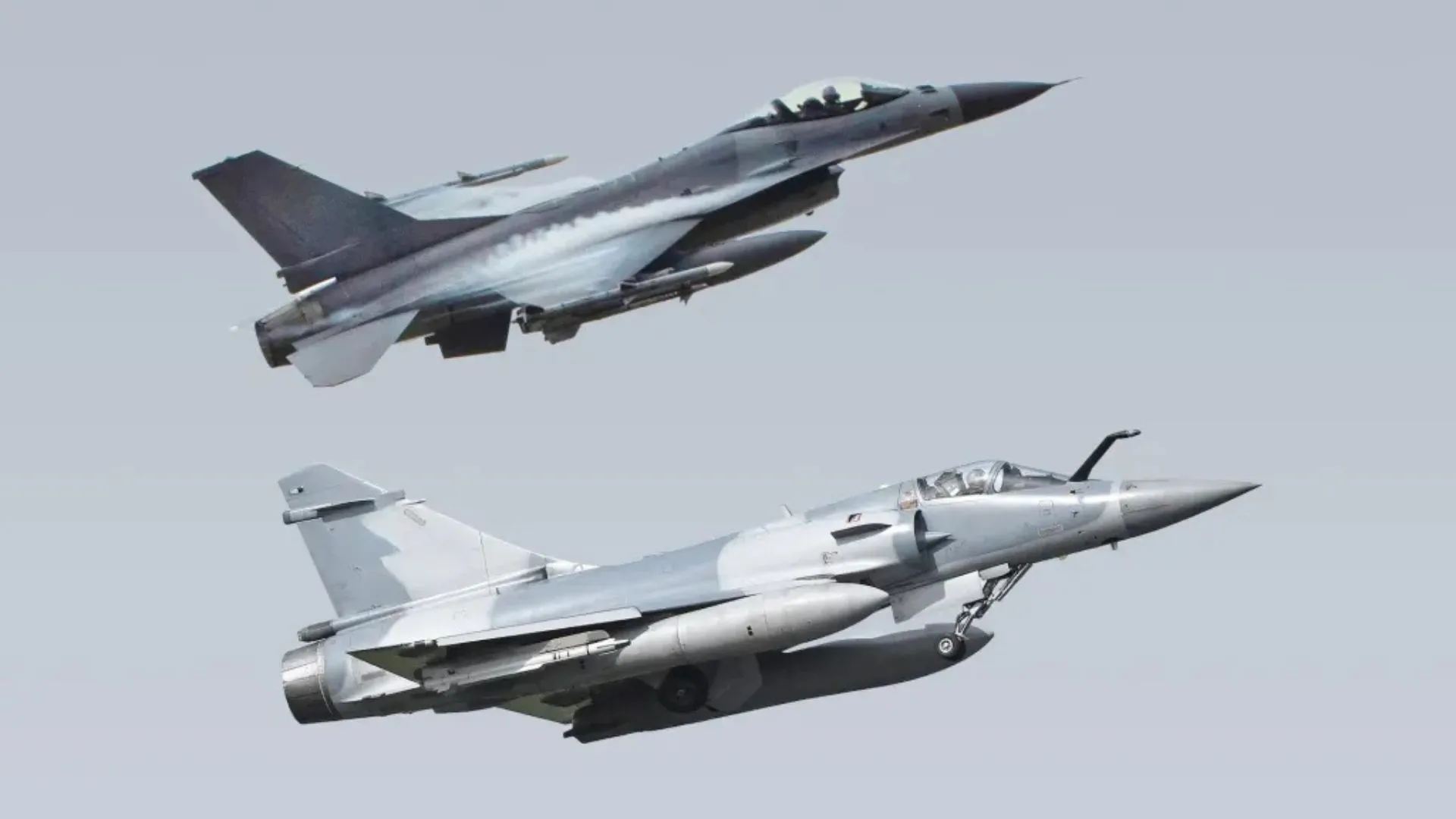
Ukrainian President Volodymyr Zelensky told allies on November 17, 2026, that Ukraine needs 40 more F-16 fighter jets because the ones it operates spend too much time under repair. He also urged European governments to transfer Dassault Mirage 2000 fighters immediately rather than wait for future Rafale deliveries. He made both requests in an address to the 37th meeting of the Ukraine Defense Contact Group (UDCG), held in the Ramstein format at NATO headquarters in Brussels under British and German co-chairmanship.
The appeal comes as Ukrainian fighters carry a growing share of the fight against Russian cruise missiles and Shahed-type attack drones, including faster jet-powered Geran variants. Speaking to journalists on November 13, Zelensky said Ukraine needs two and a half times as many F-16s in the air at any one time as it currently deploys, because the existing jets frequently undergo maintenance. In October, he said roughly half of the F-16 fleet was spending extended periods in European maintenance facilities, a claim the Ukrainian Foreign Ministry later qualified, saying repair turnaround times were shortening rather than lengthening.
Why Ukraine Needs 40 More F-16s as Maintenance Cycles Bite
“The F-16s we have now, the ones shooting down Russian ‘shaheds’ and missiles, spend a lot of time being repaired instead of flying,” Zelensky said in excerpts of the address posted on X. “Specifically, we need 40 more F-16 fighter jets.” The request targets the Air Force Coalition, whose members have supplied second-hand F-16s largely from Dutch, Danish, Norwegian and Belgian fleets transitioning to the F-35A. Kyiv does not disclose how many F-16s it operates. Belgium has committed to an expedited transfer of three jets by the end of 2026.
The donated aircraft are F-16AM/BM airframes upgraded under the European Mid-Life Update program, most of them built in the 1980s and early 1990s. Publicly available specifications indicate a single Pratt & Whitney F100-PW-220 turbofan rated at roughly 23,800 pounds of thrust in afterburner, an AN/APG-66(V)2 pulse-Doppler radar, and integration of the AIM-120 AMRAAM and AIM-9 Sidewinder. Airframe age translates directly into maintenance burden: heavier inspection cycles, structural work and spare parts pipelines concentrated at European depots.
Demand keeps rising. Ukrainian combat aircraft flew about 1,300 air defense sorties in September, according to figures cited by Kyiv-based defense outlet Defense Express, and Defense Minister Yevhenii Khmara said in October that “today aviation remains one of the most effective means of combating jet drones.” Jet-powered drones fly several times faster than propeller-driven Shaheds, compressing engagement windows for gun turrets and interceptor drones and shifting more of the workload onto fighters.
Mirage 2000-5 Offers a Faster Path Than the Rafale Pipeline
Zelensky’s second request addressed Europe’s older Dassault fighters. “Getting Rafales ready takes time, training, preparation, all of that. But Mirage jets can be put to work right now,” he said. “Europe can help us with this. Please, make this decision.”
Ukraine signed a letter of intent with France on November 17, 2025, for up to 100 Rafale F4 fighters, and an October 2025 letter of intent with Sweden covers 100 to 150 Saab Gripen E aircraft. Both are long-horizon programs dependent on production slots, financing and pilot training. The Mirage 2000-5 is already in Ukrainian service. France delivered the first examples in February 2025, when the French Air and Space Force still operated 26 Mirage 2000-5F aircraft. One was lost in July 2025.
Publicly available specifications indicate the Mirage 2000-5F is powered by a single SNECMA M53-P2 turbofan producing about 95 kN in afterburner, with a Thales RDY multimode radar that guides radar and infrared variants of the MICA air-to-air missile. Ukrainian pilots have used the jet against cruise missiles and drones and, since early 2026, to deliver AASM Hammer guided bombs on Russian positions. France has said it is ready to hand over more of its remaining Mirage 2000-5s as it retires the type in favor of the Rafale. Greece also operates the Mirage 2000-5.
According to an October 13 assessment by Defense Express, the combined F-16 and Mirage 2000 fleet exceeds the Ukrainian inventory of MiG-29 and Su-27 fighters. Zelensky also pressed partners on munitions, saying Ukraine needs “enough ammunition for the aircraft we are flying right now.”
Analysis: Kyiv’s request shifts the fighter aid debate from inventory to availability. Forty additional F-16s would not primarily expand Ukraine’s force structure; they would build a maintenance float that lets aging airframes cycle through depots while sortie generation holds steady against a drone threat that keeps getting faster. The Mirage appeal follows the same logic, trading long-term fleet rationalization for near-term capacity. The cost is logistical: Ukraine would sustain two Western fighter types now and two more later, each with separate weapons, spares and training pipelines, while Europe’s pool of surplus F-16s and Mirage 2000s is finite.
Germany hosts a Coalition of the Willing summit in Berlin on November 19, two days after the Ramstein meeting. Partners had not publicly detailed new fighter commitments from the Brussels meeting at the time of writing. The indicators to watch are delivery of Belgium’s three F-16s before year-end, any French decision on further Mirage 2000-5F transfers, and whether more F-16 sustainment work moves into Ukraine, as Kyiv has requested.