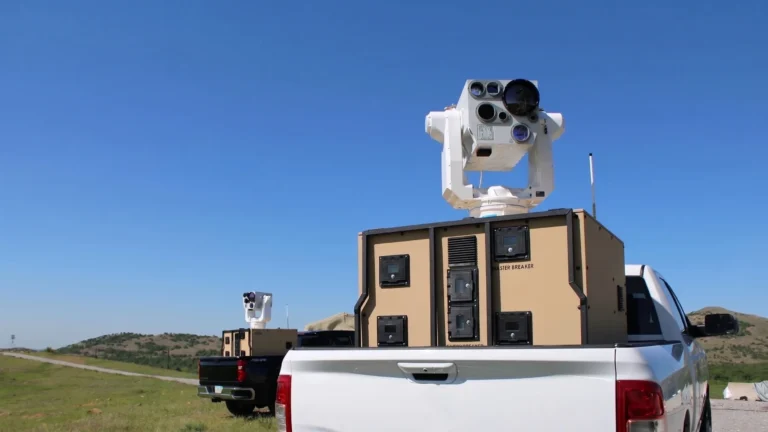
The U.S. Army has completed a week-long assessment of Northrop Grumman’s Agnostic Gun Truck (AGT) and M-ACE sensor vehicle at Fort Sill, Oklahoma, ending with a live-fire demonstration on October 28, 2026. The Fires Experimentation Division (FED) ran the event alongside Northrop Grumman and collected performance data on how well the AGT and the Mobile Acquisition, Cueing and Effector (M-ACE) system detect and engage Group 1 and Group 3 unmanned aircraft systems (UAS), while senior military leaders observed the live fire, U.S. Army Transformation and Training Command said on November 16, 2026.
The assessment comes as the Army works to thicken short-range air defense across the force after nearly five years of combat data from Ukraine showing how cheap drones can saturate maneuver units, logistics nodes and fixed sites. Fort Sill hosts the Fires Center of Excellence and the Joint Counter-small Unmanned Aircraft Systems University, which trains soldiers, airmen, sailors and Marines in counter-drone operations. The command framed the event as experimentation, saying the findings will inform future experimentation, capability development and Army modernization efforts.
How the Agnostic Gun Truck and M-ACE Split the Kill Chain
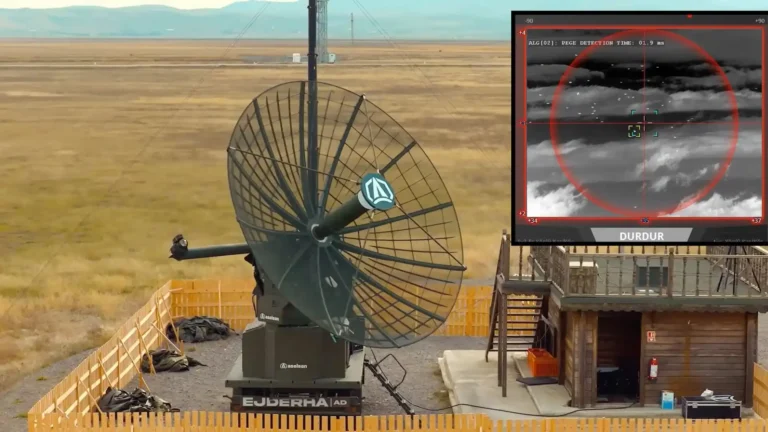
The two systems operate as a hunter-killer team. M-ACE is the sensor and command node: a light truck carrying a self-stabilizing mast that hosts a 3D radar, radio-frequency (RF) detection sensors and electro-optical/infrared (EO/IR) cameras. Company product literature lists a sensor height of under 30 feet, a 500-pound tower payload and emplacement in under two minutes without guy-wires. The command-and-control layer fuses tracks and applies predictive cueing to hand targets to a shooter, shortening the detect-to-engage cycle that decides whether a small drone is hit before it reaches its target.
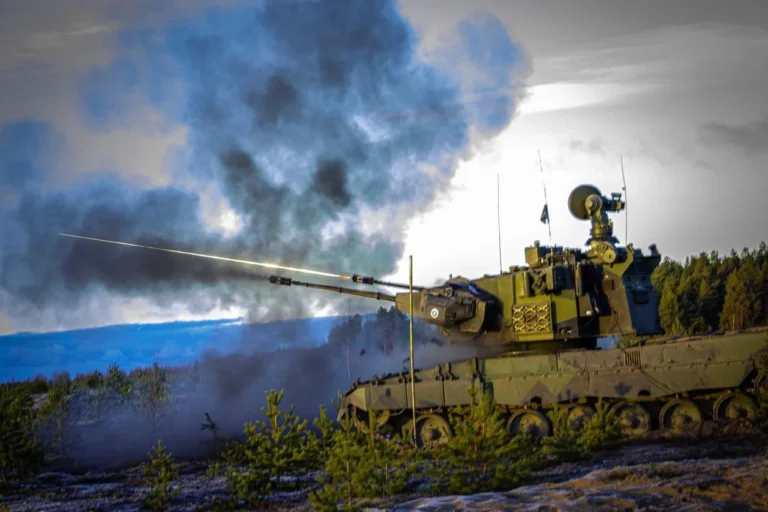
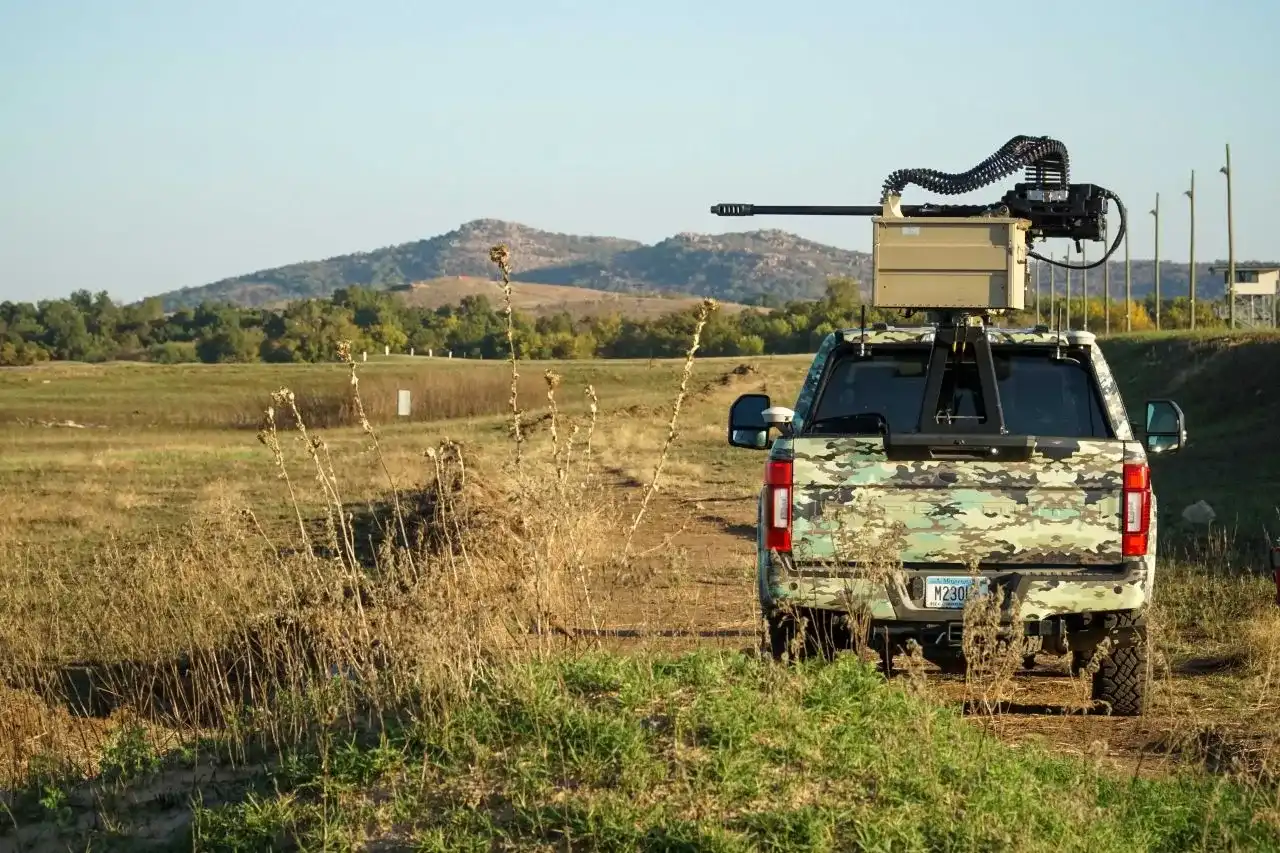
The AGT is the effector. It mounts a remote weapon station armed with the 30×113 mm M230LF Bushmaster chain gun, a link-fed ground derivative of the cannon carried by the AH-64 Apache. Against drones, the gun fires proximity-fuzed 30 mm rounds such as the XM1211, which burst near the target instead of requiring a direct hit. Publicly available information places the effective counter-UAS reach of that round at roughly 2 km. The “agnostic” label reflects the design intent: the weapon station is meant to integrate on different host vehicles and accept cueing from different sensors.
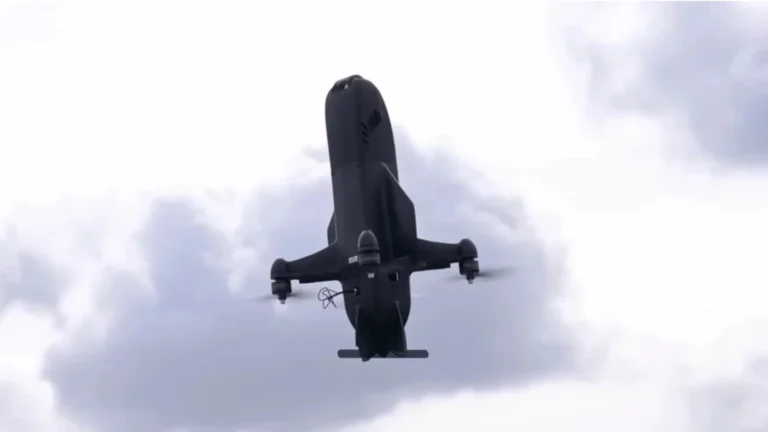
The test envelope was wide. Under U.S. military classification, Group 1 drones weigh less than 20 pounds, a category that covers commercial quadcopters and first-person-view (FPV) attack drones. Group 3 aircraft weigh up to 1,320 pounds and fly below 18,000 feet at speeds under 250 knots, a bracket that includes one-way attack munitions of the Shahed-136 class, which open-source data place at roughly 440 pounds. The Army has not released engagement ranges, hit rates or the number of targets destroyed.
From Ukraine Gun Trucks to Raid Hunter: Northrop’s Layered Path
The AGT is not new to combat. In April 2023, the Pentagon announced it would fund nine counter-UAS 30 mm gun trucks for Ukraine through the Ukraine Security Assistance Initiative (USAI), part of the response to Russian drone strikes on the Ukrainian power grid. Northrop Grumman has since said Ukrainian crews asked for more range, a request that reflects the core limitation of gun-based defenses: a fast Group 3 target spends only a short window inside a 30 mm round’s effective envelope.
Northrop’s answer at the upper end is Raid Hunter, the production name the company gave in August to its 50 mm Gun-Based Air Defense system. Raid Hunter pairs a Bushmaster chain gun with precision-guided, proximity-fuzed 50 mm ammunition and the company’s AiON command-and-control software, built to defeat drone swarms and cruise missiles. Company executives have cited engagement ranges of around 10 km for the guided round, roughly five times the reach attributed to the 30 mm proximity round.
“Our enduring mission is to develop the capabilities Soldiers need to fight, win, and survive on today’s battlefield and those of tomorrow,” said Capt. Matthew J. Killen, officer in charge of the assessment.
Analysis: The value of the Fort Sill event lies less in the AGT itself, a mature design with combat use, than in where the Army is evaluating it. Running M-ACE and AGT through the Fires Experimentation Division places a low-cost, pickup-based sensor-shooter pair alongside heavier assets such as the Stryker-based Maneuver Short-Range Air Defense (M-SHORAD) system and the Mobile-Low, Slow, Small UAS Integrated Defeat System (M-LIDS), which already uses a 30 mm XM914 chain gun. A light truck firing proximity rounds would give commanders a cheaper per-shot layer for base defense and rear-area protection, where firing interceptors that cost far more than the drone is unsustainable. The Group 3 portion of the test is the one to watch: it will show whether a 30 mm gun can defend a meaningful footprint, or whether that tier belongs to guided 50 mm rounds and missiles.
The Army has not published the assessment’s results, a timeline for a test report or any acquisition pathway linked to it. The next indicators are whether FED findings feed a formal requirement, whether upcoming Army budget submissions fund M-ACE or AGT quantities, and how Raid Hunter’s test campaign progresses.