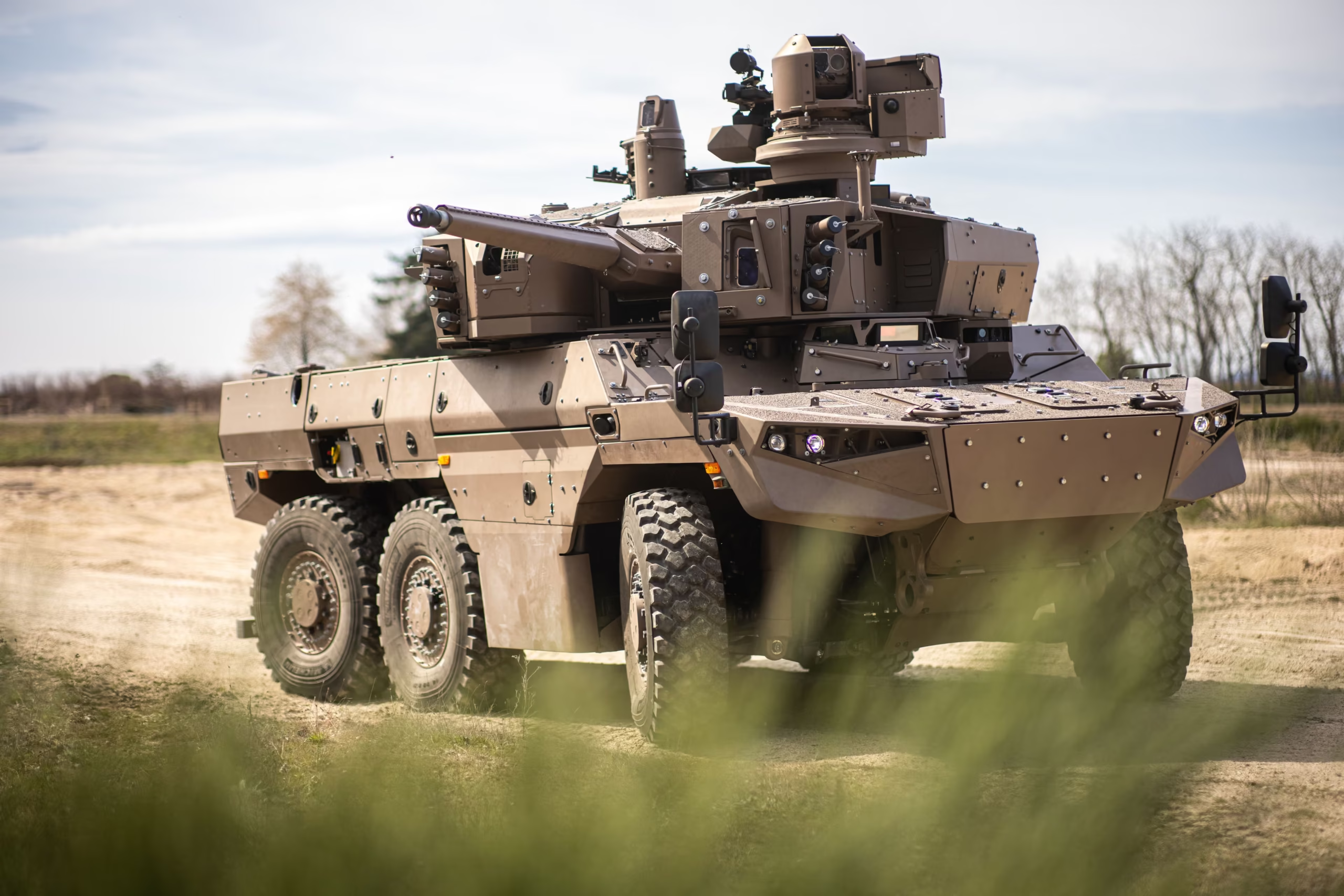
The French Army has taken delivery of its first EBRC Jaguar armored vehicles built to the R3 standard, the fully operational configuration of the reconnaissance and combat vehicle, with close to 25 examples delivered or retrofitted as of September 18, 2026, according to the French Ministry of the Armed Forces. The milestone completes the capability set planned for the Jaguar under the SCORPION land modernization program, adding full integration of the Akeron MP medium-range anti-tank missile to the platform’s 40 mm cannon and digital fire control.
The R3 delivery matters because it closes a phased fielding effort that began in 2022 and gives France’s medium cavalry a networked anti-armor capability it has lacked since the retirement of dedicated tank destroyers. France’s defense procurement agency, the Direction generale de l’armement (DGA), certified the standard “fit for service” on April 8, 2026, and the Army authorized operational use on July 20, 2026, clearing deliveries over the summer. The Jaguar replaces the AMX-10RC and ERC-90 Sagaie; France has ordered 300 vehicles for seven armored cavalry regiments, with a program cost of roughly 2 billion euros inside a SCORPION effort valued near 11 billion euros.
Jaguar R3 Firepower: T40 Turret, 40 mm CTA, and Akeron MP
The R3 standard brings the Jaguar’s offensive suite to full specification around the KNDS-designed T40 turret. The digitized, fully stabilized turret mounts a 40 mm Cased Telescoped Armament System developed by the Franco-British venture CTA International, firing at up to 200 rounds per minute with 65 rounds ready and roughly 180 carried, across an elevation arc of minus 10 to plus 45 degrees. The cannon can engage on the move against moving targets, a capability introduced at the R2 standard in 2024 and retained in R3.
The defining R3 addition is complete integration of the Akeron MP, MBDA’s medium-range guided missile. Publicly available specifications indicate a reach of up to 4 kilometers and penetration exceeding 1,000 millimeters of armor via a tandem warhead. The Jaguar carries four rounds, two ready to fire in an external pod and two stowed. Fielding a fire-and-forget, top-attack class missile on a wheeled reconnaissance vehicle gives crews a stand-off anti-tank option, letting them hold enemy armor at risk without closing into an unfavorable direct-fire engagement. A remote weapon station, the Arquus T3 Hornet S with a 7.62 mm machine gun, plus the GALIX self-protection system and its 14 smoke grenades, round out the loadout. That combination, rapid-fire cannon plus guided missile plus close defense, is what separates the Jaguar from the 105 mm-armed AMX-10RC it replaces.
From R2 Retrofit to a 300-Vehicle Fleet by 2035
Beneath the turret, the Jaguar is a 25-tonne, 6×6 platform assembled by KNDS at Roanne, powered by a militarized Volvo D11 six-cylinder turbodiesel rated at 500 horsepower (370 kilowatts) through a ZF seven-speed automatic transmission, with an operational range of 800 kilometers and a top speed of 90 kilometers per hour. Protection meets STANAG 4569 Level 4 with optional modular armor kits, and the three-person crew operates behind Thales-supplied vetronics tied into the SCORPION combat information system (SICS), the networking layer that lets Jaguars, Griffon troop carriers and command nodes share a common tactical picture.
Reaching R3 across the fleet is now the priority. Every Jaguar previously delivered at the earlier R1 and R2 standards is scheduled for retrofit to R3 by the end of 2027, meaning the first vehicles at units are the opening move in a fleet-wide transition rather than a small specialist batch. France plans deliveries through 2030 and a complete 300-vehicle fleet by 2035. The platform has also drawn export interest: Belgium and Luxembourg have selected the Jaguar under the Capacite Motorisee (CaMo) partnership, and KNDS says further campaigns are under way. Commonality on the 40 mm CTA cannon, also fielded on the British Army’s Ajax, gives France an interoperability and industrial argument with a key NATO partner.
Analysis: The R3 milestone is less about a single vehicle than about validating the SCORPION concept of a networked, sensor-and-shooter force. By pairing the Akeron MP’s 4-kilometer reach with SICS connectivity, France converts its wheeled cavalry from a direct-fire scouting arm into a distributed anti-armor screen able to detect, designate and strike at range, then pass targeting data across the formation. For NATO’s eastern flank, where French Jaguars already rotate through the Baltic, that pushes the medium-cavalry role toward attrition of armored spearheads from stand-off distance rather than close contact. The open question is industrial tempo: sustaining new-build deliveries while retrofitting the in-service fleet by 2027 is a demanding parallel effort for a supply chain still absorbing wartime demand.
The near-term markers are clear. The retrofit campaign must convert all R1 and R2 vehicles to R3 by the end of 2027, deliveries continue through 2026 and beyond toward the 300-vehicle target set for 2035, and export decisions from CaMo partners and prospective customers will test the production line’s headroom. How quickly the seven cavalry regiments reach a uniform R3 standard, and whether the Akeron MP inventory keeps pace with the fielded launchers, will determine when the French Army can count on the Jaguar’s full anti-armor capability across the force.