Tiberius Aerospace has closed an $85 million Series A co-led by Lakestar and Rochefort Asset Management, valuing the Sceptre ramjet artillery round developer above $1 billion post-money, the companies announced November 17, 2026. Lakestar is a Zurich-based technology investor and Rochefort a U.S. national security-focused investment firm, according to the joint announcement. Rochefort also provided a senior secured debt facility alongside its equity investment; the size of that facility was not disclosed.
The raise comes less than seven weeks after Tiberius announced, on October 1, 2026, a $500 million technology collaboration contract with UK technology partners to manufacture, license and distribute Sceptre. It also lands as Western ministries struggle to match Ukraine-driven artillery demand with domestic output. Tiberius pitches a two-part answer: more range from existing guns, and production licensed to allied factories.
How the Tiberius Aerospace Series A Will Fund Sceptre Production
New investors in the round include Dream Ventures and Aero X Ventures, alongside other institutional investors, with existing backers Blacklake, Moonshots Capital and UA1 also participating. Rochefort is licensed under the Office of Strategic Capital (OSC) of the U.S. Department of War and under the Small Business Administration (SBA). According to the company, the combined equity and debt will fund expansion of its manufacturing partner network, product certification, continued development and its AI-powered GRAIL platform.
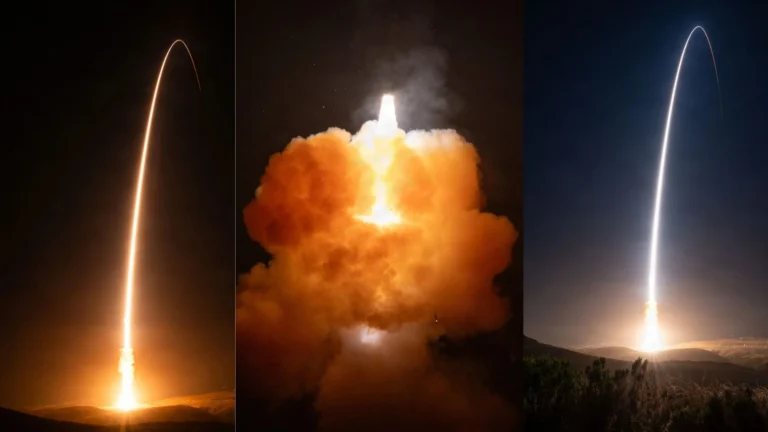
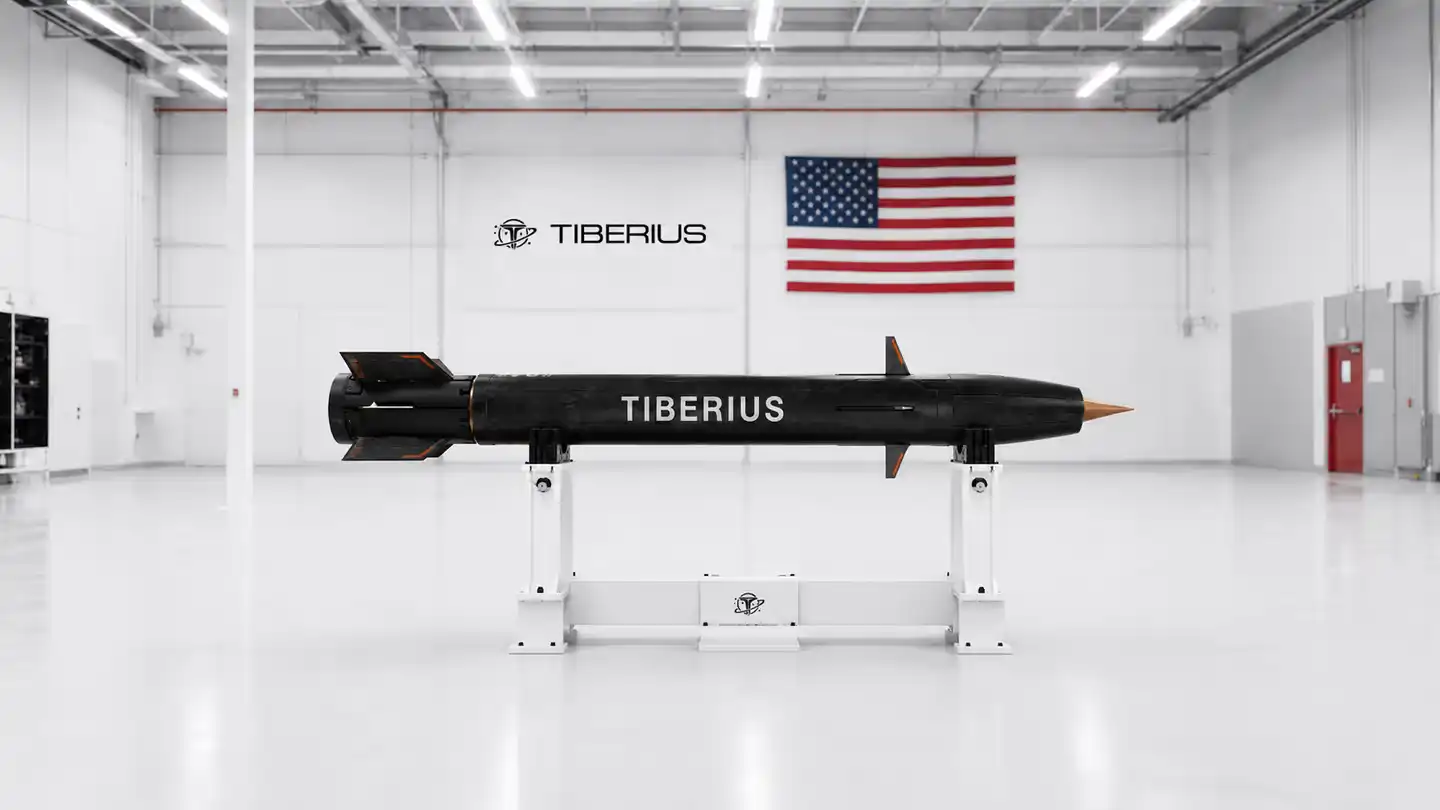
Sceptre, designated TRBM 155HG, is described by Tiberius as the only 155mm artillery round powered by a liquid-fueled ramjet. It is designed to be fired from existing NATO-standard guns. In April 2026, the company reported the first in-flight ramjet ignition of such a projectile fired from a NATO-standard 155mm howitzer. Rochefort co-founder Kyle Bass put the round’s reach at 140 km, while the company’s earlier published figure was 150 km. Publicly available specifications released at the program’s May 2025 unveiling indicate a top speed of about Mach 3.5, an apogee above 65,000 feet, a total mass of roughly 47.5 kg with a 5.2 kg warhead, and a length of 1,550 mm, too long for current automatic loaders, although Tiberius has said it is developing a version for autoloaded guns such as the Archer self-propelled howitzer.
The program remains in development. The UK Ministry of Defence became Sceptre’s first customer in 2025 under a trials and development contract, and the U.S. Defense Innovation Unit (DIU) supported independent verification and validation of testing. Tiberius has since signed a Cooperative Research and Development Agreement (CRADA) with the U.S. Army Combat Capabilities Development Command (DEVCOM) Armaments Center to mature the system.
Defense-as-a-Service Model Targets Sovereign Allied Production
Under its Defense-as-a-Service approach, Tiberius uses private capital to develop, test and validate systems before licensing them to allied governments, rather than asking a single state to fund development upfront. Research and development is separated from manufacturing: designs are licensed for in-country production by vetted suppliers in partner nations, while Tiberius retains the intellectual property.
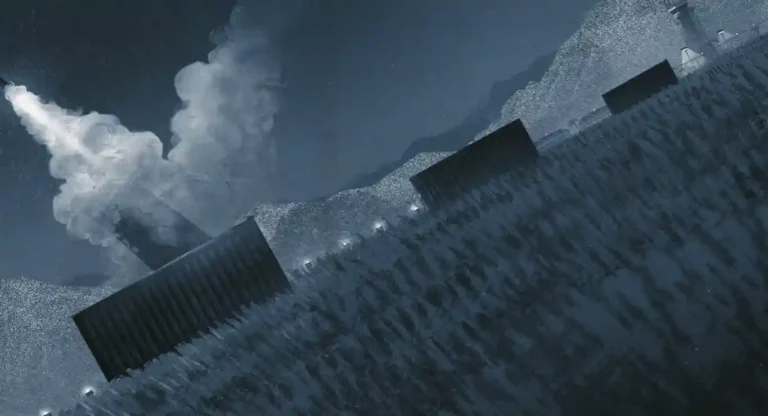
Partner nations build against a common engineering baseline, and development continues after fielding, so validated improvements are shared across participating allies instead of each country paying separately for the same upgrade. GRAIL, the company’s AI-powered platform, links requirements, engineering, suppliers, compliance and manufacturing in a single governed environment. Sceptre is the first system built on this model. Tiberius is applying the same approach to Invictus, a long-range precision missile in development for speeds above Mach 3 and ranges of up to 200 km.
Analysis: Investors are valuing a business model as much as a munition. If Sceptre’s range holds up in qualification, a towed 155mm battery could hold targets at distances usually covered by rocket artillery, without new launchers or logistics chains. The licensing structure also fits European demands for sovereign production better than a classic export sale. The constraints are real: certifying a new propulsion system inside a gun-launched round is slow, the current round’s length rules out automatic loading on self-propelled howitzers until an autoloader-compatible version is ready, and a common baseline across several national supply chains will test the configuration control GRAIL is meant to provide.
The next markers are product certification, the identity of the UK manufacturing partners under the October contract, and whether the DEVCOM CRADA leads to a formal U.S. Army procurement path. Tiberius has not disclosed a unit cost, a production rate target, a fielding date for Sceptre or a test schedule for Invictus.