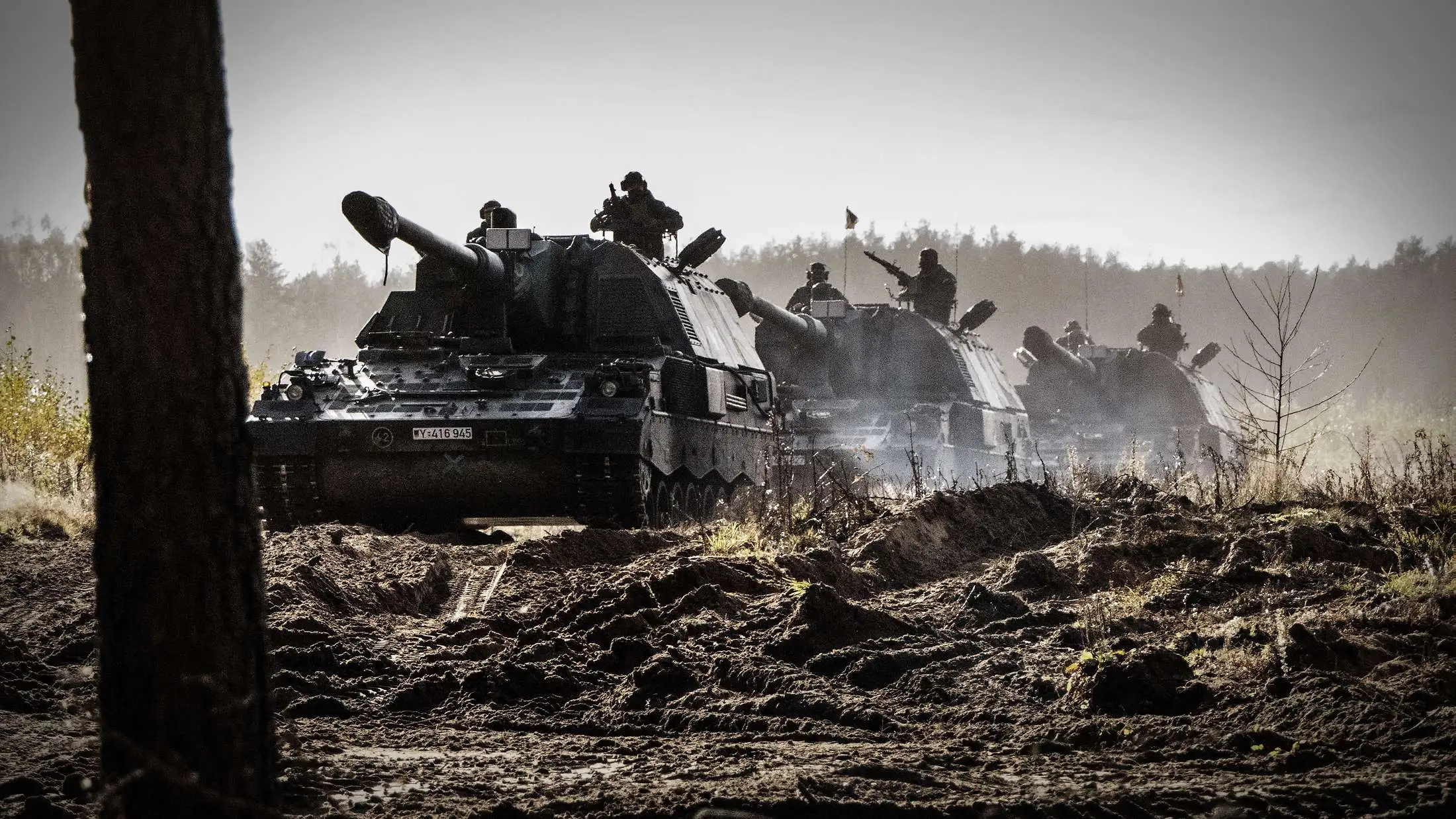
Germany’s Bundeswehr exceeded its legally mandated 2026 personnel growth corridor of 186,000 to 190,000 active soldiers for the first time in early October, when the month’s recruit intake, the largest of the year, lifted active strength above 190,000, the Federal Ministry of Defense said on October 21, 2026. The ministry expects the force to finish the year at the top of the corridor or above it.
The corridor is a statutory benchmark introduced by the Military Service Modernization Act, which the Bundestag passed on December 5, 2025, and which took effect on January 1, 2026. The law sets annual personnel corridors on the way to a 2035 target band of 255,000 to 270,000 active soldiers, alongside a reserve of at least 200,000, a force size Berlin ties to the additional capabilities it has committed to NATO. Service remains voluntary, but men born in 2008 or later must complete a registration questionnaire, and the Bundestag can activate needs-based conscription if volunteer numbers fall short.
Bundeswehr Personnel Figures Behind the 190,000 Threshold
The ministry’s last formal monthly count, dated September 30, 2026, put active strength at about 186,200 soldiers. That is 2.5 percent, or roughly 4,500 personnel, above September 2025, but about 200 fewer than at the end of August, which kept the force inside the corridor at the close of the third quarter. The ministry has not published an exact figure for the October peak beyond stating that it exceeded 190,000.
The year-on-year gain breaks down unevenly. About 3,800 of the additional soldiers are fixed-term soldiers (Soldaten auf Zeit) and career soldiers, while about 700 come from the New Military Service relative to last year’s voluntary military service (FWDL) cohort. Around 10,800 voluntary service members and short-term fixed-term soldiers currently serve under the New Military Service framework, about 7 percent more than the comparable FWDL population of up to 23 months a year earlier.
Recruitment indicators are running well ahead of 2025. By the end of September, the Bundeswehr had recorded more than 95,500 initial career consultations. Applications for military careers reached about 58,700, up roughly 29 percent on September 2025, and new hires reached about 18,700, up 15 percent. The ministry also points to its web series Generation Wehrdienst, which follows recruits through homeland defense training and has logged more than 120 million views across platforms since July 2026; its third and final season launched on October 21.
New Military Service Questionnaire Returns, Assessments, and Fines
As of September 30, 2026, the Bundeswehr had mailed about 492,800 military registration questionnaires: roughly 253,000 to men, for whom a response is mandatory, and about 239,800 to women and persons of other genders, for whom it is voluntary. About 96 percent of the men answered within the deadline, including the grace period.
From October, the ministry is opening administrative offense proceedings against men who failed to respond after a reminder letter and a subsequent grace period. Fines can reach 250 euros, and payment does not release the recipient from the obligation to complete the questionnaire.
The conversion funnel remains narrow. By the end of September, about 4,450 respondents who expressed interest had completed an assessment, and 1,530 applicants had been scheduled for service across all career tracks: almost 1,150 for 2026 and the remainder for 2027. The ministry describes this questionnaire-driven intake as an add-on to its conventional recruitment effort rather than its main source of applications and hires.
Analysis: The figures show that Bundeswehr growth is still carried by long-term contracts rather than the new service model. More than four-fifths of the 4,500-soldier annual increase came from fixed-term and career soldiers, while the questionnaire pipeline has so far yielded 1,530 placements from nearly half a million letters. The pace also matters: moving from about 186,200 soldiers today to the 260,000 target inside the 2035 corridor implies average net growth of roughly 8,000 soldiers per year, close to twice the current annual gain. Crossing 190,000 in a peak intake month clears the 2026 benchmark, but it does not yet demonstrate that voluntary recruitment alone can sustain the trajectory Berlin has committed to NATO.
The next markers are the October and year-end strength figures, which will show whether the post-intake level holds against attrition, and the ministry’s six-monthly personnel report to the Bundestag. Proceedings against non-respondents begin this month. From mid-2027, compulsory medical screening of entire male birth cohorts is set to start, widening the pool the Bundeswehr can draw on. If volunteer numbers fall behind the annual corridors, the government can ask the Bundestag to activate needs-based conscription.