NATO launched its Counter-Unmanned Aircraft Systems (C-UAS) marketplace on November 5, 2026, allowing Allies to buy 16 pre-selected counter-drone solutions directly from a NATO catalog without running their own tender. The NATO Communications and Information Agency (NCIA) competed and selected the systems from five companies: Alta Ares, Axon Enterprise Inc., Northrop Grumman, OSL UK and Quantum Systems, under multi-award framework contracts valid for 18 months.
The marketplace is the first concrete procurement tool delivered under Drone Edge, the initiative NATO Secretary General Mark Rutte unveiled at the NATO Summit Defence Industry Forum in Ankara, Türkiye, on July 7, 2026. There, Allies committed to invest more than $40 billion in counter-drone capabilities over five years and to train five times as many drone operators by the end of 2027. That $40 billion is aggregated national spending, not a central NATO budget, so the speed of the buying channel matters as much as the headline figure.
How the NATO Counter-Drone Marketplace Bypasses National Tenders
The marketplace is built for urgent operational requirements. Once a solution is listed, an Ally can procure it directly from the catalog, skipping a national competition that can take months or longer. NCIA, which hosts the NATO Counter-UAS Centre of Expertise, manages the framework contracts and selected the 16 solutions based on experience gained through NATO activities, national innovation programs and exercises. NATO’s 2024 Counter-UAS Technical Interoperability Exercise alone tested more than 60 systems and technologies, including sensors, jammers and effectors.
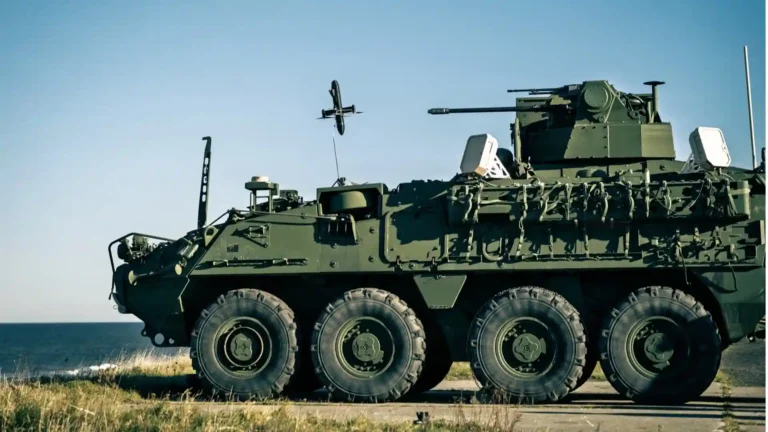
Every selected capability has already been deployed in Allied countries and in Ukraine. The package mixes static, transportable and on-the-move configurations. NCIA framework requirements specified that on-the-move systems must integrate on tactical vehicles and operate while moving, while static systems must deliver continuous detection, tracking and identification with permanent power, networking and secured communications.
NATO also allocated €3.1 million to fund further testing of the selected solutions by nations or NATO commands. The alliance intends to run regular competitions to refresh the catalog as drone threats evolve.
Five Vendors, 16 Systems: Inside the NCIA C-UAS Catalog
NATO has not disclosed which specific products from each company made the list, a gap national planners will need closed before matching systems to requirements. The vendor mix, based on publicly available information, spans software, sensors, command-and-control (C2) and kinetic interceptors:
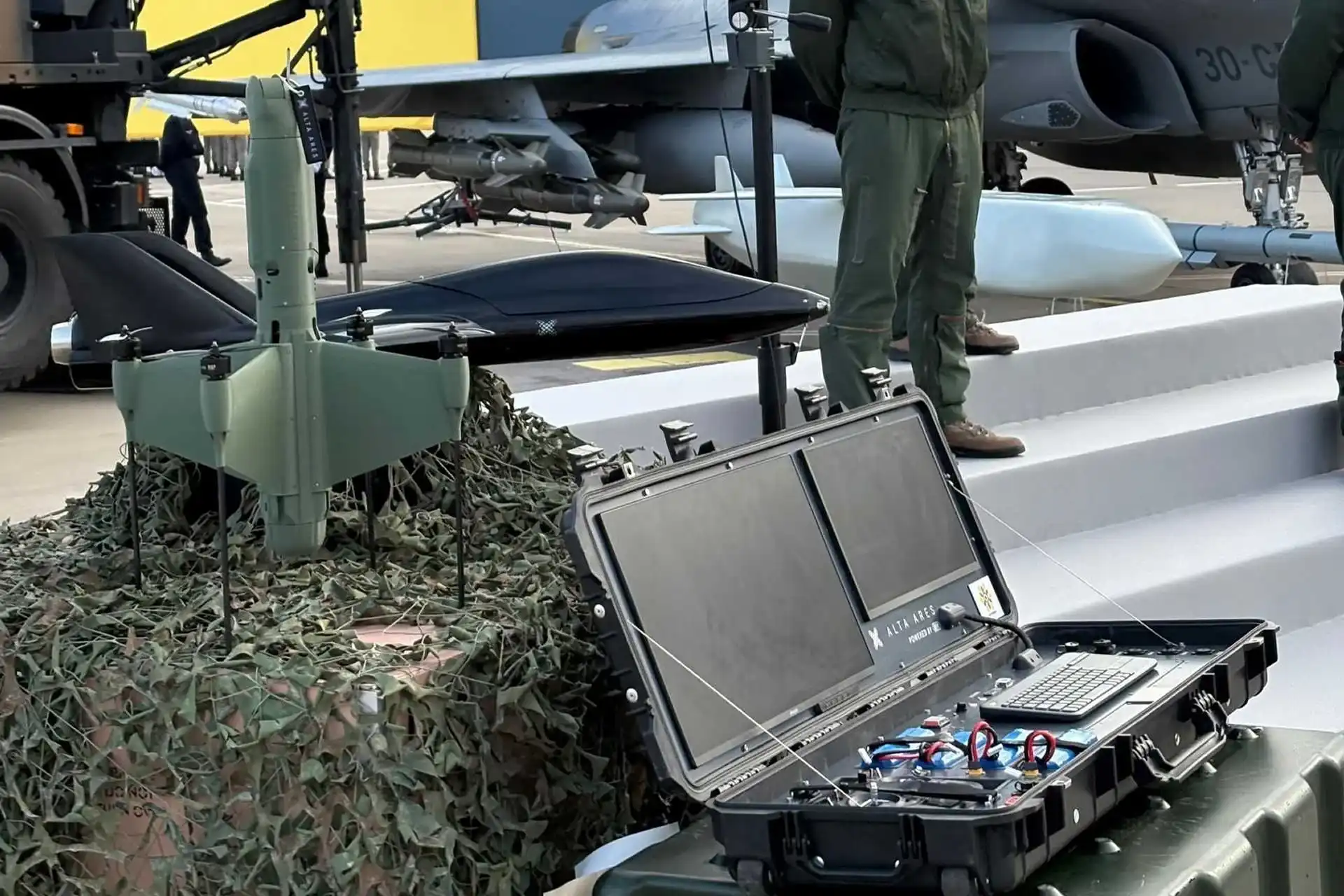
- Alta Ares: a French company founded in 2024 from frontline work in Ukraine. It builds AI-guided X-Lock and Black Bird interceptors, and its chief executive said in April 2026 that the company’s interceptors had shot down Russian drones, including Shaheds, in Ukraine. It raised a €50 million Series A in June 2026.
- Axon Enterprise: the US firm that acquired Dedrone in 2024, adding radio-frequency detection and airspace security software to its portfolio.
- Northrop Grumman: developer of the Forward Area Air Defense Command and Control (FAAD C2) system, the US Army’s counter-UAS C2 backbone.
- OSL UK: the Reading-based integrator behind the counter-drone architecture at London Heathrow, acquired by Denmark’s Terma in November 2025.
- Quantum Systems: the German uncrewed aircraft maker best known for the Vector reconnaissance drone, which announced a $1.2 billion Series D round in July 2026.
Analysis: The marketplace removes contracting friction, but it does not by itself solve integration. NATO now runs two parallel C-UAS frameworks: in July, the NATO Support and Procurement Agency (NSPA) set up five framework contracts for tactical and deployable systems with Axon, BSS, DEFSECINTEL, JISR and CS Group France, built around a common C2 architecture. Axon is the only supplier on both lists. Unless NCIA and NSPA converge on shared C2 and data standards, Allies could field systems faster while still fragmenting the air picture. The €3.1 million testing pot, small against a $40 billion commitment, also signals that the marketplace remains a validation mechanism rather than a funding source.
The next indicators are the first national call-off orders, publication of the full product list and the date of the next competition. If the 18-month clock started at launch, the current contracts lapse around May 2028, giving NATO roughly one refresh cycle to show the catalog keeps pace with threats observed in Ukraine.