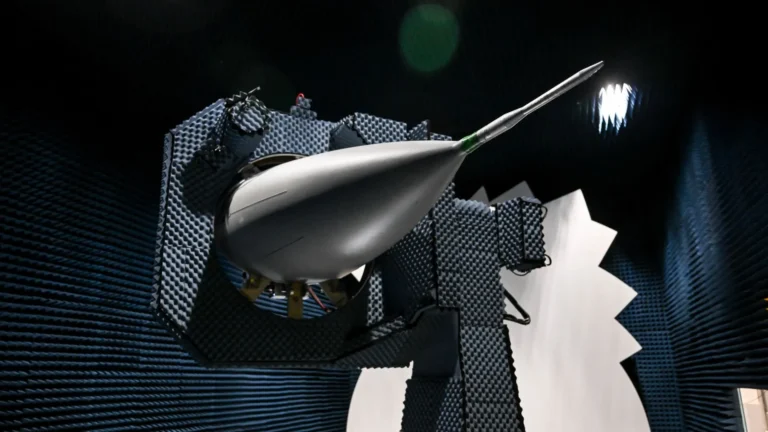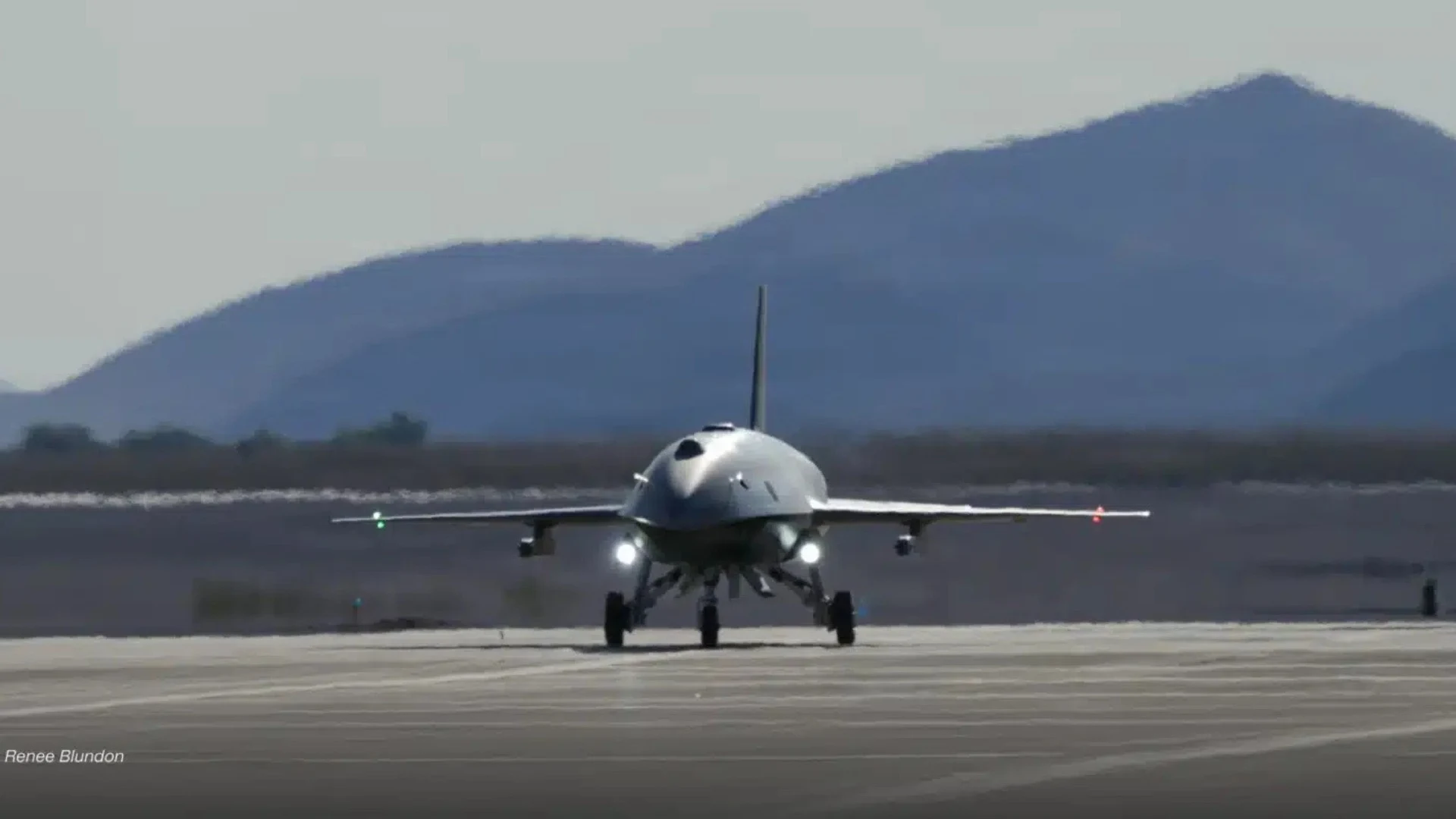
Shield AI’s Hivemind mission autonomy software flew multiple U.S. Air Force Collaborative Combat Aircraft (CCA) in a multi-ship formation and through tactical beyond-visual-range (BVR) air combat maneuvers on October 26, 2026, the company announced on November 9. The flight came 18 days after Hivemind executed directives from an airborne F-22 Raptor pilot aboard a pre-production YFQ-44A Fury.
The disclosure arrives as the Air Force CCA program nears a decision on who will supply the software for its first uncrewed fighters. Anduril, RTX subsidiary Collins Aerospace, and Shield AI are competing to become primary mission autonomy provider for Increment 1, with selection planned by summer 2027. The service ordered the Anduril FQ-44A and General Atomics FQ-42A into production on June 17, 2026, and plans more than 150 aircraft by the end of the decade and at least 500 by 2032.
Air Force CCA Flights Move From Single Wingman to Multi-Ship Team
During the October 8 sortie, one Raptor acted as an airborne quarterback for one YFQ-44A. The Air Force disclosed the demonstration on October 16 and said onboard autonomy software converted high-level tactical directives into dynamic maneuvers and simulated combat tasks in real time. The service did not name that software; Shield AI’s release identifies it as Hivemind. Anduril said both aircraft launched from Edwards Air Force Base, California, joined up in flight, and that the pilot sent an updated mission plan over a tactical data link. Neither the Air Force nor Anduril described the F-22’s test configuration.
The pilot assigned intent rather than flying the aircraft remotely, the model the Air Force needs if one fighter is to manage several wingmen. An F-22 pilot had already controlled a General Atomics MQ-20 Avenger surrogate from a cockpit tablet in October 2025, but Anduril told The War Zone the October event was the first to pair a Raptor with a pre-production Fury.
The October 26 flight went beyond one aircraft. Shield AI said the participants executed collaborative tactics rather than simply sharing airspace, and that the software runs on each aircraft, which points to distributed execution rather than control from a single node. The release leaves key test parameters unstated: the number and type of aircraft, the range used, whether a crewed fighter or ground operator supervised the formation, and whether the BVR scenario involved live or simulated adversaries. No separate Air Force account of the flight had surfaced at publication.
Fury Airframe and Weapons Set the Limits for BVR Teaming
Publicly available estimates describe the YFQ-44A as a single-engine aircraft powered by a Williams FJ44-4M turbofan, with a top speed near Mach 0.95, a service ceiling of 50,000 feet, and external carriage for two AIM-120 Advanced Medium-Range Air-to-Air Missiles (AMRAAM). The Air Force and Anduril have not released full production specifications, though the production FQ-44 is set to have four external hardpoints capable of carrying four AIM-120s, at a cost in range with a full missile load. Reported Increment 1 requirements call for a combat radius of at least 700 nautical miles.
Those figures explain why team behavior matters more than any individual aircraft. A transonic platform with two to four missiles cannot rely on speed or magazine depth in a BVR fight, so its value depends on how a formation divides sensor coverage, geometry, and weapons across airframes. Todd Wesley, Shield AI’s vice president of Hivemind engineering, said the flights advanced integration of the sensors, data links, and interfaces that mission autonomy depends on. The company did not identify the sensors or links used.
Weapons work is running in parallel. The Air Force announced in July 2026 that a Fury had fired its first live AIM-120, and the type has flown in formation with F-35s, though those fighters did not command it in flight. Shield AI’s release does not mention weapons employment on October 26. Hivemind flew formation profiles on smaller Firejet drones in tests reported in January 2025, but Shield AI describes the October flight as a first for the CCA program. Abroad, Türkiye’s Kizilelma and Australia’s MQ-28 Ghost Bat have completed air-to-air intercepts and elements of formation flight.
A-GRA Keeps the Contest for CCA Mission Autonomy Open
Shield AI ties both flights to the government-owned Autonomy Government Reference Architecture (A-GRA), which uses standardized interfaces to separate mission software from aircraft-specific functions. The Air Force has said the approach prevents vendor lock. Anduril disclosed in February 2026 that a YFQ-44A flew both Hivemind and Anduril’s Lattice on a single sortie, while Collins integrated its Sidekick software on the YFQ-42A through the same standard.
The acquisition model turns that modularity into competitive pressure. Six companies hold mission autonomy production contracts: Anduril, General Atomics, Lockheed Martin, Northrop Grumman, Collins, and Shield AI. Only Anduril, Collins, and Shield AI hold options for the two six-month competitive phases, with a cut to one or two vendors planned after the first. The Air Force also plans a large fly-off at the three-year point and ties payment to operator feedback and combat performance through an award fee.
Shield AI’s case rests on software reuse. The company says Hivemind is integrated on more than 40 uncrewed systems across air, land, sea, and space, and that lessons from one aircraft can transfer to others, subject to data handling limits. Wesley said the release process is nearing the point where the Air Force can “fly a sortie, update the software overnight and fly again the next day.” No performance data accompanied the release.
Analysis: The October 26 flight moves CCA autonomy from executing commands toward the team-level behavior on which the program’s combat mass argument depends. Its evidentiary weight remains limited until the Air Force publishes its own assessment, and coordinated maneuver is a lower bar than a kill chain under jamming with degraded data links. The disclosure also lands near the end of the first competitive phase, making it both a test result and positioning against Collins and Anduril.
The next public marker is Exercise Emerald Flag in December, the first large-force employment for these aircraft. The first autonomy downselect should follow around the turn of the year, based on the June award date. How many CCAs one F-22 pilot can manage, and through what cockpit interface, remains unknown.