Rocket Lab Corporation booked eight Neutron launch contracts worth more than $515 million in the third quarter of 2026, the company announced November 9, 2026, lifting the backlog of its unflown medium-lift rocket to 16 missions and raising its base launch price to $70 million from $55 million. The customers span five operators: European synthetic aperture radar (SAR) specialist ICEYE, U.S. satellite builder Muon Space, orbital data center startup Starcloud, Canadian optical data relay operator Kepler Communications, and the U.S. Space Force.
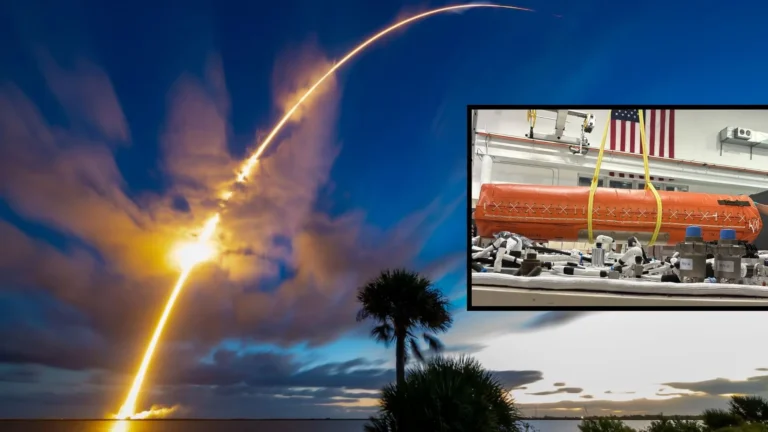
The bookings arrive less than a month after Rocket Lab pushed Neutron’s inaugural flight from the fourth quarter of 2026 into 2027, following the discovery of voids between carbon fiber layers in the forward dome of the first-stage propellant tank. Neutron was unveiled in 2021 with a 2024 debut target, and its schedule has slipped several times since. Rocket Lab now says the next open launch slots fall in the 2030s, a measure of how tight Western medium-lift capacity has become.
Rocket Lab Neutron Manifest Grows With ICEYE, Muon Space and Starcloud
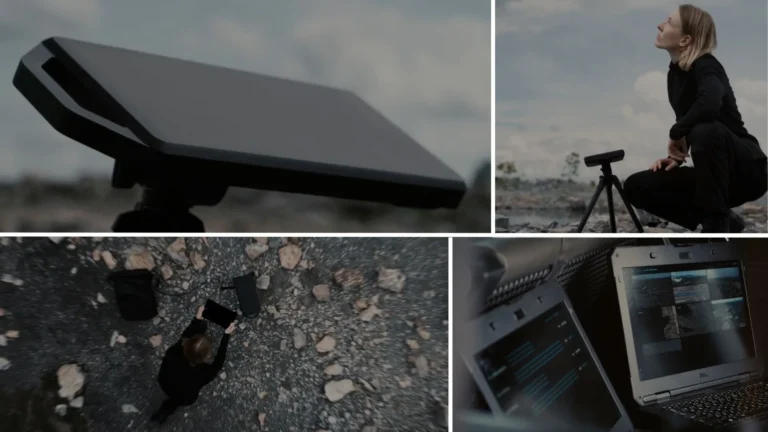
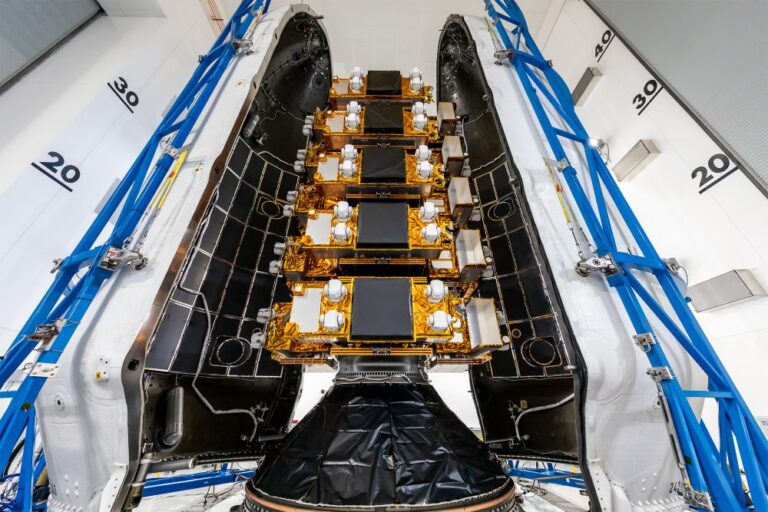
ICEYE signed the largest block of the quarter: three dedicated Neutron launches beginning in late 2028. ICEYE operates one of the largest commercial SAR constellations in orbit and serves government and defense users, which makes assured launch access a security concern as much as a commercial one. Muon Space contracted two dedicated missions, one in 2029 and one in 2030, while Starcloud, which plans to design, build, and deploy data centers in orbit, booked a single dedicated flight in 2029.
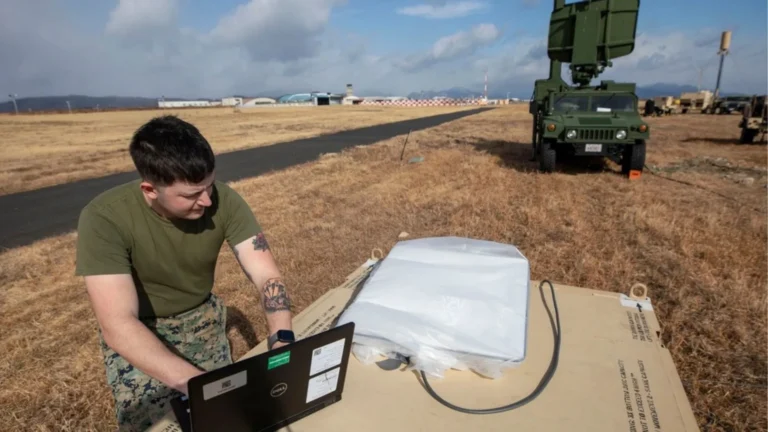
These deals add to two Q3 contracts announced earlier. Kepler Communications, which deployed its first 33 satellites on rideshare missions, booked its first dedicated launch, targeting no earlier than 2028 from Launch Complex 3 on Wallops Island, Virginia. The U.S. Space Force booked one dedicated launch under the Space-Based Airborne Moving Target Indicator (SB-AMTI) program. Across eight missions, the $515 million total implies an average above $64 million per launch, consistent with a mix of earlier pricing and the new $70 million base rate.
The company framed the price increase as a response to demand. Founder and CEO Sir Peter Beck said strong international demand and a growing manifest at a new price point “is proof that Neutron is the launch vehicle the market has been waiting for.” Chief Financial Officer Adam Spice told analysts the company chose higher pricing and lower volume on some bookings rather than discounting.
Neutron Architecture: Nine Archimedes Engines and a Captive Fairing
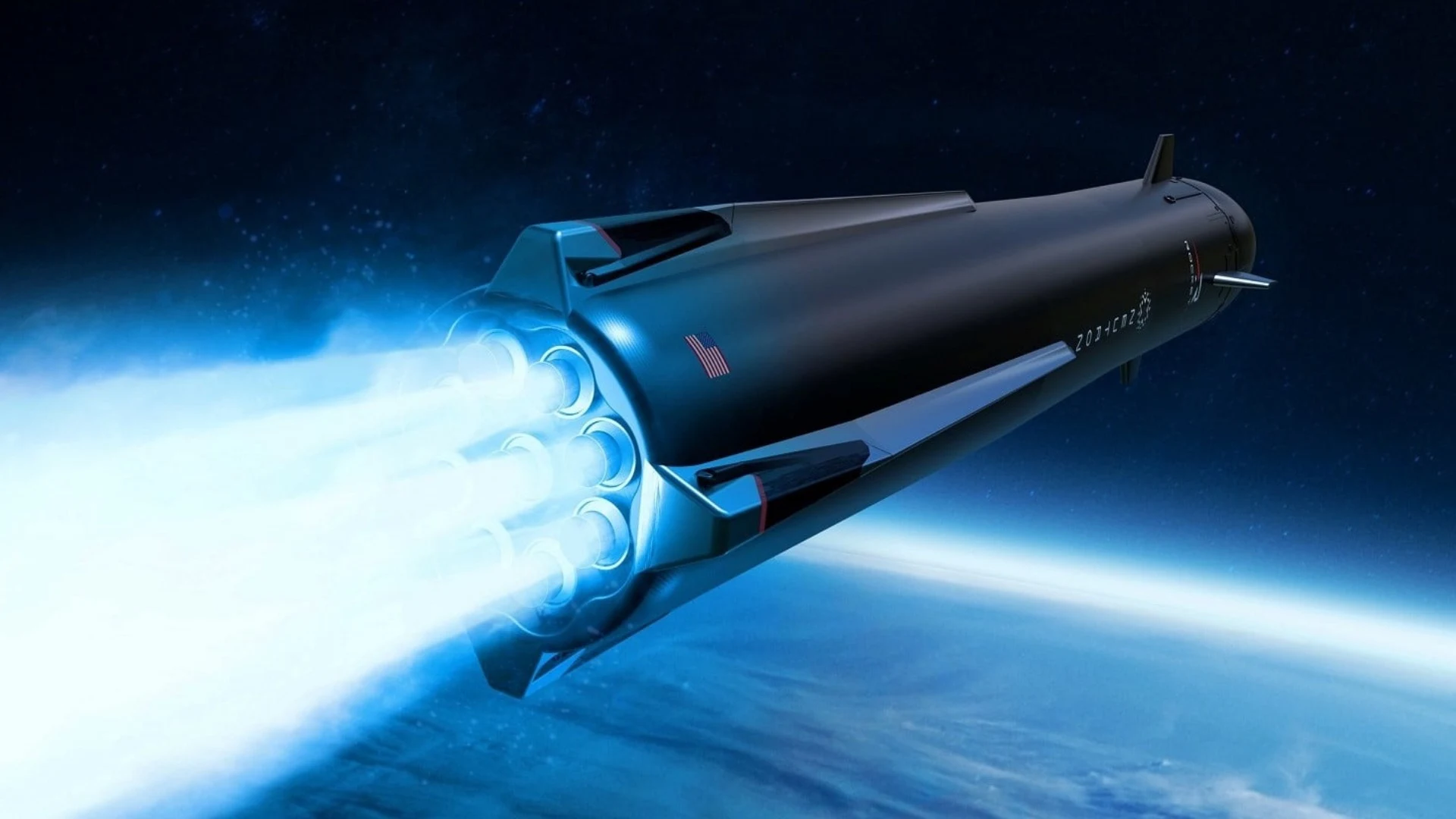
Neutron is a two-stage, partially reusable launch vehicle built around carbon composite primary structures. Publicly available specifications indicate a vehicle roughly 43 meters tall with a 7-meter base diameter. Nine Archimedes engines burning liquid oxygen and liquid methane power the first stage, and a single vacuum-optimized Archimedes drives the expendable second stage. Rocket Lab designed Archimedes for reuse, with the first stage intended to land propulsively.
Performance depends on recovery mode. Rocket Lab lists up to 13,000 kg to low Earth orbit with a downrange landing; publicly available figures put capacity at about 8,500 kg with a return to the launch site and about 15,000 kg in expendable configuration. That places Neutron below SpaceX’s Falcon 9 in raw lift but squarely in the mass class its Q3 constellation customers need.
The vehicle’s defining feature is its integrated “Hungry Hippo” fairing. Instead of jettisoning fairing halves for sea recovery, the fairing stays attached to the first stage, opens to release the second stage and payload, then closes for reentry and landing. Rocket Lab argues the captive design cuts refurbishment time and recovery assets, the two variables that govern reusable launch cadence. That thesis remains unproven until the vehicle flies repeatedly.
SB-AMTI and NSSL Lane 1 Raise the Defense Stakes for Neutron
The Space Force mission ties Neutron directly to one of the Pentagon’s priority sensing architectures. In August 2026, Rocket Lab received a $397 million firm-fixed-price award under SB-AMTI to build, launch, and operate multiple Flatellite spacecraft, with launch on Neutron and an option for additional satellites. SB-AMTI aims to track moving airborne targets from orbit, reducing reliance on crewed airborne radar platforms that face rising risk from anti-access/area-denial (A2/AD) systems. Space Systems Command has described Rocket Lab’s role as a way to add technical approaches and reduce dependence on a single supplier.
Neutron is also on-ramped to the National Security Space Launch (NSSL) Phase 3 Lane 1 contract, a multiple-award indefinite-delivery/indefinite-quantity vehicle with a $5.6 billion ceiling and an ordering period running to June 2029. Rocket Lab becomes eligible to compete for Lane 1 task orders only after a successful first flight, so each slip shortens the window to win missions before the ordering period closes.
Analysis: A $15 million price increase on an unflown rocket says less about Neutron’s maturity than about the structure of the medium-lift market. Operators that want dedicated rides on a reusable American vehicle outside SpaceX have few near-term alternatives, and companies such as ICEYE and Kepler are paying to lock in schedule control years in advance. For the Pentagon, Neutron’s value lies in vendor diversity for proliferated low Earth orbit architectures. The risk is concentration: a growing share of Rocket Lab’s defense commitments, including the fixed-price SB-AMTI work, now rests on a vehicle that has yet to complete first-stage qualification. A manifest filled into the 2030s also means Neutron will offer little surge capacity for responsive government missions unless production rates climb.
The next milestone is testing of the replacement forward dome, which Rocket Lab has said should be completed in the first quarter of 2027 before a new launch date is set. Beck has declined to name a target quarter or month. Customer missions begin with Kepler and ICEYE no earlier than 2028, followed by Muon Space and Starcloud in 2029. Per-customer contract values, the SB-AMTI launch date, and the share of the 16 booked missions carrying national security payloads remain undisclosed.