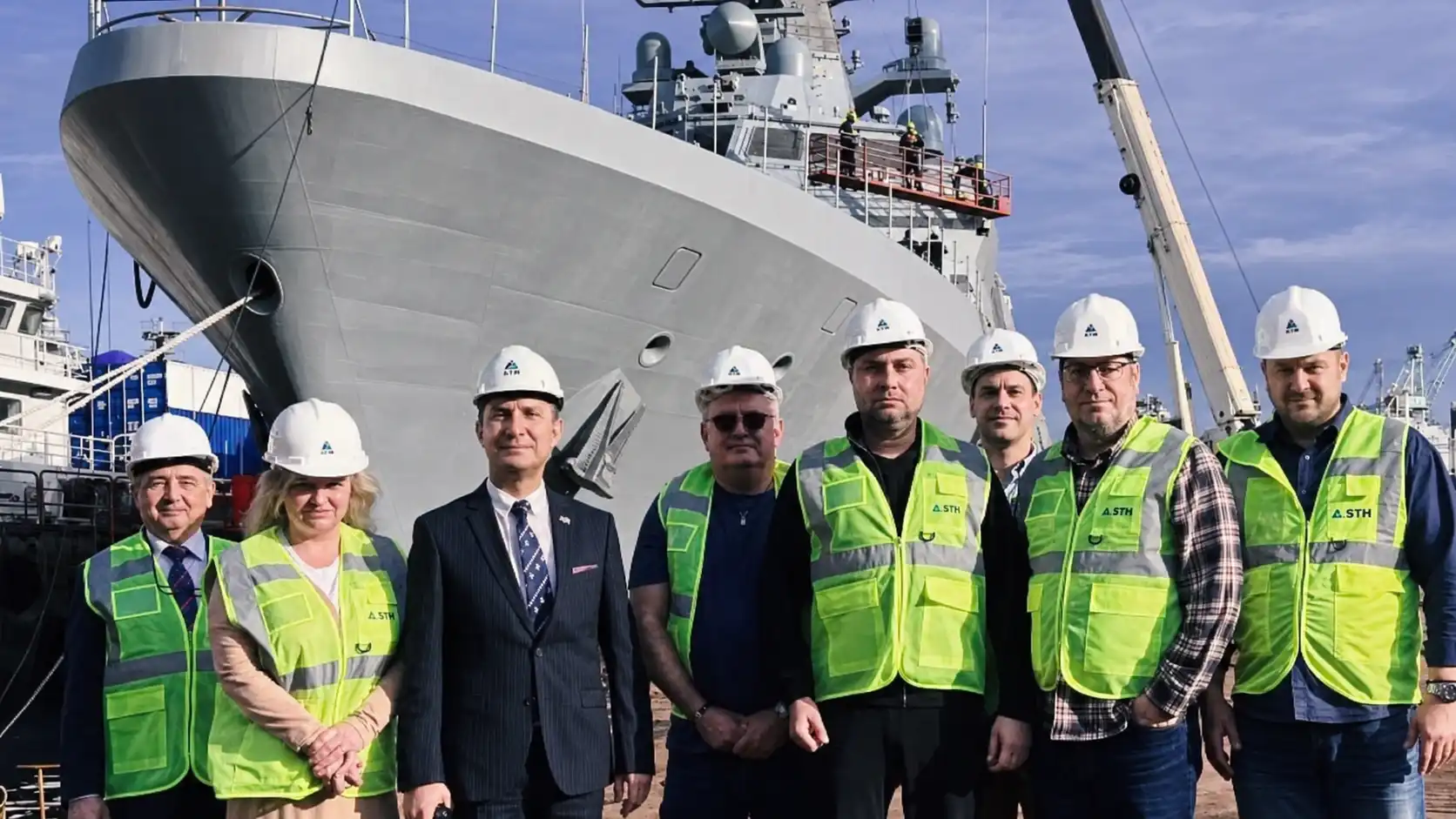
Ukraine’s second Ada-class corvette, Hetman Ivan Vyhovskyi, is in the last phase of construction in Istanbul and getting ready for its first trip to sea, Kyrylo Budanov, head of the Office of the President of Ukraine, said on November 12, 2026, following a visit to the yard where Turkish defense firm STM is building the ship for the Ukrainian Navy.
“The work is in its final stages,” Budanov posted on X. During the visit he met the ship’s commanding officer, Captain 2nd Rank Yurii Pyshchyk (equivalent to a U.S. Navy commander), and said the crew was “ready for action.” The sequence he set out next, a first trip to sea, then trials, then handover, shows the corvette has yet to make its first sortie. When the hull was launched on August 1, 2024, STM chief executive Özgür Güleryüz set 2026 as the target for its first voyage and the first quarter of 2027 for delivery to Ukraine. That leaves the builder about seven weeks to keep the 2026 date.
Hetman Ivan Vyhovskyi Build Timeline and Contract Structure
STM signed the Ukrainian Corvette Project contract with Ukraine’s Ministry of Defense on December 17, 2020. The deal covers two Turkish-built ships and a technology transfer package, and STM presents it as Türkiye’s first corvette export to Europe. Ukrainian officials have also discussed building two further hulls in Ukraine, though no construction contract for those ships has been made public.
Construction of Hetman Ivan Vyhovskyi started in October 2022, the month the lead ship, Hetman Ivan Mazepa (F211), was launched. The second hull’s keel was laid on August 18, 2023, and First Lady Olena Zelenska launched it on August 1, 2024.
The lead ship sets the pattern: Hetman Ivan Mazepa started sea trials in May 2024 in the Sea of Marmara and remains in Türkiye more than two years later. The first sortie of Hetman Ivan Vyhovskyi will open a similar cycle of builder’s and acceptance trials before handover. Budanov’s meeting with Pyshchyk indicates the second ship’s crew is already embedded at the yard, which should ease the transfer from builder to navy.
Ada-Class Design, CODAG Propulsion, and Ukraine’s Reported Weapons Fit
The Ada class, first product of Türkiye’s MILGEM national warship program, was designed primarily for anti-submarine warfare and coastal patrol. Publicly available specifications indicate a displacement of about 2,400 tonnes, a length of 99.56 meters, a beam of 14.4 meters, and a draft of 3.9 meters. Propulsion is a combined diesel and gas (CODAG) arrangement pairing one General Electric LM2500 gas turbine with two diesel engines through a RENK cross-connect gearbox, delivering roughly 31.6 megawatts to two shafts. That plant yields a top speed of about 30 knots and a range of 3,500 nautical miles at 15 knots, with 10 days of autonomous endurance. The Turkish baseline crew is 93, with berths for up to 106.
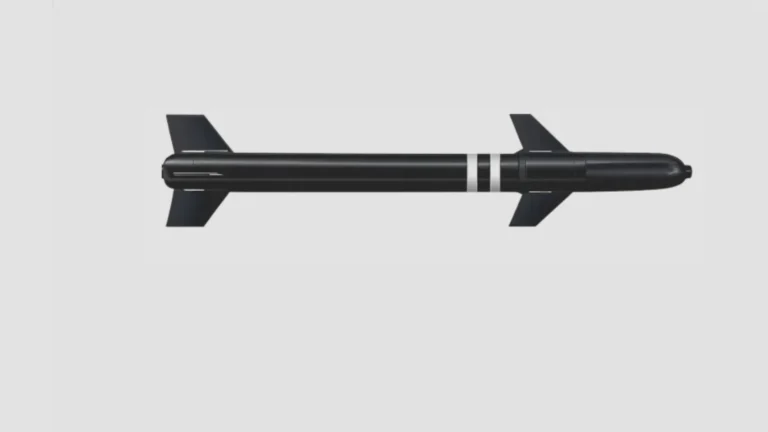
Ukraine’s ships diverge from the four Turkish Navy units in combat fit. Reported configurations for the lead ship list eight RGM-84 Harpoon anti-ship missiles, MBDA VL MICA vertically launched air defense missiles in place of the Turkish RAM launcher, a 76 mm Leonardo Super Rapid gun, a 35 mm close-in weapon system, Aselsan STAMP 12.7 mm remote weapon stations, and 324 mm tubes for MU90 Impact lightweight torpedoes. A hangar and flight deck support one medium helicopter. Neither STM nor Kyiv has published an official weapons list for Hetman Ivan Vyhovskyi; it is expected to mirror its sister.
With a published reach of about 20 kilometers, VL MICA extends the air defense envelope beyond the shorter-range RAM, a relevant margin against the drones and cruise missiles that have shaped Black Sea combat since 2022.
Analysis: The binding constraint on these corvettes is legal, not industrial. Since February 2022, Türkiye has barred warships of belligerent states from the Bosphorus and Dardanelles under the 1936 Montreux Convention, a position Ankara applied in January 2024 to two Royal Navy minehunters earmarked for Ukraine. Until the war ends or that interpretation shifts, Hetman Ivan Vyhovskyi and Hetman Ivan Mazepa form a two-ship Ukrainian squadron that cannot reach Ukraine. Their value lies in the postwar Black Sea: two NATO-standard anti-submarine hulls with Western missiles would restore a surface combatant core the Ukrainian Navy has lacked since losing much of its fleet in Crimea in 2014 and scuttling its flagship Hetman Sahaidachny in 2022.
The next milestone is the maiden sortie, which STM must complete before December 31 to hold its 2026 commitment, followed by trials ahead of a first-quarter 2027 handover. Open questions include the final weapons fit, where both ships will be based while the straits stay closed, and whether Kyiv funds the follow-on hulls planned for Ukrainian yards.