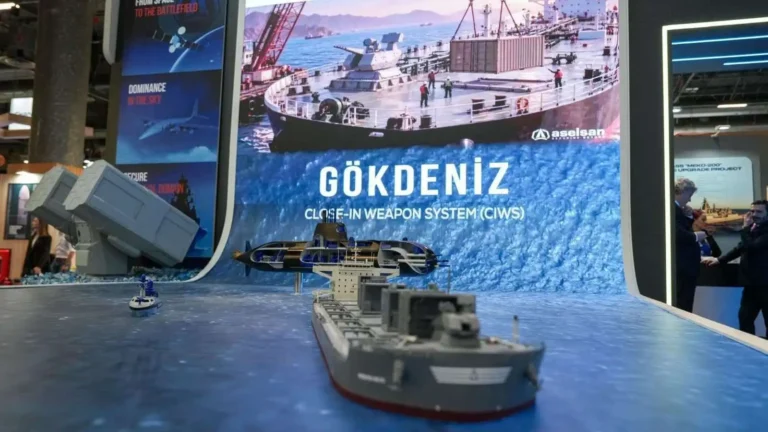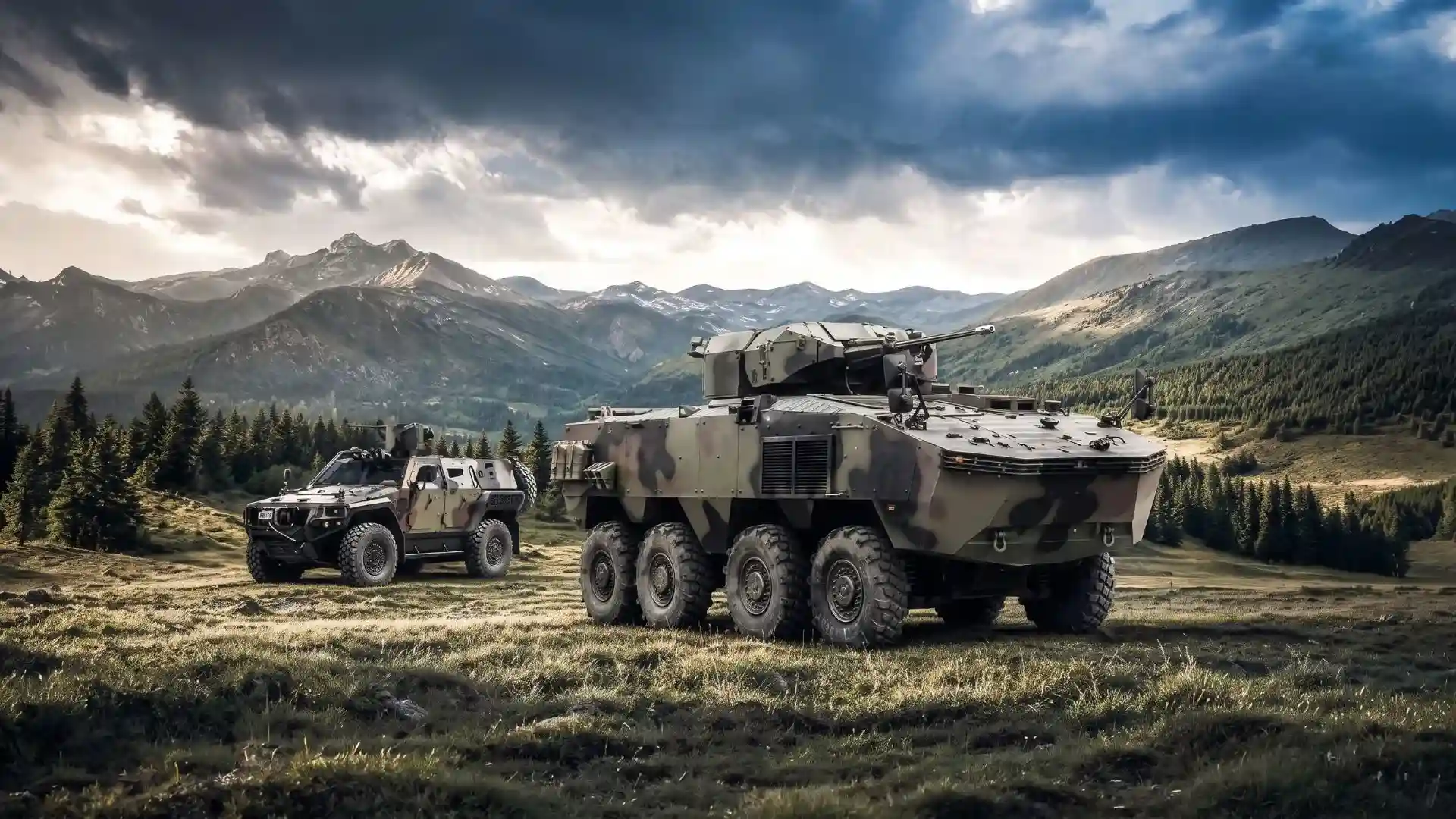
Otokar, Türkiye’s largest land systems exporter, is presenting a scale model of its ARMA 8×8 armored combat vehicle fitted with the 30 mm MIZRAK turret at SIDEC 2026, the International Defence Exhibition and Conference held in Celje, Slovenia, from November 10 to 12, 2026. Its COBRA II 4×4 tactical armored vehicle is displayed at the outdoor stand of Guardiaris, a Slovenian simulation specialist and Otokar’s local industrial partner.
The showing comes while Slovenia’s largest planned land acquisition remains uncontracted. Ljubljana intends to buy 106 8×8 wheeled combat vehicles in two tranches of 53 to equip a medium combat reconnaissance battalion and a medium battalion battlegroup pledged to NATO, with €695.2 million earmarked since July 2023. After withdrawing from a 45-vehicle Boxer order, the previous government selected the Patria AMV XP and signed a letter of intent with Finland on February 13, 2025, then deferred the contract in late 2025 over new counter-drone and domestic turret requirements. A government led by Janez Janša took office in June 2026; no award has been announced.
Otokar ARMA 8×8 and the 30 mm MIZRAK Turret Configuration
ARMA is a modular wheeled family built on a monocoque steel hull. Otokar product literature lists a gross vehicle weight of up to 32,000 kg, a length of 8,000 mm, a width of 3,000 mm and room for up to 12 personnel including driver and commander. Early vehicles used a 450 hp turbocharged diesel; the ARMA II, unveiled at IDEF 2023, adopts a 720 hp Ecotorq powerpack derived from a Ford Otosan truck engine. Publicly available specifications indicate a top road speed of 105 km/h. Otokar has not stated which generation it would propose to Slovenia.
The MIZRAK-30 is an unmanned, dual-axis stabilized turret. Published configurations pair a 30 mm dual-feed Mk44 Bushmaster II cannon, firing NATO-standard 30×173 mm ammunition, with a coaxial 7.62 mm machine gun and optional twin anti-tank guided missile launchers. Fire control includes thermal imaging, a laser rangefinder, automatic target tracking and a hunter-killer mode through the commander’s independent sight. Keeping the crew in the hull improves survivability and frees volume for dismounts.
Otokar offers ARMA as an infantry fighting vehicle, armored personnel carrier, anti-tank guided missile carrier, mobile air defense and counter-unmanned aircraft system (C-UAS) platform, 81 mm and 120 mm mortar carrier, command post, combat and CBRN reconnaissance vehicle, recovery vehicle and ambulance. The reconnaissance and C-UAS roles map onto Slovenia’s stated gaps. The turret is harder: Slovenian defense officials projected that the first six domestic Mangart 25 remote weapon stations would be integrated on existing Svarun 8×8 vehicles in the second half of 2026.
COBRA II, Guardiaris Simulators and Otokar’s Industrial Offer
COBRA II serves with more than 20 end users, according to Otokar, which lists a gross vehicle weight of up to 14,500 kg and capacity for up to 11 personnel. Publicly available specifications indicate a 6.7-liter turbocharged diesel producing 360 hp and 1,100 Nm, a six-speed automatic transmission, a top speed of 110 km/h and a range of 700 km. Its strongest NATO reference is Romania, which selected COBRA II on October 4, 2024, and signed an €857 million contract on November 27, 2024, for 1,059 vehicles: the first 278 are built in Türkiye and the rest in Romania through a 50-50 joint venture with Automecanica.
Otokar and Guardiaris signed a strategic cooperation agreement at SIDEC 2025 covering joint development of Otokar vehicle simulators, following an ARMA 8×8 simulator delivery to an African customer and an order for a COBRA II simulator. Tamer Sırçalı, Otokar’s Military Cluster Head, said the company is “ready to enhance the operational capabilities of the Slovenian Armed Forces,” citing more than 33,000 Otokar military vehicles in service across nearly 50 countries.
Analysis: Otokar is positioning for a procurement that has reopened three times in eight years. The conditions Ljubljana added in 2025, counter-drone protection and domestic turret work, are the levers a challenger can use, and Otokar can point to a C-UAS ARMA variant and a localization model already running in Romania. Against that, the AMV XP route rests on a government-to-government framework with Finland and commonality with the Patria-derived Svarun fleet, while a new competition would push back a battlegroup Slovenia’s 2020 defense white paper scheduled for 2027.
The next decision point is the Janša government’s position on the 106-vehicle framework. Otokar has not disclosed a formal bid, the ARMA generation it would offer or the scope of any Slovenian workshare.