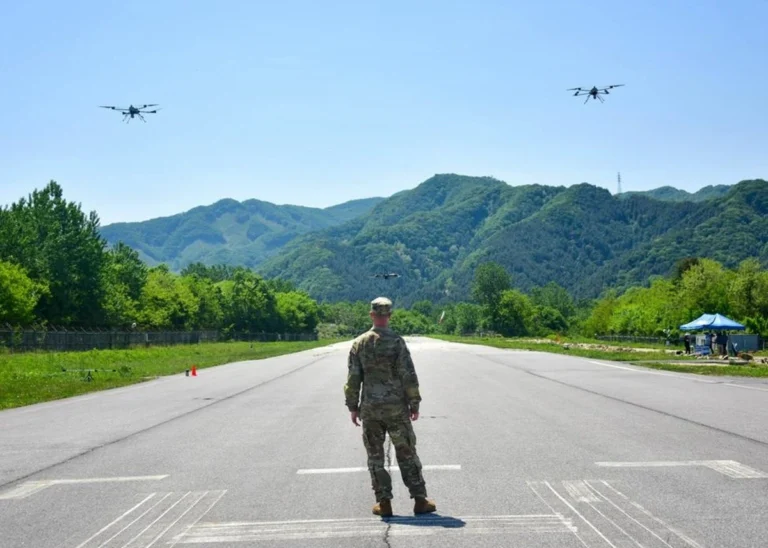
Nokia Federal Solutions has won a contract under the Department of War’s (DoW) Real-World Application Prototyping for ISAC Demonstration (RAPID) project to develop, build and test integrated sensing and communications (ISAC) capabilities that use 5G and 6G infrastructure to detect and track unmanned aerial vehicles (UAVs). Nokia Federal announced the award on November 13, 2026, in Chantilly, Virginia, without disclosing its value.
RAPID is managed by the FutureG Office within the Office of the Under Secretary of War for Research and Engineering (OUSW(R&E)). On November 3, 2026, the National Spectrum Consortium (NSC) announced 11 RAPID awards totaling more than $50 million, issued through its Spectrum Forward Other Transaction Authority (OTA). The effort reflects the department’s push to leverage commercial cellular infrastructure against drone threats: ISAC turns the cellular infrastructure already in place into a distributed sensor.
Inside the Nokia Federal RAPID Contract: AI-RAN and Sensor Fusion
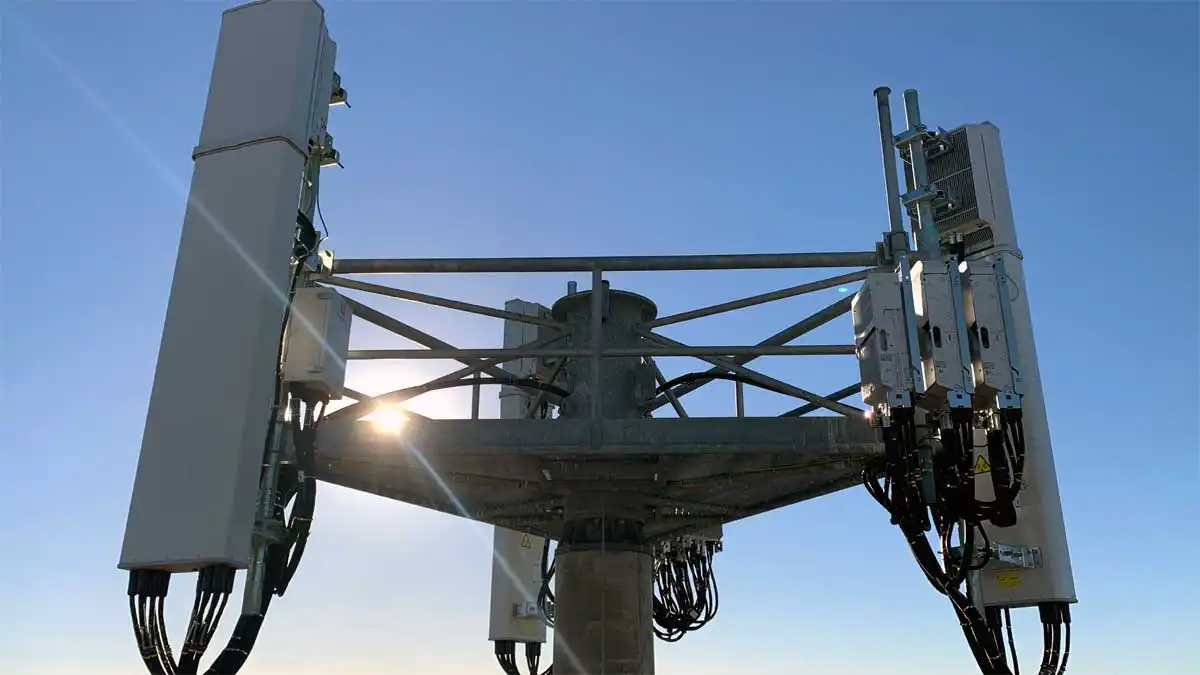
ISAC lets a radio network transmit data while simultaneously exploiting radio-frequency (RF) signals to detect objects in its coverage area, sharing spectrum and hardware between both functions. Under the contract, Nokia Federal will demonstrate an end-to-end solution built on Nokia’s AI-RAN platform, integrating Nokia and third-party applications for sensing and spectrum threat awareness. The architecture combines multiple sensing modalities through sensor fusion to build a more complete picture of potential UAV threats to critical infrastructure.
Subcontractors include Nokia affiliates, Texas Tech University, DeepSig, Hidden Level and Future Technologies. The NSC award listing also names AT&T as a member of the Nokia Federal team. Nokia has not detailed individual roles, but the partners bring complementary capabilities. Arlington, Virginia-based DeepSig develops OmniSIG, AI-based software that detects and classifies RF emissions in real time. Syracuse, New York-based Hidden Level operates networks of passive RF sensors mounted on rooftops and cell towers that track drones even when they do not broadcast Remote ID.
Nokia has not released frequency bands, detection ranges, minimum target size or test locations for the demonstration.
How RAPID Fits the FutureG Office’s $50 Million ISAC Portfolio
RAPID runs 24 months in two phases. Phase 1 delivers laboratory or field demonstrations; Phase 2 produces prototypes intended for military and commercial deployment. Other awardees include AT&T with Ericsson, Leidos with Tiami Networks, Peraton Labs with Nexcepta, and a team of Texas A&M University, the University of California San Diego, IBM and Northrop Grumman. The FutureG Office and NSC intend to coordinate development across the portfolio and encourage teams to share results.
Marlan Macklin, Deputy Principal Director for FutureG in OUSW(R&E), said the office is cultivating an open ecosystem to leverage commercial cellular infrastructure “to bolster force protection and defense of critical assets against evolving UAV threats.” Steve Vogelsang, Chief Technology Officer of Nokia Federal Solutions, framed the requirement bluntly: “The unmanned system threat is real.”
The award extends Nokia Federal’s work with the department on spectrum programs. In 2025, the company was selected as one of five project leads for the Advanced Spectrum Coexistence demonstration, also awarded through the NSC.
Analysis: Nokia and the FutureG Office both frame ISAC’s force protection value the same way: existing commercial cellular networks would be leveraged to identify UAV threats to critical infrastructure. If RAPID demonstrates reliable detection of small, low-flying drones, the cellular grid could serve as a cueing layer for dedicated counter-UAS systems rather than replace them. The FutureG Office has itself identified sensing precision, bandwidth, frequency selection and vulnerability to electronic warfare as key engineering constraints.
The next milestone is the Phase 1 demonstration within the 24-month RAPID window. Key unknowns remain the value of Nokia Federal’s award, the test environment, and published detection performance against small UAVs. RAPID targets both military and commercial use, and ISAC is expected to play a critical role in the emerging 6G wireless standard.