Turkish defense electronics group Aselsan says its Ejderha high-power microwave (HPM) weapon neutralized 51 drones simultaneously in a single engagement, a result President and CEO Ahmet Akyol described as a world first. The company disclosed the demonstration on November 15, 2026, in a post on the Turkish social media platform NSosyal, timing it to the firm’s 51st anniversary. According to Akyol, the system downed all 51 targets without firing a single missile. Aselsan said the 51 drones, one for each year since the company’s founding, took off simultaneously and were neutralized within seconds.
Akyol added that Ejderha has reached operational deployment and entered serial production, without naming the units using it. Aselsan has not released the test location, the drone types involved, or which Ejderha variant conducted the engagement.
The announcement lands as low-cost drone swarms push air defenders toward cost-exchange ratios that kinetic interceptors cannot sustain. Ejderha forms the drone defense layer of Steel Dome, Türkiye’s multilayered air defense architecture linking air defense weapons, radars, electro-optical sensors, communications, and command-and-control nodes through an artificial intelligence-enabled network that shares a real-time air picture. Aselsan, founded in Ankara on November 14, 1975, to supply the Turkish Armed Forces with domestically produced communications equipment, has since expanded into radar, electronic warfare, electro-optics, avionics, and air and missile defense.
Aselsan Ejderha AD 200 and AD 210: Inside the HPM Effector
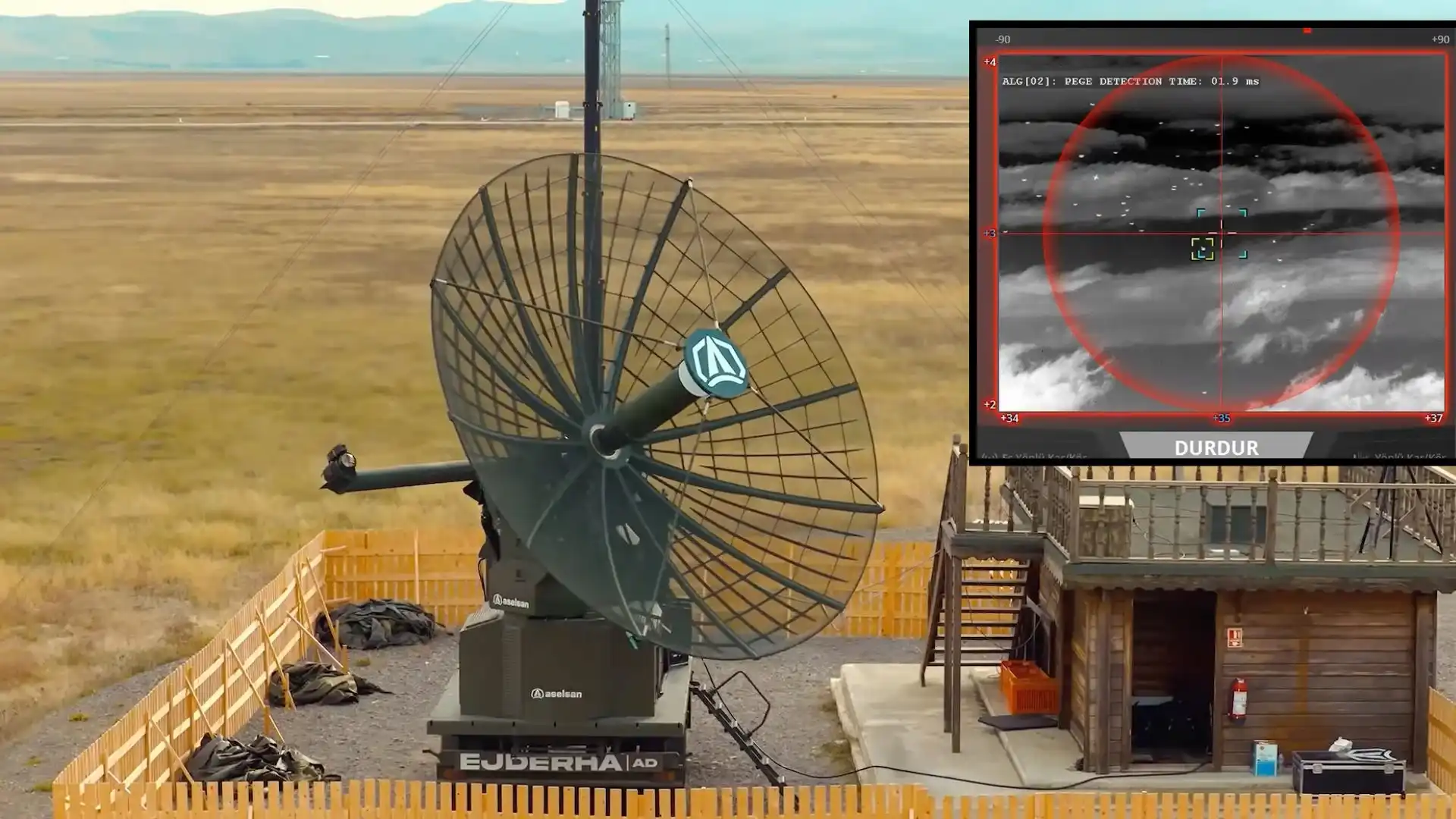
Ejderha generates narrow-band, high-power electromagnetic pulses and directs them through a steerable antenna. Rather than jamming a control link, the pulse couples into the target’s circuitry and damages navigation, communication, and flight control electronics, burning out transistor junctions and causing permanent failure, forced reboots, or system freezes. That mechanism carries direct operational weight: because Ejderha attacks onboard electronics rather than the datalink, it remains effective against fiber-optic-guided first-person-view (FPV) drones that conventional jammers cannot touch.
The baseline Ejderha AD 200 is a towed, trailer-mounted system with an electro-optical camera, automatic and semi-automatic engagement modes, adjustable pulse parameters, and an integrated cooling system for sustained firing. Its antenna offers a narrow-beam fixed mode for single threats and a wide-view steering mode for swarm defense. In a January 2026 demonstration, held as the system entered low-rate serial production, the AD 200 defeated three wired FPV drones simultaneously from several hundred meters. In April 2026, Turkish press reported that Ejderha had entered the Turkish Land Forces Command inventory, with the ability to neutralize both mini and micro drone swarms and electronically triggered improvised explosive devices.
Aselsan unveiled the upgraded Ejderha 210 at the SAHA 2026 exhibition in Istanbul in May 2026. The company says the new variant doubles the original’s range and adds a radar and improved electro-optics, enabling standalone operation. Publicly available descriptions point to a considerably larger antenna, a coaxial infrared camera, and a mast-mounted AURA 100-G drone detection radar, while retaining the towed layout. Trade press reporting from the show cited an effective range of about 1 km, and the video released with the 51-drone announcement shows Ejderha disabling two wired drones at about 1,000 m. Aselsan has not published official range or power output figures.
Steel Dome Drone Layer and the Global HPM Swarm Benchmark
Ejderha operates inside Aselsan’s DRONEDEF integrated counter-unmanned aircraft system architecture alongside the İHTAR detection and jamming system, the Gökberk 10 laser weapon, and the Gökalp autonomous interceptor drone, which destroys targets through collision. Gökberk 10 doubles the original laser’s output to 10 kW, with a focusing distance of 150 m to 2 km, according to company specifications. Aselsan demonstrated the layered chain during a two-day live event in Ankara in June 2026 attended by delegations from 20 countries, with a central operations center assigning incoming swarms to the appropriate effector. Ejderha systems were also seen downing drones during Türkiye’s Ateş Serbest military demonstration in October 2026.
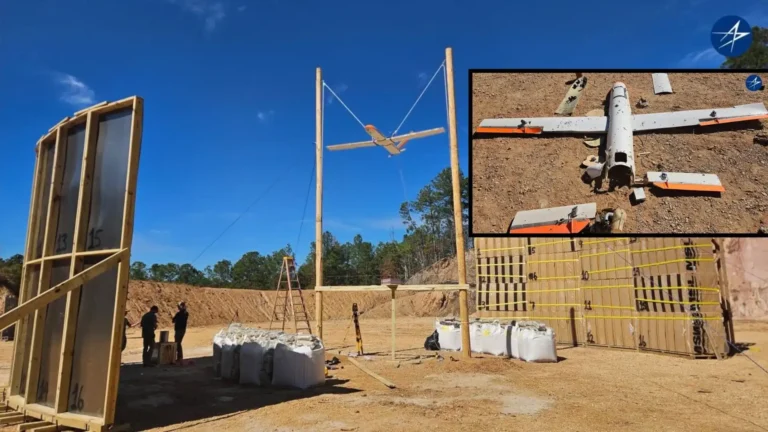
The world-first claim requires context. US firm Epirus reported that its Leonidas HPM system disabled a 49-drone swarm with a single pulse on August 26, 2025, at Camp Atterbury, Indiana, as the finale of a 61-of-61 demonstration. In April 2025, the British Army’s Thales-developed Radio Frequency Directed Energy Weapon defeated more than 100 drones across a series of trials in west Wales, including two swarms in one engagement, at a stated cost of about 10 pence per shot. Aselsan’s 51-drone figure would narrowly exceed the largest publicly disclosed single-engagement HPM kill, but without independent observation or published test conditions, the claim cannot be verified.
Analysis: The demonstration’s strategic weight lies less in the headline number than in what it signals about Türkiye’s counter-drone industrial depth. Ankara now fields a domestically produced kill chain spanning radar cueing, electronic attack, laser, microwave, and kinetic interceptor effectors under one command architecture, a breadth few NATO allies can match from national industry alone. For armies watching fiber-optic FPV drones erode the value of jamming in Ukraine, a towed HPM effector with a negligible cost per engagement offers a credible hard-kill layer, and Aselsan’s export marketing will lean heavily on this result.
Key unknowns remain the variant used, the drone classes engaged, and the distances involved, all of which determine whether the result translates to operational swarm scenarios. Indicators to watch include further Steel Dome delivery milestones, any confirmed Ejderha 210 production contract, and first export orders following the June 2026 demonstration for foreign delegations.