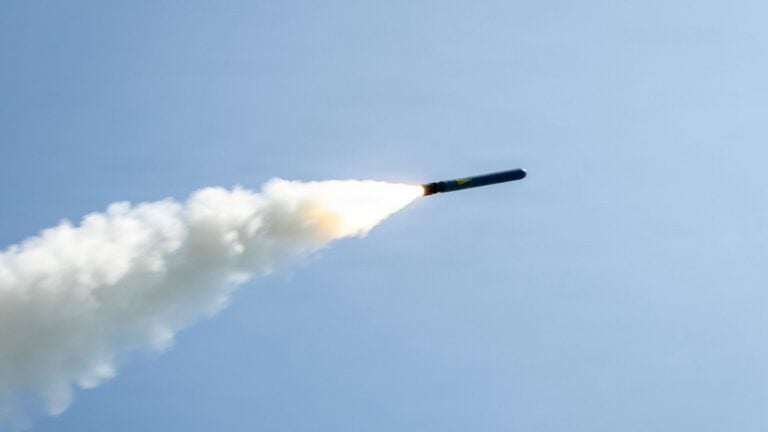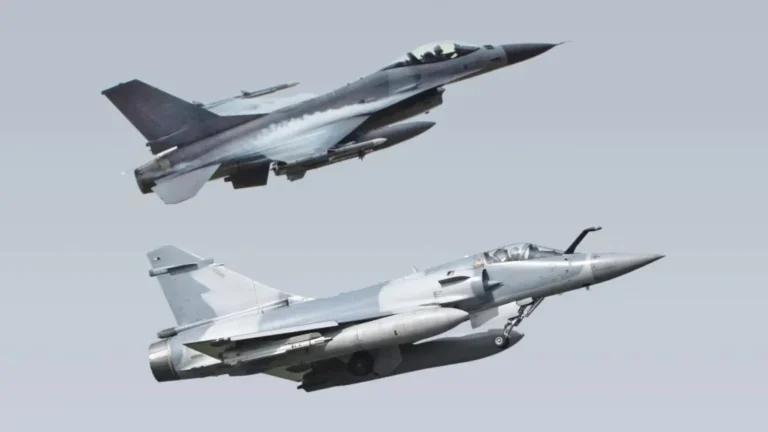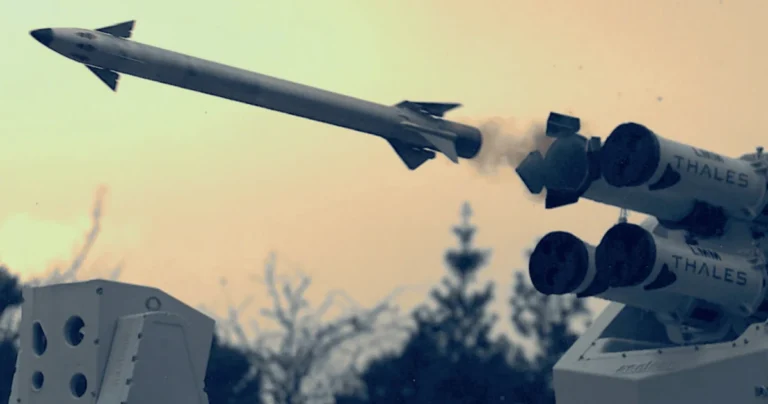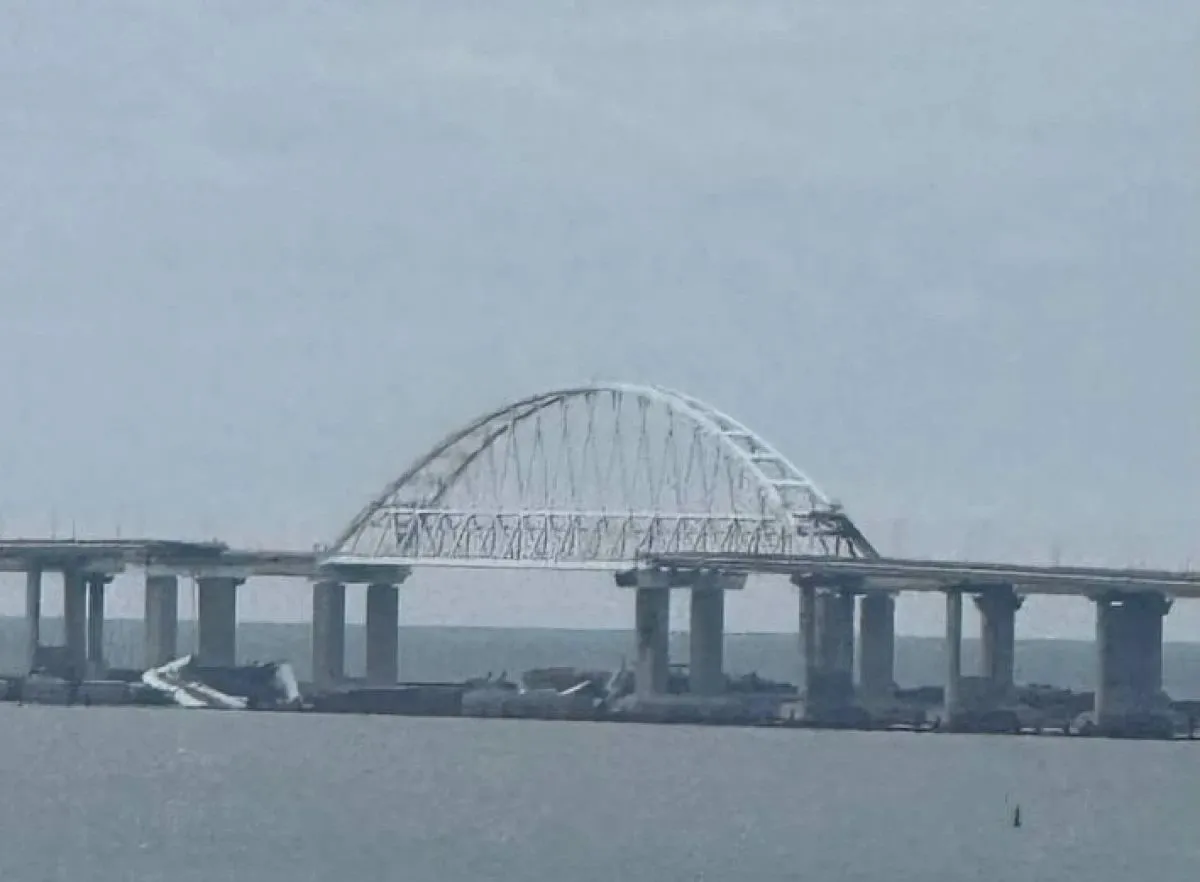
Dutch missile maker Destinus said on November 17, 2026, that seven of its RUTA cruise missiles struck the Crimean Bridge across the Kerch Strait, causing one span to collapse. It was the second consecutive day of Ukrainian strikes against the crossing. According to the company, strikes the previous night had already damaged the bridge’s upper load-bearing structure, and its LORD long-range drones, designated Da Vinci in Ukrainian service, were deployed during the operation to suppress Russian air defenses. Destinus, which says it can build nearly 300 RUTA missiles a month, offers a Block 2 version with a range of more than 700 km and a 250 kg payload, but has not said which version hit the bridge.
The 19-kilometer road and rail bridge, opened by Vladimir Putin in 2018, is Russia’s only fixed link to occupied Crimea and a primary route for fuel, ammunition and troops moving toward Russian forces in southern Ukraine. It was previously damaged in October 2022, July 2023 and June 2025, the last time by underwater charges placed by the Security Service of Ukraine (SBU). Since June 2026, Kyiv has run a sustained campaign to isolate the peninsula, collapsing a rail bridge over the North Crimean Canal, hitting fuel infrastructure in Kerch and targeting S-400 radars and Pantsir units deployed around the crossing.
Competing Claims Over Which Weapons Brought Down the Span
Destinus published its statement on LinkedIn, framing the attack as a two-phase effort: a first wave to weaken the superstructure, followed by seven RUTA impacts that dropped the span. “RUTA systems have been used successfully by the Ukrainian defence forces on multiple occasions, including against bridges used by the Russian military,” the company said.
Destinus is not the only manufacturer claiming a role. Hours earlier, Fire Point co-founder Denys Shtilerman shared video said to show the company’s FP-5 Flamingo cruise missile seconds before impact, after reports that the road section over the shipping channel had fallen into the strait overnight. President Volodymyr Zelenskyy named 11 weapons used across what he described as a seven-stage operation, including RUTA, Da Vinci, the FP-5 Flamingo and the R-360 Neptune. He said Palianytsia missile-drones struck the road section, while “‘Neptune’ missiles, ‘Ruta’ drones, and FP-5 drones struck the railway section.”
Zelenskyy did not say how many weapons were launched or which caused the collapse. Several points remain unverified: which RUTA variant was used, whether the span Destinus describes is on the road or rail section, and how many missiles Russian air defenses intercepted. Russia’s Transport Ministry suspended road and rail traffic and said damage was being assessed, without confirming a collapse. Russia’s Investigative Committee has opened a terrorism case.
Destinus describes LORD as a propeller-driven drone able to fly more than 1,000 km with a 40 to 100 kg warhead, suited to saturating radars ahead of the faster cruise missiles.
RUTA Cruise Missiles: Block 1 Production and Block 2 Specifications
Destinus offers RUTA in two versions. Block 1, originally characterized as a missile-drone, is boosted off its launcher by two rocket motors before a T150 turbojet takes over for the cruise phase. It is in volume production in the Netherlands: in late October, the company said it had built 1,750 Block 1 rounds and could produce nearly 300 a month.
Block 2 is a redesigned airframe rather than an incremental upgrade. Destinus gives it a range of more than 700 km, a 250 kg payload and a speed of 600 to 700 km/h. It retains the T150 turbojet but doubles Block 1’s range and maximum take-off weight, cruising slightly slower. It flies low-altitude, terrain-following profiles against hardened targets where satellite navigation is jammed, using an electro-optical and infrared seeker with AI-assisted target recognition to reach an operator-selected aimpoint. An in-line booster and folding wings, validated in an April 2026 flight test, allow launch from a canister or a 40-foot container. At its January 2026 unveiling, Destinus cited a range of more than 450 km, a figure since raised. The company has not said which block hit the bridge.
The family is expanding further through Rheinmetall Destinus Strike Systems, a joint venture formed with the German group in 2026 to manufacture long-range cruise missiles, with a new system expected to exceed 2,000 km in range.
Analysis: Whatever the final attribution, the operation illustrates how Ukraine now attacks hardened, densely defended point targets: by mass rather than by a handful of high-end munitions. Committing seven cruise missiles in one wave, behind drone-based suppression and a preceding strike, is affordable only with a weapon built at hundreds per month. For European capitals reassessing deep-strike requirements, a bridge collapse claimed by a Netherlands-built missile is a powerful sales argument. That commercial incentive, and Fire Point’s competing claim, mean manufacturer statements should be treated as provisional until Ukrainian authorities or independent imagery settle which weapons did the decisive damage.
The next indicators are Russia’s damage assessment and repair timeline, and whether Kyiv follows the pattern it used on the North Crimean Canal bridge in June, striking repair crews as they arrive. On the industrial side, Rheinmetall has said it expects a first cruise missile order for its ventures by the end of 2026 or early 2027. A confirmed RUTA role at Kerch would strengthen Destinus’s position in that competition.