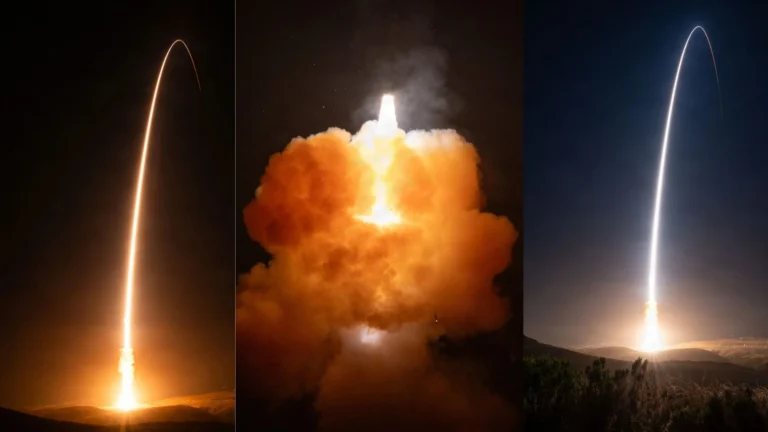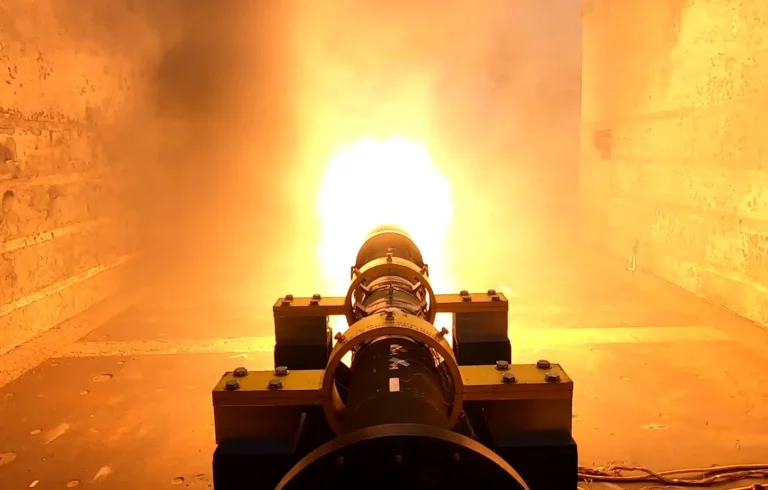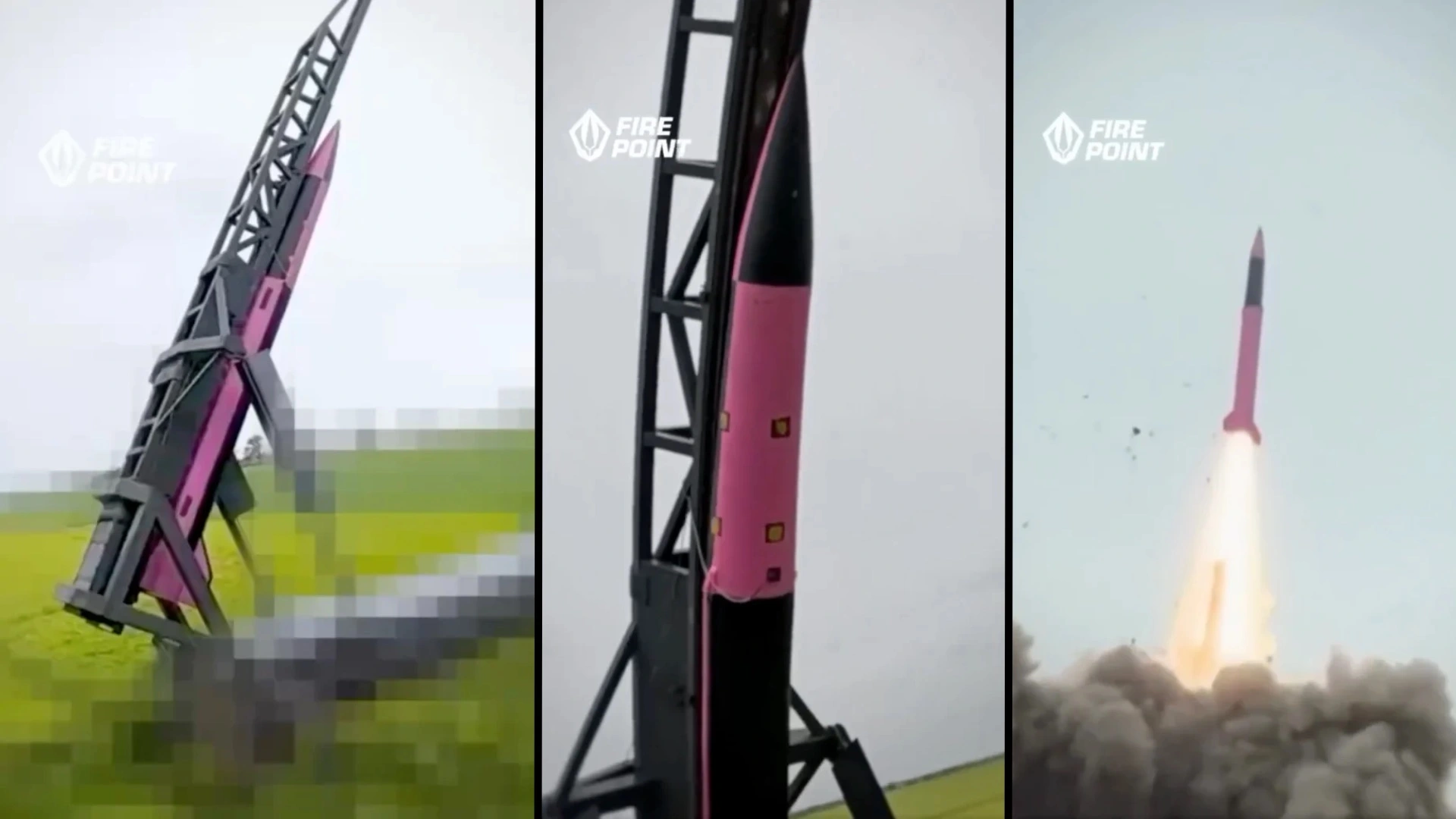
Ukraine has completed development of the interceptor missile and launcher for the FREYJA European anti-ballistic missile defense system, and Denmark has finished the program’s first partner-supplied component, a radar, President Volodymyr Zelenskyy told journalists on November 13, 2026. “We received a briefing on the Danish radar. This is the first component from our partners that is ready. And overall, our missile is ready. That’s the main thing,” Zelenskyy said.
The update follows Zelenskyy’s visit to Copenhagen, where he addressed the Danish Parliament on November 11 and reviewed program progress with Danish officials, and talks with leaders of the Nordic Five: Denmark, Finland, Iceland, Norway, and Sweden. FREYJA was formally launched in Paris on July 13, 2026, when Ukraine and nine European countries (Denmark, France, Germany, Italy, the Netherlands, Norway, Spain, Sweden, and the United Kingdom) established the Anti-Ballistic Coalition. Its goal is a European-built capability to intercept ballistic missiles, offering an alternative to the US-made Patriot system while Patriot interceptors remain scarce and Russian Iskander-M and North Korean-supplied ballistic missiles continue to strike Ukrainian cities.
FP-7.X Specifications Behind the FREYJA Interceptor Design
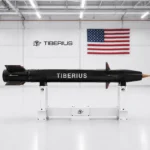
The interceptor is the FP-7.X, built by Fire Point, the Kyiv-based company that initiated and leads FREYJA and also produces the FP-1 long-range strike drone and the Flamingo cruise missile. Company figures give a length of 7.25 meters and a flight speed of 1,500 to 2,000 meters per second. In June 2026, Fire Point co-founder and chief designer Denys Shtilierman stated that the current configuration reaches about 1,800 m/s, roughly Mach 5, and can engage ballistic targets below 25 km altitude within an 80 km radius. Chief executive Iryna Terekh has said the company targets a 20 to 25 km intercept altitude and a top speed of 2,200 m/s as the design matures. All of these figures are manufacturer claims and have not been independently verified.
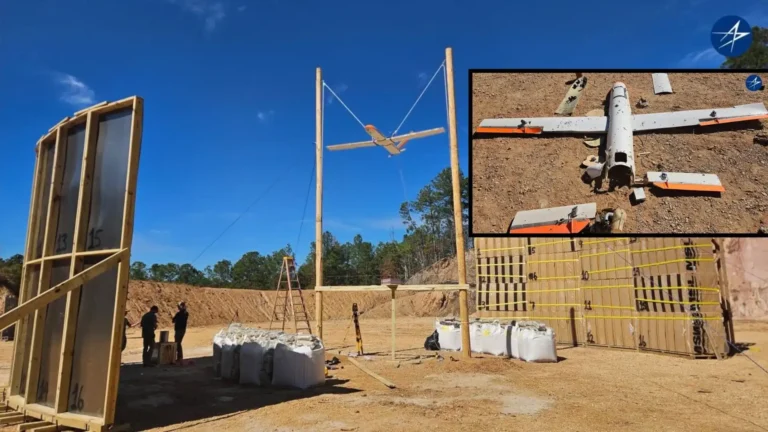
Guidance combines radar-supported midcourse flight with a terminal infrared seeker, according to company material. Diehl Defence, which produces the seeker for the IRIS-T family, has confirmed talks with Fire Point without disclosing details. The current FP-7.X carries a blast-fragmentation warhead, and Terekh has said the company intends to develop a hit-to-kill version, acknowledging that blast effects offer a low probability of destroying a ballistic payload. That distinction matters, because the Patriot PAC-3 MSE relies on hit-to-kill against the same threat class. Integration with other air defense assets is planned through NATO’s Link 16 datalink.
Fire Point has set a unit price target below €1 million, a fraction of the multimillion-dollar cost of a PAC-3 MSE round, and a production goal of 2,000 interceptors per year.
Danish Radar and the European Sensor Architecture for FREYJA
Zelenskyy drew a clear division of labor. “The launcher and the missile are what Ukraine produces. The remaining components depend on our partners,” he said. Those components include the radar, detection, and command-and-control layers required to turn the FP-7.X into an operational system.
Officials have not disclosed the Danish radar’s manufacturer, type, frequency band, or detection range. Denmark’s Weibel Scientific, a Doppler radar specialist, is among the program’s industrial participants alongside Kongsberg, Saab, Diehl Defence, Hensoldt, Thales, Safran, Sener, and Leonardo, but no official statement has linked it to the completed radar.
Part of the sensor architecture is already known. Hensoldt signed a memorandum of understanding with Fire Point at Eurosatory on June 16, 2026, to supply its TRML-4D active electronically scanned array radar, which Fire Point says will handle detection. Kongsberg is developing the command-and-control center that integrates the components, according to Fire Point. In June, Ukrainian outlet Militarnyi reported that the fire-control and guidance radar role would go to either Weibel’s GFTR-2100/48 or Leonardo’s KRONOS Land, a choice that has not been officially confirmed.
The program’s institutional footprint is also expanding. Zelenskyy told the Danish Parliament on November 11 that 11 countries now participate, one more than the founding group, though the new member has not been identified. A FREYJA coordination office is being prepared in Copenhagen together with Norway, which hosted an industrial coordination meeting in Oslo in September 2026.
Analysis: The Danish radar is the first tangible delivery from the partner side, but it does not resolve FREYJA’s central unknown. The FP-7.X has not yet engaged a ballistic target, and a blast-fragmentation interceptor with a terminal infrared seeker has yet to demonstrate it can kill a maneuvering Iskander-class warhead. The program is a deliberate bet on magazine depth over per-shot sophistication: thousands of low-cost interceptors cued by multiple European sensors. That logic addresses the binding constraint facing Ukraine and NATO’s European members, but it holds only if integration across a dozen suppliers succeeds, the phase Fire Point itself describes as the hardest.
Zelenskyy said he hopes initial system testing can begin this winter, and Fire Point plans a so-called zero test before the end of 2026, with a first live ballistic intercept targeted for mid-2027. The next markers are identification of the remaining radar and command-and-control suppliers, a contracted seeker, and funding: Nordic leaders pledged continued support for 2027, while Zelenskyy flagged a shortfall in NATO’s Prioritized Ukraine Requirements List mechanism.