Raytheon has awarded Ursa Major and Avio USA a joint contract to design, develop and qualify a new solid rocket motor booster for the Tomahawk cruise missile, the companies announced on November 18, 2026. The multi-year award gives both firms a path to become qualified U.S. suppliers of the booster, adding a domestic propulsion source for the U.S. Navy’s primary long-range strike weapon.
The award follows the seven-year, $22.9 billion contract the Navy awarded Raytheon on August 17, 2026, to raise Tomahawk output from roughly 60 missiles a year to more than 1,000. That ramp, part of the Department of War’s Arsenal of Freedom initiative, comes after sustained combat expenditure of Tomahawks in the Middle East. Solid rocket motors are a known bottleneck, and reporting on the August contract puts Tomahawk lead times at 18 to 24 months from order to delivery.
Why the Tomahawk Rocket Motor Sets the Production Pace
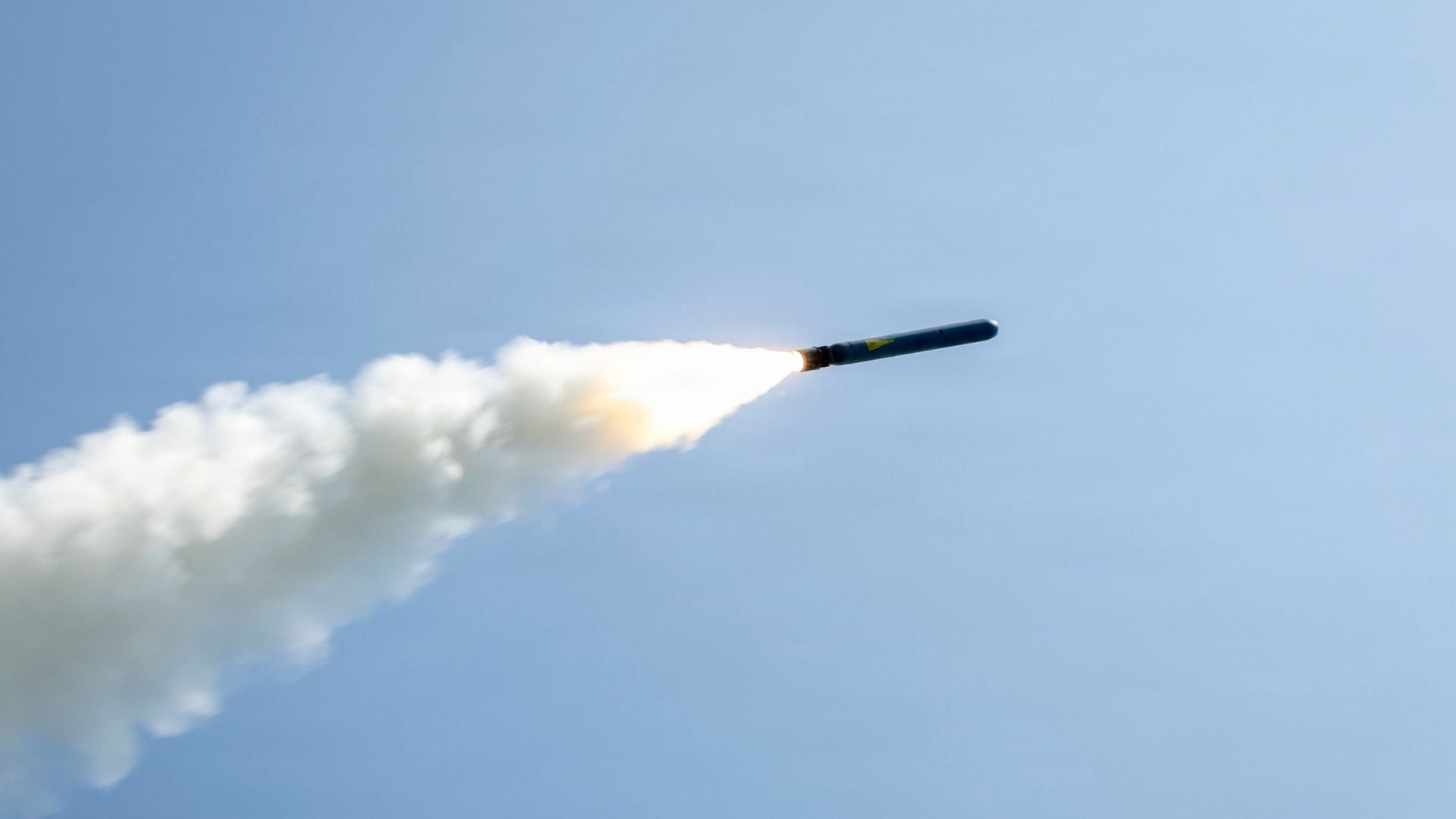
The booster performs a short but critical task. It drives the missile out of a Mk 41 Vertical Launching System cell on a cruiser or destroyer, or out of a submarine launch system, and accelerates it to the point where the wings deploy and the Williams International turbofan takes over for the cruise phase. The booster then separates. U.S. Navy data gives Block IV and Block V missiles a range of about 1,600 km (1,000 miles) at high subsonic speed.
L3Harris Technologies currently builds the Mk 135 solid propellant booster for Tomahawk, along with the missile’s blast-fragmentation warhead, and has supported the program for more than 30 years. In September 2026, L3Harris signed a multi-year public-private partnership with the Naval Air Warfare Center Weapons Division at China Lake, California, to expand Tomahawk component capacity. The new effort is additive: Raytheon is seeking to qualify additional sources alongside the incumbent, not to replace it.
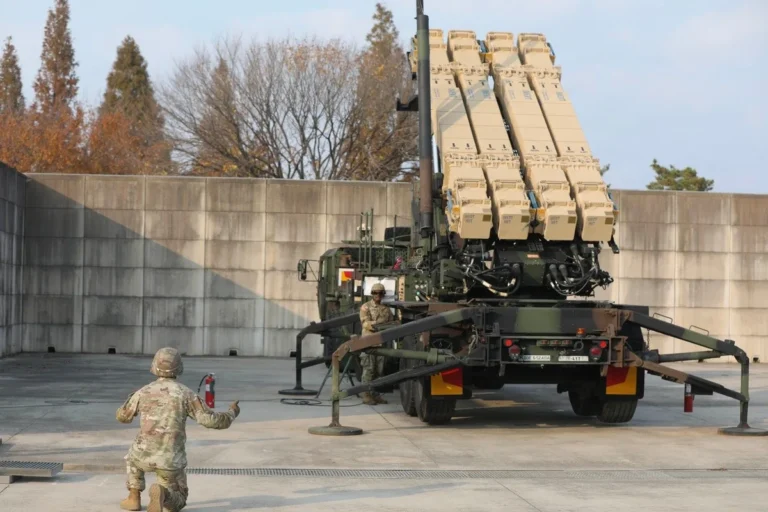
No design parameters for the new Tomahawk rocket motor were released. At a minimum, any alternative booster must match the incumbent’s mechanical and electrical interface with the airframe and remain compatible with the launchers the weapon now uses, from surface ship and submarine systems to the Army’s land-based Typhon Mid-Range Capability. Qualifying an energetic component for Navy service involves static fire, environmental and aging tests, which is why second-source programs run on multi-year timelines.
Raytheon framed the award as a supply chain hedge. “By dual-sourcing this critical component with both Avio USA and Ursa Major, we’re strengthening our supply chain, encouraging innovation, and building the capacity needed to meet the Navy’s mission requirements well into the future,” said Sam Deneke, president of Naval Power at Raytheon.
What Ursa Major and Avio USA Bring to the Booster Program
Avio USA, headquartered in Arlington, Virginia, is a subsidiary of Italy’s Avio S.p.A., prime contractor for the Vega launcher and a solid rocket motor subcontractor on major European tactical missile programs. The U.S. unit operates under a U.S.-based board to comply with American security and export-control rules and is led by CEO James Syring, a retired Navy vice admiral and former director of the Missile Defense Agency. On September 29, 2026, it broke ground on a roughly 900,000-square-foot, $500 million plant at the Southern Virginia Multimodal Park in Hurt, Virginia, sized to produce thousands of tactical motors a year, with production expected to begin in 2029. Avio USA already works with Raytheon on the Mk 104 dual-thrust motor for the Standard Missile family.
“This award also marks a significant step forward for our planned U.S. manufacturing facility,” Syring said.
Ursa Major, founded in 2015 and headquartered in Berthoud, Colorado, with manufacturing in Youngstown, Ohio, relies on additive manufacturing and a production approach it calls Lynx, which it says can deliver hundreds of motors a year. The Navy awarded the company $10 million in July 2026 to take its own Mk 104 design through critical design review and static fire, followed in October by contracts for a 10-inch motor for the Naval Modular Missile medium-range variant and a 7-inch motor for the Compact Air-to-Air Missile.
“Tomahawk is a critical capability for the warfighter, and meeting growing demand requires more capacity and a stronger, more resilient supply chain,” said Jason Meredith, president of Ursa Major.
Analysis: The award confirms that Raytheon and the Navy now treat solid rocket motors as a portfolio to be diversified across several suppliers rather than a commodity bought from one or two incumbents. Pairing a venture-backed newcomer with the U.S. arm of a European propulsion house spreads technical and industrial risk, but it does not solve the near-term ramp. Neither partner builds Tomahawk boosters today, and Avio USA’s Virginia plant targets 2029 production. Until a new source qualifies, the climb toward 1,000 missiles a year still rests largely on L3Harris capacity.
The companies intend to qualify the jointly designed booster and demonstrate eligibility for future production orders. Key unknowns include the contract value, the qualification timeline, and how design and production work will be split between the partners. Design reviews and static fire tests will be the first public indicators of progress.