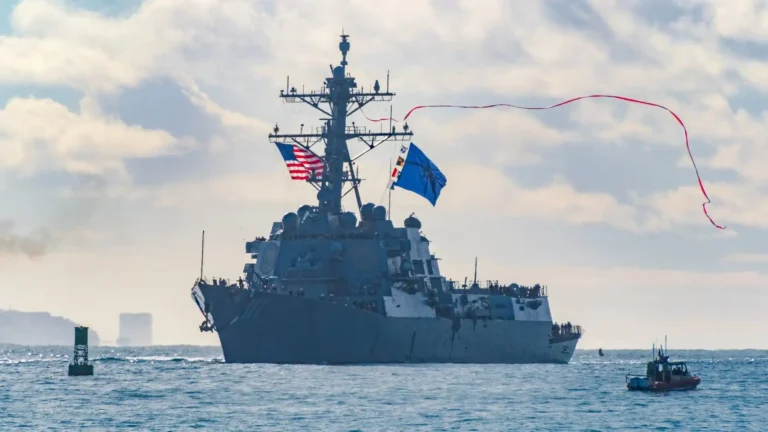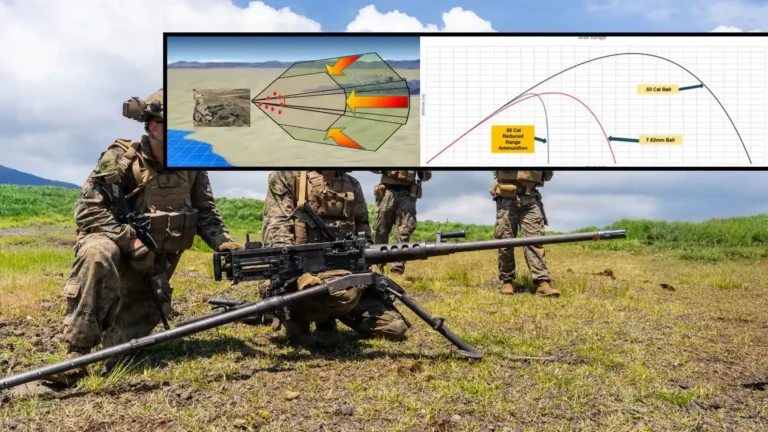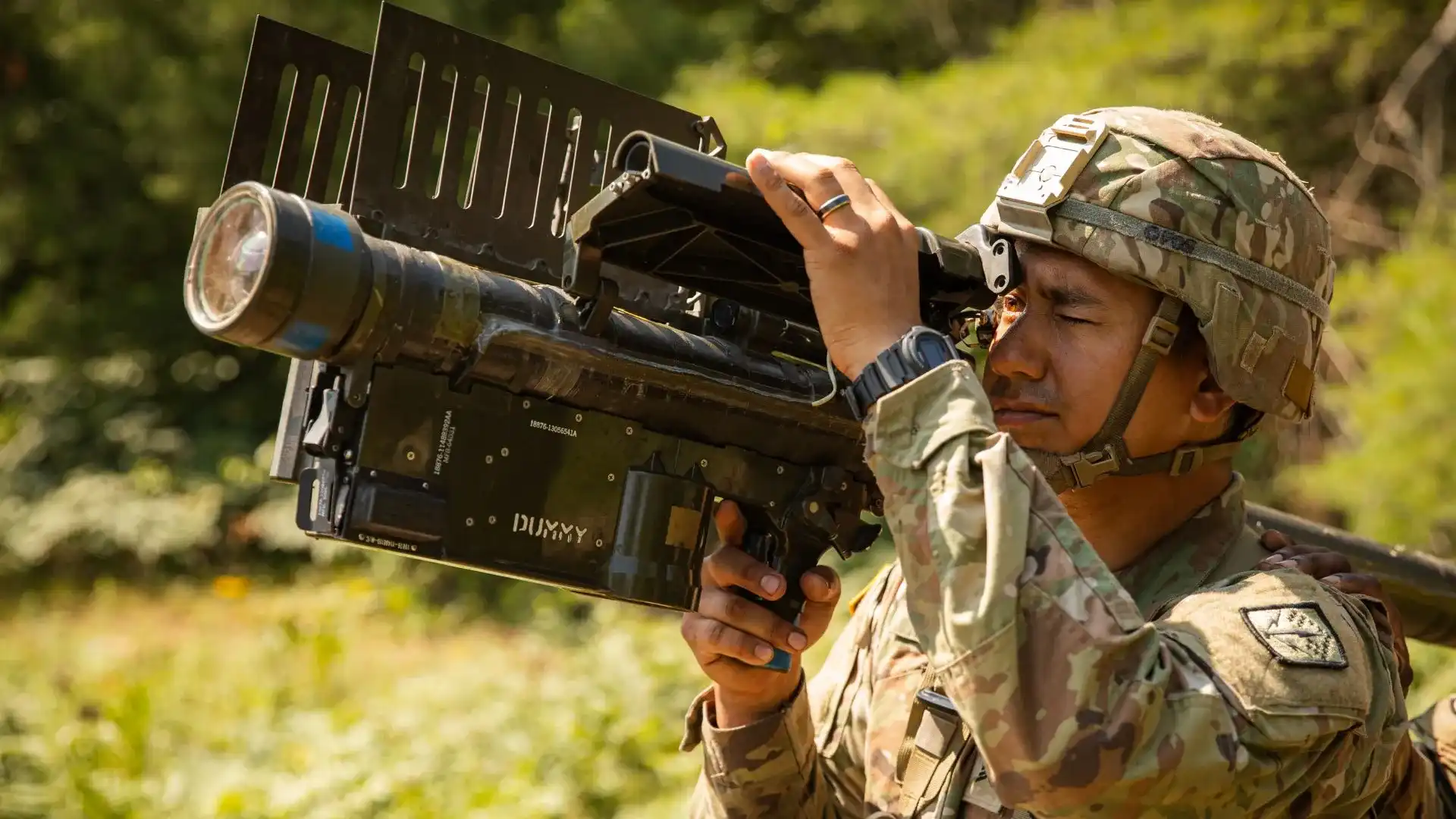
On November 20, 2026, the U.S. Army asked industry for a third Stinger replacement missile that can hit Group 3 drones at up to 8,000 meters, with a cost goal under $200,000 per missile. Army Contracting Command at Redstone Arsenal, Alabama, issued the Call for Solutions for a Next Generation Short Range Interceptor (NGSRI) Alternate Interceptor, seeking ready-made, soldier-portable surface-to-air missiles that can go directly into government-led developmental testing. Solution briefs are due by 4:00 p.m. Central Time on December 20, 2026, and the service plans to award one or more prototype Other Transaction Agreements in September 2027.
The solicitation, numbered MOSAIC-26-04, was issued on behalf of the Short and Intermediate Effectors for Layered Defense (SHIELD) project office under Portfolio Acquisition Executive Fires. It arrives as the two NGSRI incumbents selected in 2023, Lockheed Martin and RTX’s Raytheon, push their designs through testing. Lockheed Martin first flew its interceptor at White Sands Missile Range, New Mexico, on January 13, 2026. Raytheon reported on July 15 that guided rounds fired from its soldier-portable Command Launch Assembly hit simulated aerial targets at Dugway Proving Ground, Utah. The fiscal 2027 budget request includes $215.1 million for NGSRI within $460.9 million for Maneuver Short-Range Air Defense (M-SHORAD) development.
Stinger Replacement Requirements: 8,000-Meter Intercepts Against Group 3 Drones
The Army defines NGSRI as a high-performance, soldier-portable, fire-and-forget surface-to-air missile intended to defeat rotary-wing aircraft, fixed-wing aircraft, and Group 2 and Group 3 unmanned aircraft systems. The missile must be day and night capable and backward compatible with FIM-92 Stinger launchers and legacy Stinger platforms, including the Army’s Stryker-based SGT STOUT and the U.S. Marine Corps’ Marine Air Defense Integrated System (MADIS). Offerors must also price the cost of retrofitting those platforms.
The live-fire demonstration sets the performance floor. Each invited vendor must fire at least one warhead round and one telemetered round from a soldier-portable launcher. The first mandatory event is an intercept of a heat-source “Hot Plate” target suspended no lower than 25 meters above ground level at a range of 6,000 meters. Two further events require intercepts of Group 3 unmanned aircraft at 5,000 to 8,000 meters, one at a 0-degree aspect angle and one at 90 degrees. Every event is scored pass or fail.
For comparison, publicly available specifications put the FIM-92 Stinger’s effective range at roughly 4.8 kilometers. A crossing-target intercept on a Group 3 drone at up to 8 kilometers stresses missile range and velocity, seeker lock-on range, and launcher acquisition range, all of which the solicitation lists among its technical merit criteria, along with the maturity of the modeling and simulation behind performance claims. Lethal effect may come from a direct hit or a proximity detonation.
Production Readiness and $200,000 Unit Cost Targets Drive Selection
The evaluation order makes clear the Army is buying hardware, not concepts. Solution briefs are scored first on readiness for a live-fire demonstration no later than May 2027, including hardware and software status, a safety danger zone analysis, an explosive ordnance disposal technical data package, and insensitive munition certifications. Technical merit ranks second, production readiness third, and cost fourth.
After the demonstration, award criteria shift toward delivery. A winning offeror must be ready to deliver at least 50 developmental test missiles and six launchers within three months of the live fire, and must be able to enter low-rate initial production no later than the fourth quarter of fiscal 2028. Affordability goals are set at less than $200,000 per missile and less than $200,000 per launcher. Offerors must also submit a rough order of magnitude estimate for producing at least 11,000 missiles and 2,200 launchers over ten years, built on the MIL-STD-881 work breakdown structure.
The prototype agreement would run up to 12 months on a firm-fixed-price basis with milestone payments. Under 10 U.S.C. § 4022, a successful prototype could move to follow-on production without a new competition, subject to available funding. Eligibility is limited to U.S. companies, or foreign companies with U.S. partners, able to handle SECRET information and hardware. Teams must also include a nontraditional defense contractor or nonprofit research institution in a significant role, consist only of small businesses or nontraditional contractors, or cover at least one third of prototype costs with non-federal funds.
Analysis: The alternate interceptor track turns a two-vendor development race into a hedge against schedule and price risk before the Army commits to 11,000 rounds. Readiness-first scoring and the 90-day delivery requirement favor teams that already hold a mature missile and launcher, while the eligibility rules leave room for new entrants and foreign designs offered through U.S. partners. The $200,000 ceiling also signals that the service treats NGSRI as a high-volume counter-drone magazine, with Group 3 unmanned aircraft now written into the core threat set alongside helicopters and fixed-wing aircraft.
Industry questions are due by November 30, 2026, and the Army expects to issue demonstration invitations in December 2026, ahead of live-fire events in May and June 2027. The solicitation does not say how an alternate award would affect the Lockheed Martin and Raytheon efforts, or how much funding is set aside for prototype missiles.