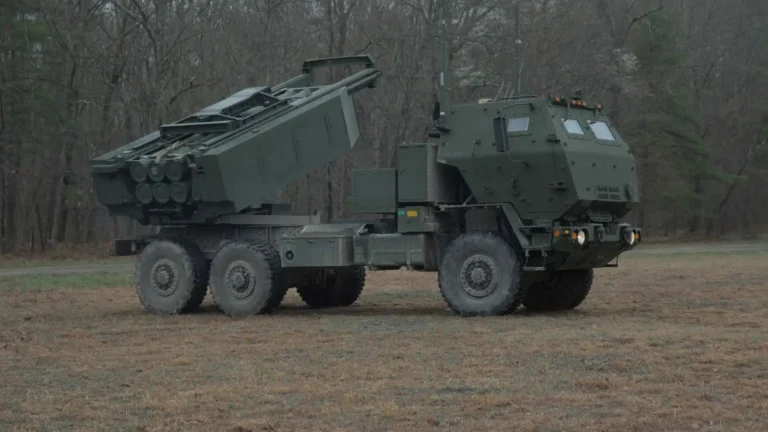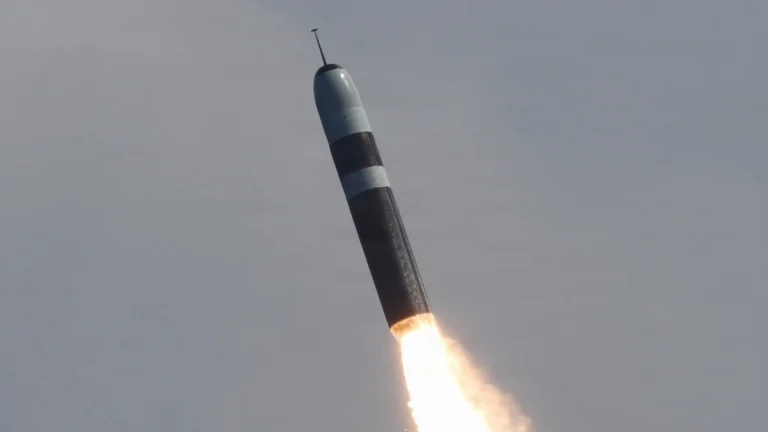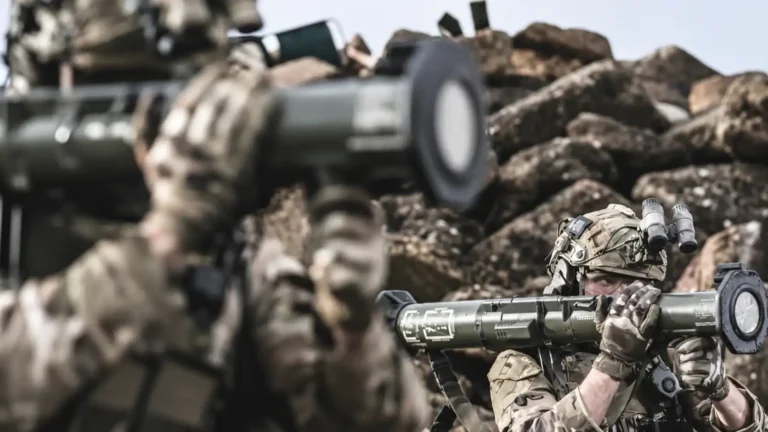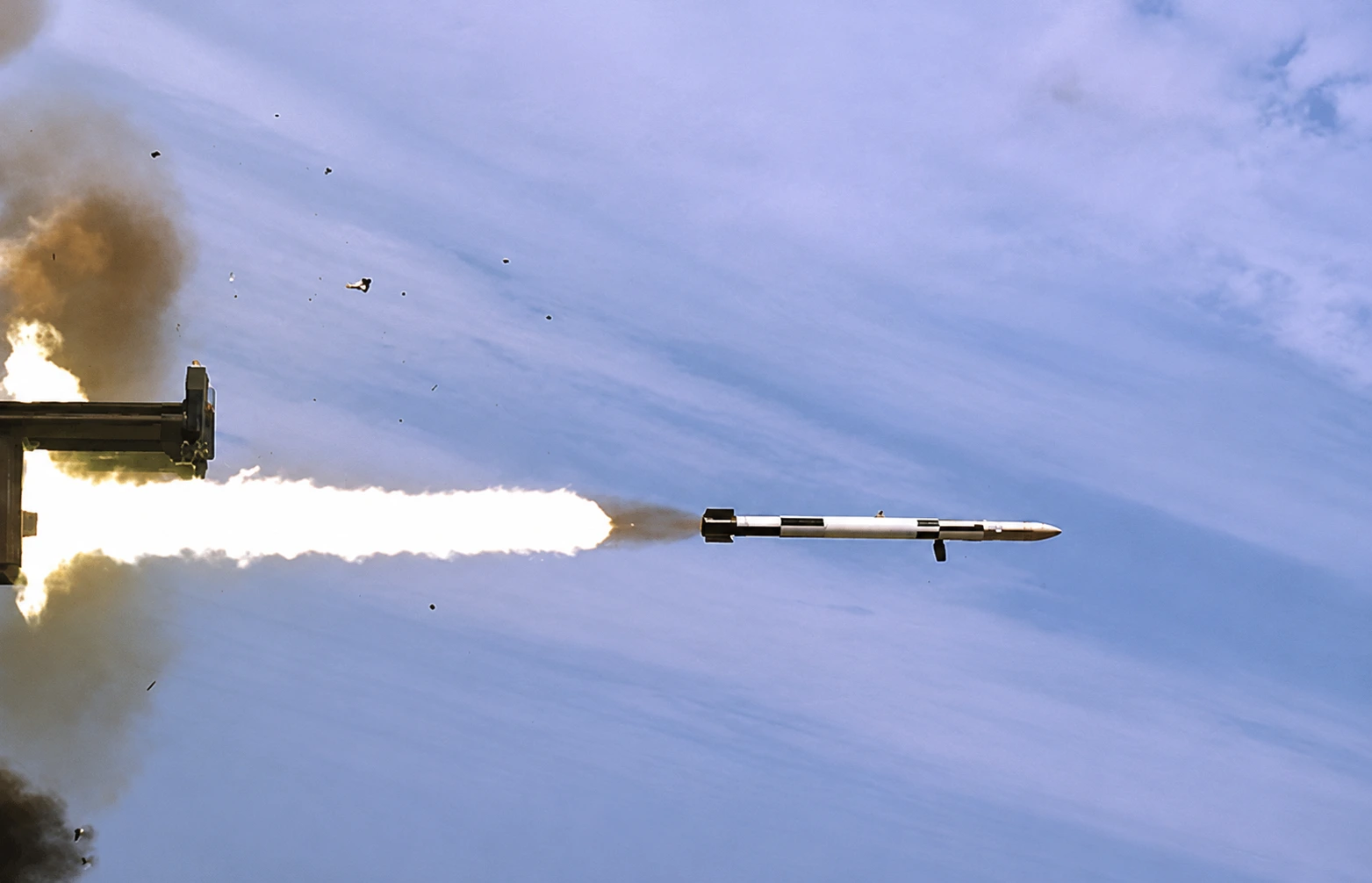
Lockheed Martin fired a full 24-round salvo of its JR3 training rocket, the Joint Reduced Range Rocket, at Yuma Proving Ground, Arizona, in a third flight test announced on November 23, 2026. The test demonstrated range, trajectory, accuracy and marking-payload effects. The JR3 pairs a low-cost rocket with a reusable 24-round launch pod and is being developed as a potential replacement for the Reduced Range Practice Rocket (RRPR) fired by U.S. Army and partner-nation crews from the M142 High Mobility Artillery Rocket System (HIMARS) and the M270 Multiple Launch Rocket System (MLRS). Army budget documentation plans a down-select to a single JR3 solution in the third quarter of fiscal year 2027.
The firing comes 15 months after the first JR3 flight. Lockheed Martin first flew a JR3 prototype at White Sands Missile Range, New Mexico, in August 2025 and reloaded the same tube to show reuse. A second test followed at Yuma in August 2026, with multiple rounds launched from a HIMARS. The November firing is the first full 24-round salvo, which matters because the program’s core promise is training volume: more live rounds per upload, at lower cost per shot, on ranges too small for combat munitions.
Inside the JR3 Training Rocket: Motor, Pod, and Marking Payload
Lockheed Martin describes the JR3 as an all-up round built on mature rocket motor technology, combining a low-cost motor with an adaptable payload. The marking payload lets crews and range controllers see where a round lands without explosive effects, preserving the call-for-fire feedback loop that qualification events depend on. The company says it supports drills day or night in varied environmental conditions.
The pod carries the cost argument. Reloadable launch tubes and a reusable pod mean the most expensive structure is not expended with each salvo, which Lockheed Martin says lowers cost per training round. Packaging also changes the training arithmetic. A standard MLRS Family of Munitions pod holds six 227mm rockets; a HIMARS carries one pod and an M270 carries two. If the 24-round JR3 pod uses the same launcher interface, as the company’s HIMARS and M270 compatibility claim implies, a HIMARS crew could fire 24 practice rounds per upload instead of six, and an M270 crew 48 instead of 12.
Key parameters remain undisclosed. Lockheed Martin has not published the JR3’s caliber, length, weight, motor type, achieved range or measured accuracy, nor which launcher fired the November salvo or a target unit cost. Army requirements reported in open sources call for a firing range of roughly 7.5 to 15 km, in line with the RRPR’s publicly listed 15 km maximum. “With a 24-round rocket launch pod, our JR3 system meets the Army’s demand for higher training volume and lower cost without sacrificing performance,” said Sabrina Barnes, vice president of Lockheed Martin Precision Fires Rockets.
Replacing the Aging M28A2-Based RRPR Before Army Stocks Run Out
The requirement is driven by inventory. The current Low-Cost Reduced Range Practice Rocket is built on M28A2 rocket motors last produced in the mid-1990s, with a blunt nose that limits range to 15 km and a ballasted, non-explosive payload. Army budget documentation states that the remaining motors and launch pod containers cannot sustain production beyond fiscal year 2030; earlier Army planning documents projected inventories would be exhausted by fiscal year 2032. The Army identifies the round as its only live training rocket that meets annual qualification and pre-deployment requirements, and U.S. Marine Corps HIMARS crews also fire it.
The Army is funding both sides of the transition. JR3 has its own research, development, test and evaluation line, with a fiscal year 2026 request of $28.9 million, while the legacy MLRS RRPR procurement line carries a FY2026 request of $32.3 million to sustain near-term stocks.
Lockheed Martin is not the only bidder. Raytheon announced on November 9, 2026, that its DeepStrike JR3 solution had completed a third successful flight test at Yuma, with a design that also carries 24 rockets in an MLRS Family of Munitions pod. Raytheon said it is preparing additional flight tests ahead of qualification. Both teams are now at comparable test maturity.
Analysis: JR3 is a training program, but its industrial logic reaches further. A cheap motor, a modular payload and a reloadable pod holding four times the rounds of a standard pod are the same ingredients the Army is pursuing for low-cost combat rockets, including the Direct Support Fires Technology project that the DEVCOM Aviation & Missile Center opened to industry in August 2025 to mature low-cost rocket technology and a reloadable MLRS-compatible pod. Lockheed Martin explicitly frames JR3’s modular architecture as a basis for future low-cost, mass-producible rockets. For the prime that builds HIMARS, the M270A2 and the Guided MLRS rocket, the training round is also a defensive position: a Raytheon win would give a competitor a production foothold inside a munitions family historically led by Lockheed Martin.
Army budget documentation schedules prototype flight evaluations through the third quarter of fiscal year 2027, a down-select to one solution in that same quarter, then qualification and user testing through the third quarter of fiscal year 2030, with JR3 production required to begin by fiscal year 2030. Open questions include achieved range and dispersion data, unit cost against the legacy round, pod reuse life, and whether the Marine Corps and foreign HIMARS and M270 operators will converge on a single JR3 configuration. With legacy motors unable to sustain production beyond fiscal year 2030, the Army has limited room to let the competition run long.