The US Army’s 2nd Battalion, 20th Field Artillery Regiment (2-20 FAR) compressed a year-long gunnery cycle into three and a half months at Fort Sill, Oklahoma, this fall to reach Table XV qualification. The cycle ran from individual section certifications in August to battery-level live fires in November 2026 and included joint counter-drone training during Operation Diamond Fury, the 75th Field Artillery Brigade said. It prepares the “Deep Strike” battalion to assume contingency response force responsibilities on January 1, 2027.
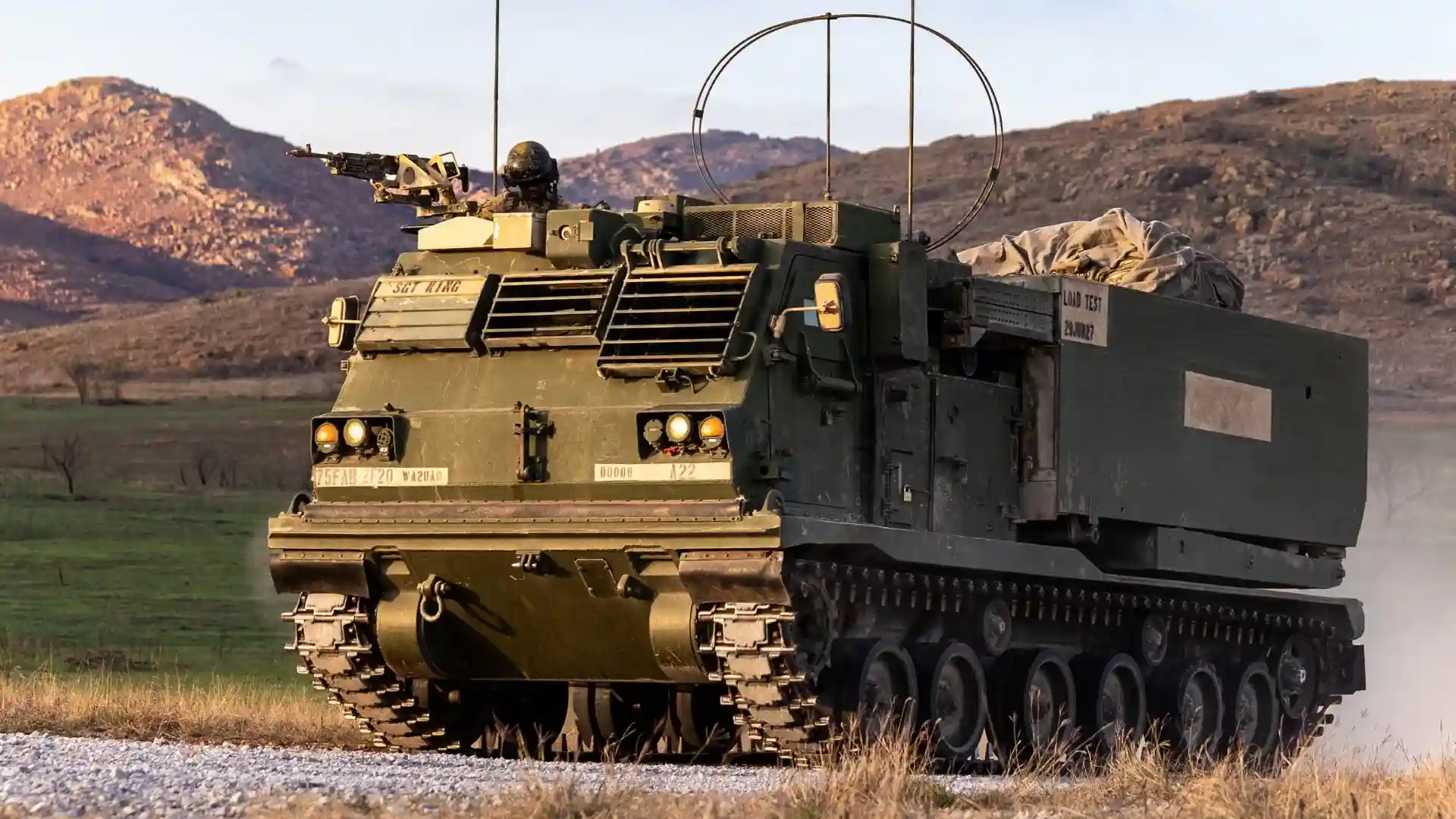
The timeline matters because a contingency response force leaves little margin for error: the unit must be ready to deploy and deliver fires on short notice. According to its official Fort Sill unit page, 2-20 FAR became the Army’s first M270A1 Multiple Launch Rocket System (MLRS) unit in 2001, and its batteries provide fires in support of III Armored Corps. Brigade leadership chose to raise the certification bar rather than accept the regulatory minimum, then validated the battalion’s sustainment element against aerial threats in a separate joint setting.
Why Brigade Leaders Made Table XV Qualification a Deployment Gate
Field artillery gunnery progresses in sequence. Units begin with Table VI, which certifies individual launcher sections, advance to Table XII to qualify platoons, and finish with Table XV, which validates an entire battery’s ability to integrate fires, communications, and tactical movement under combat conditions. Army regulations typically require firing batteries to reach Table XII before they assume deployment orders. The 75th Field Artillery Brigade added the Table XV collective qualification as a mandatory certification gate on top of that requirement.
Running all three tables between August and November left little slack between gates. External observer-coach/trainers from the 1st Battalion, 14th Field Artillery Regiment evaluated the qualification runs on the Fort Sill ranges, a step intended to hold the battalion to combat standards rather than internal assessment.
“The battery mission is to provide those lethal and timely fires in support of III Armored Corps to allow them their freedom of maneuver,” said Capt. Jaime Alvarado, commander of Headquarters and Headquarters Battery, 2-20 FAR, on November 4, 2026.
The battery-level emphasis fits the platform. The M270 launcher carries two pods of six Guided MLRS (GMLRS) rockets, and the GMLRS Unitary round has a range exceeding 70 kilometers, according to manufacturer Lockheed Martin. The system can also fire the Army Tactical Missile System (ATACMS). Because Table XV tests fires, communications, and tactical movement together, it measures more than accuracy. The Army has not disclosed which M270 variant the battalion fielded during the cycle, how many rounds were fired, or individual battery scores.
Counter-UAS Drills Test 2-20 FAR Sustainment at Altus Air Force Base
While the firing batteries qualified at Fort Sill, the battalion’s 67th Forward Support Company (FSC) deployed to Altus Air Force Base in southwestern Oklahoma to replicate the extended supply lines of large-scale combat operations. Operating at distance forced logisticians to execute realistic sustainment packages far from the main tactical assembly area.
“The focus is to test communications at distance and the ability to operate individually yet simultaneously toward the larger mission,” said Capt. Gabriel Buckles, the 2-20 FAR assistant S3. “The training value is that it lets Soldiers test their equipment, communications gear, and mental readiness for rapid mission execution.”
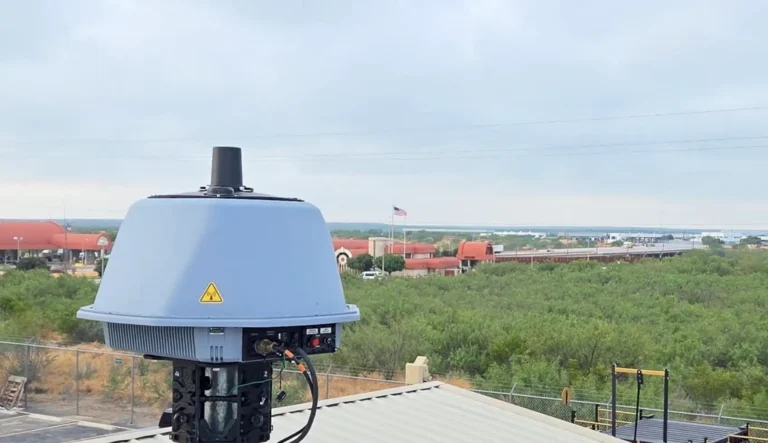
At Altus, the support Soldiers partnered with Air Force security forces for react-to-unmanned-aerial-systems (UAS) training. The drills focused on identifying, reporting, and reacting to aerial threats while keeping ammunition and supplies flowing to forward firing units. For a rocket battalion, that flow is the limiting factor: every launcher that empties its pods needs a resupply run before it can fire again. The Army did not specify which drone types, detection sensors, or defeat systems were used, and the training as described centered on passive and reactive measures rather than kinetic engagement.
Analysis: Adding Table XV above the regulatory floor moves the certification standard for an alert force from the platoon to the battery, the echelon at which rocket fires are actually planned, massed, and moved. Pairing that with counter-drone drills for the forward support company matches a lesson the Army has drawn from Ukraine. An Army sustainment analysis notes that persistent Russian surveillance and long-range fires pushed Ukrainian logistics units to replace centralized depots with small, mobile resupply points, and that logistics nodes can no longer assume they will operate in secure rear zones. A long-range fires battalion whose ammunition trucks cannot operate under drone observation cannot sustain a tempo of fire, regardless of how well its crews qualify. The open question is whether a three-and-a-half-month cycle is repeatable across the brigade without eroding equipment readiness or Soldier recovery time.
The next milestone is January 1, 2027, when 2-20 FAR assumes its contingency response force role. Still unknown are the qualification results by battery, the after-action findings from Operation Diamond Fury, and whether the 75th Field Artillery Brigade will apply the compressed Table XV model to its other battalions ahead of their own alert cycles.