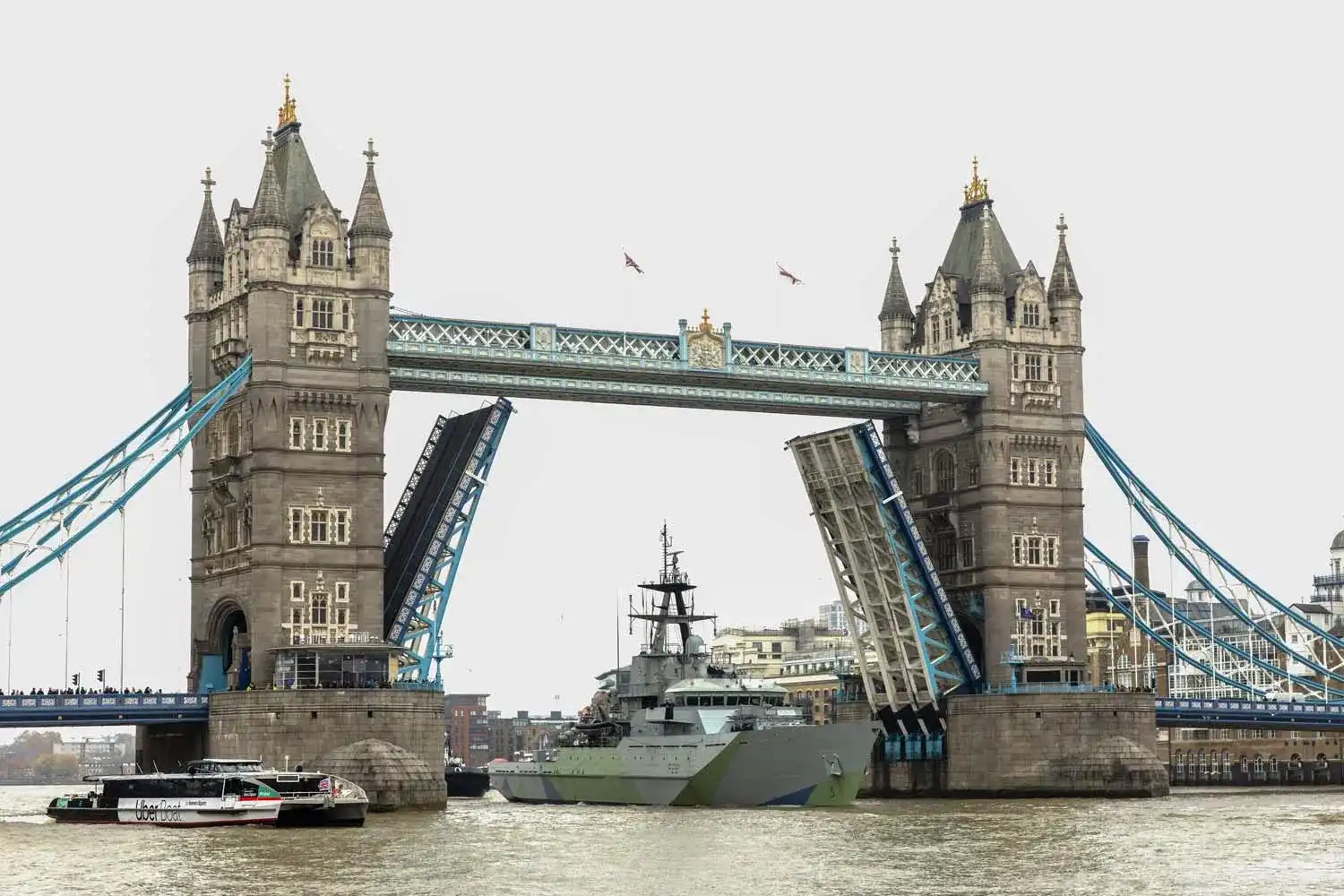
The Royal Navy has berthed offshore patrol vessel HMS Tyne alongside HMS Belfast in central London this week to showcase its Hybrid Navy concept, embarking uncrewed surface and air systems and using the ship as the venue for a £142 million investment in REMUS 620 uncrewed underwater vehicles (UUVs) for minehunting. The visit, announced by the Royal Navy on November 25, 2026, gives ministers, industry and defense stakeholders a first-hand look at the service’s crewed-uncrewed force.
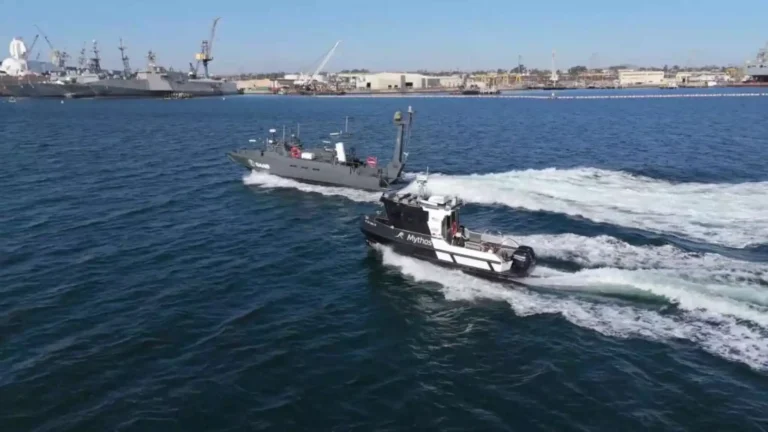
The London stop comes three weeks after the Royal Navy commissioned its 1st Autonomous Squadron (1AS) at His Majesty’s Naval Base Portsmouth on November 5, 2026. The unit of around 180 personnel replaces Project Beehive, its earlier uncrewed boat procurement effort. It also follows a busy year for Tyne, which in October deployed with Type 45 destroyer HMS Dauntless and Royal Navy helicopters to report on Russian ship movements in the English Channel. The Hybrid Navy effort is backed by £1.5 billion over four years.
Kraken K3 Scout Leads the Hybrid Navy Showcase Aboard HMS Tyne
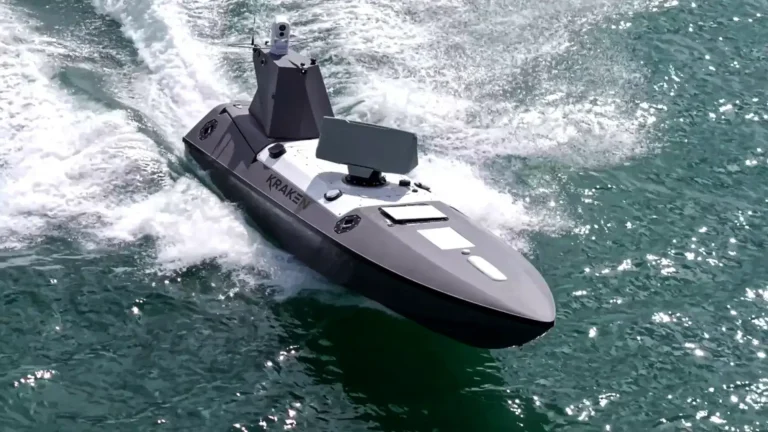
Tyne carries a Kraken K3 Scout uncrewed surface vessel (USV) and its control equipment from 1AS, alongside uncrewed air systems from 700X Naval Air Squadron. Publicly available specifications indicate the K3 Scout measures 8.4 m in length with a 1.93 m beam, displaces up to 2,500 kg and reaches up to 55 knots. The Ministry of Defence ordered 20 of the boats for £12.3 million under Project Beehive, and Saab announced on November 10, 2026 a £15 million contract for Sea Giraffe 1X radars to let the craft detect drones and other airborne threats.
The host ship is a legacy platform. Tyne (P281), lead ship of the Batch 1 River-class, was commissioned on July 4, 2003, displaces about 1,700 tonnes over 79.5 m and reaches 20 knots on two Ruston diesel engines. Embarked uncrewed systems extend the sensor reach of a hull with no organic aviation.
Lieutenant Commander Sam Fields, Commanding Officer of HMS Tyne, said the ship would “showcase how emerging technologies and autonomous systems can work alongside our people to create a more capable, resilient and adaptable navy.”
REMUS 620 UUVs Reshape Royal Navy Mine Countermeasures
The investment announced aboard Tyne funds REMUS 620 UUVs built by HII. The vehicles travel at up to 8 knots, dive to 600 m and operate for up to 110 hours on a single mission. They will run on SeeByte SeeTrack and Neptune software already in Royal Navy service, with work supporting jobs in Portchester.
HII was selected on November 3, 2026 under the Mine Hunting Capability (MHC) Block 2 program, offering the REMUS 620 with a Thales SAMDIS 600 synthetic aperture sonar ahead of bids from Exail Robotics, Teledyne Gavia and TKMS Atlas UK. HII announced on November 24 that the UK’s National Armaments Director Group had awarded it the £142 million contract, covering REMUS 620 vehicles, Sea Launcher launch and recovery systems, other equipment and support services. The number of vehicles has not been disclosed; an earlier request for information referenced up to 24 UUVs and eight launch and recovery systems.
The operational logic is stand-off. UUVs search suspect waters ahead of the force, keeping sailors clear of the mine threat. Defence Secretary Wes Streeting said the investment “strengthens our ability to protect freedom of navigation, which is critical to our security and our economy.”
Analysis: The visit is messaging, but contracts and an operational unit stand behind it. The Royal Navy is building mass through cheaper, attritable uncrewed systems while its crewed surface fleet remains small, and mine countermeasures is the mission where that trade is most mature: removing sailors from the minefield is a direct survivability gain. The harder test lies elsewhere. Surveillance-role USVs and UUVs complement escorts and minehunters; they do not replace the hulls needed to host, protect and sustain them.
Throughout the week, Tyne will host government, parliamentary, academic and industry audiences plus STEM visits. The next markers to watch are the MHC Block 2 delivery schedule and vehicle quantity, Giraffe 1X integration on the K3 Scout, and the first front-line deployments of 1AS outside UK waters.