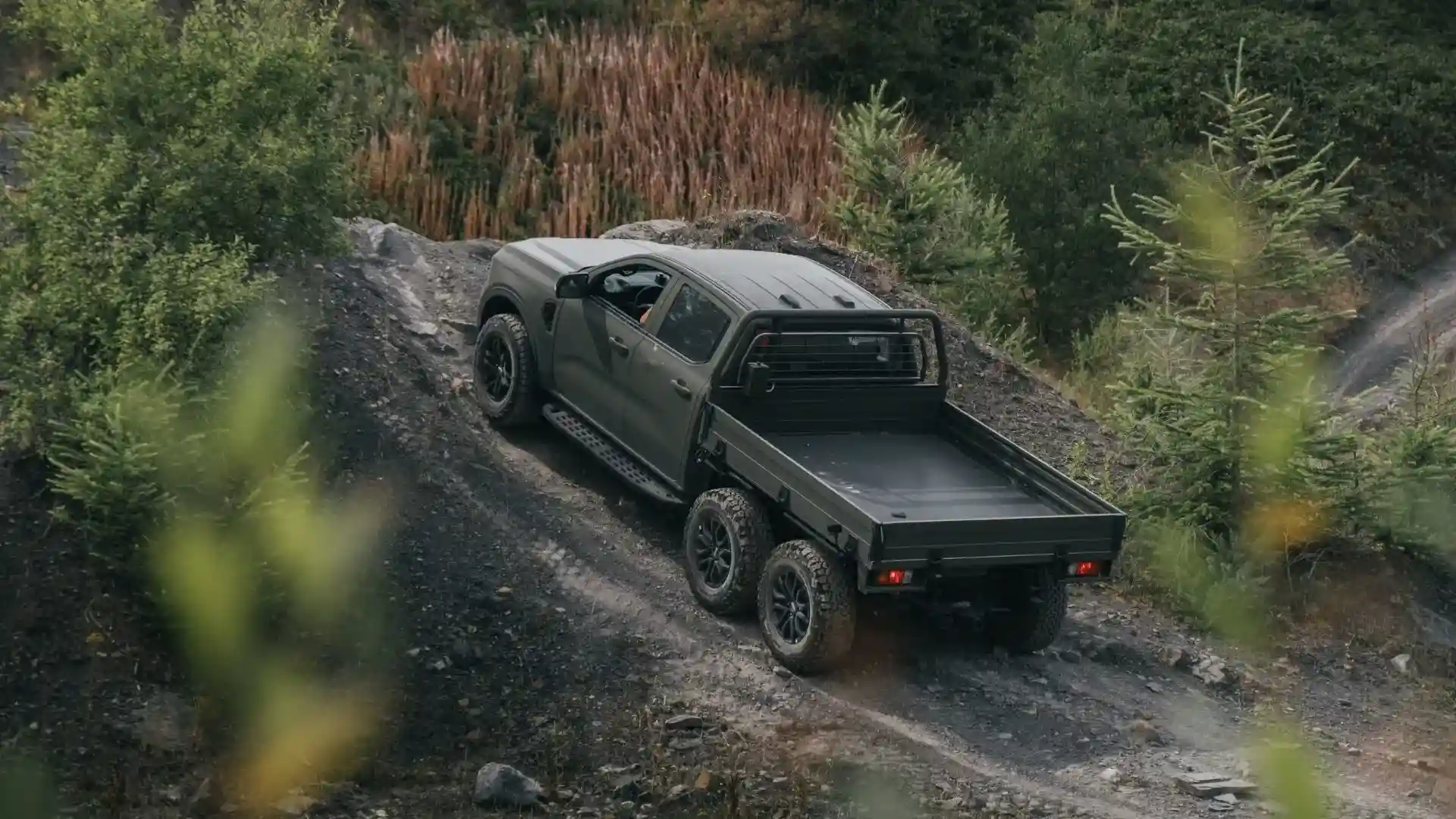
Ford Motor Company confirmed on November 24, 2026, that it has held talks with the Pentagon about supplying military vehicles and other defense products to US forces, the latest sign that Detroit’s legacy automakers are moving to capture a share of fast-rising defense spending. A Ford spokesperson said the discussions covered the supply of highly capable military vehicles and a partnership with Revolution Space, a US space systems contractor, to build advanced satellites.
The confirmation came hours after The Wall Street Journal reported that the Pentagon is in talks with General Motors (GM), Ford and other manufacturers to help mass-produce military drones by supplying components such as actuators, engines, sensors and lidar to drone companies. The outreach extends discussions first reported by the Journal in April 2026, when senior defense officials held talks with executives from GM, Ford, GE Aerospace and Oshkosh about expanding weapons production, and it unfolds alongside a proposed $1.5 trillion defense budget that funds munitions and drone manufacturing. During World War II, Detroit’s automakers converted their factories to build tanks, jet engines and trucks.
Ford Pentagon Talks Build on ISV-Heavy Bid and Revolution Space Stake
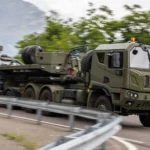
Ford enters these talks with a live Army program. On June 30, 2026, the Army awarded firm-fixed-price Other Transaction Agreements (OTAs) to Ford, GM Defense and BC Customs to develop prototypes for the Infantry Squad Vehicle-Heavy (ISV-H), a heavier, six-seat evolution of the lightweight, unarmored Infantry Squad Vehicle. Each company must deliver three prototypes by March 30, 2027, after which Army Test and Evaluation Command will assess them. Ford’s entry, managed by its Industrial Platform subsidiary, is derived from the F-Series Super Duty pickup; GM Defense is offering a militarized Chevrolet Silverado HD 3500.
The Army’s Commercial Solutions Opening for the program, released on March 30, 2026, allows up to three contracts for 606 ISV-H vehicles, although quantities could vary. The requirement emphasizes exportable power for on-the-move command-and-control systems and other mission equipment. Each prototype agreement carries a reported initial value of $3.33 million, and BC Customs has confirmed a $3.3 million OTA for its own entry.
The space element is newer. On November 23, Industrial Platform agreed to take a minority stake in Boston-based Revolution Space, a space systems prime contractor whose in-space propulsion technologies give its spacecraft maneuverability for high-value missions, according to Ford. Financial terms were not disclosed, and closing remains subject to regulatory approvals. Ford says it will contribute design, engineering, manufacturing and supply chain capacity to industrialize the company’s next-generation spacecraft, a volume-driven model aligned with the military’s shift toward satellites produced in tranches rather than as bespoke units.
Drone Motors, Lidar and Actuators: GM and Magna Join Pentagon Push
The drone component effort targets a different bottleneck. According to the Journal, GM is weighing whether to manufacture drone motors and has held talks with RTX and L3Harris on similar arrangements, with its interest driven largely by requests from senior defense officials. US defense officials have also met executives at Canadian parts maker Magna International and at manufacturers outside the auto sector. GM declined to comment on the report but said its Defense unit has extensive capabilities and scale and has “demonstrated our commitment to reinforce the US defense-industrial base and help address critical needs.” Magna said it had nothing to add.
The Pentagon framed the outreach as structural. “The Department of War is actively partnering with domestic manufacturers, suppliers, and emerging tech firms to build a resilient, high-capacity industrial base that accelerates the production, deployment, and long-term sustainment of next-generation unmanned and autonomous systems,” a Pentagon official said.
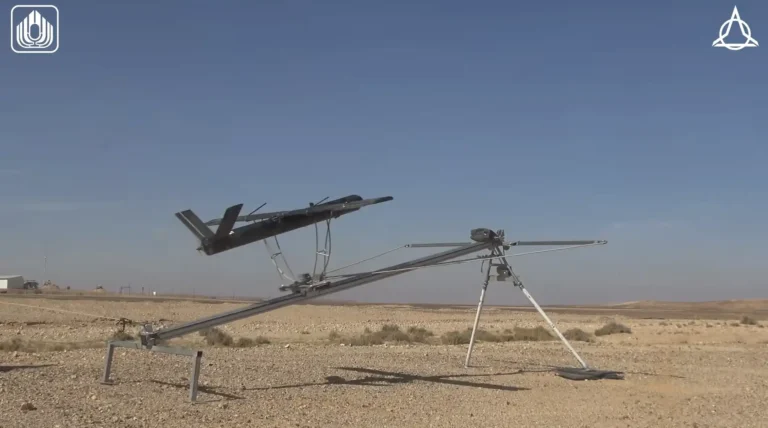
The demand signal is the Drone Dominance Program, the roughly $1.1 billion effort launched in late 2025 to buy more than 200,000 low-cost, one-way attack small uncrewed aircraft systems by 2027 through successive “Gauntlet” competitions. Phase one orders priced drones at about $5,000 per unit, and program officials aim to bring costs down toward $2,000 per unit over the life of the effort. Reaching that cost curve depends less on airframes than on motors, actuators, sensors and electronics produced at volume, categories where automotive suppliers already operate.
Analysis: The automakers’ value to the Pentagon lies in subsystems, not finished weapons. Detroit cannot quickly qualify a missile or design a combat drone, but it can produce electric motors, wiring harnesses and sensor assemblies at rates and unit costs that traditional defense primes do not approach. If the talks mature into supply agreements, the likely model is tiered: drone makers and primes such as RTX and L3Harris retain system integration, while automakers act as high-volume component suppliers. That would ease a persistent chokepoint in the small drone industrial base, though it would also tie military output to commercial supply chains with their own exposure to imported rare earths and electronics.
No contract has emerged from the latest discussions, and neither Ford nor GM has disclosed product scope, volumes or timelines. The nearest firm milestone is the March 30, 2027, ISV-H prototype delivery deadline, which will test whether Ford’s commercial-derivative approach can close the gap on GM Defense’s head start. Further Drone Dominance orders and any component supply deals announced in the coming months will show whether the drone parts outreach moves beyond exploratory talks.