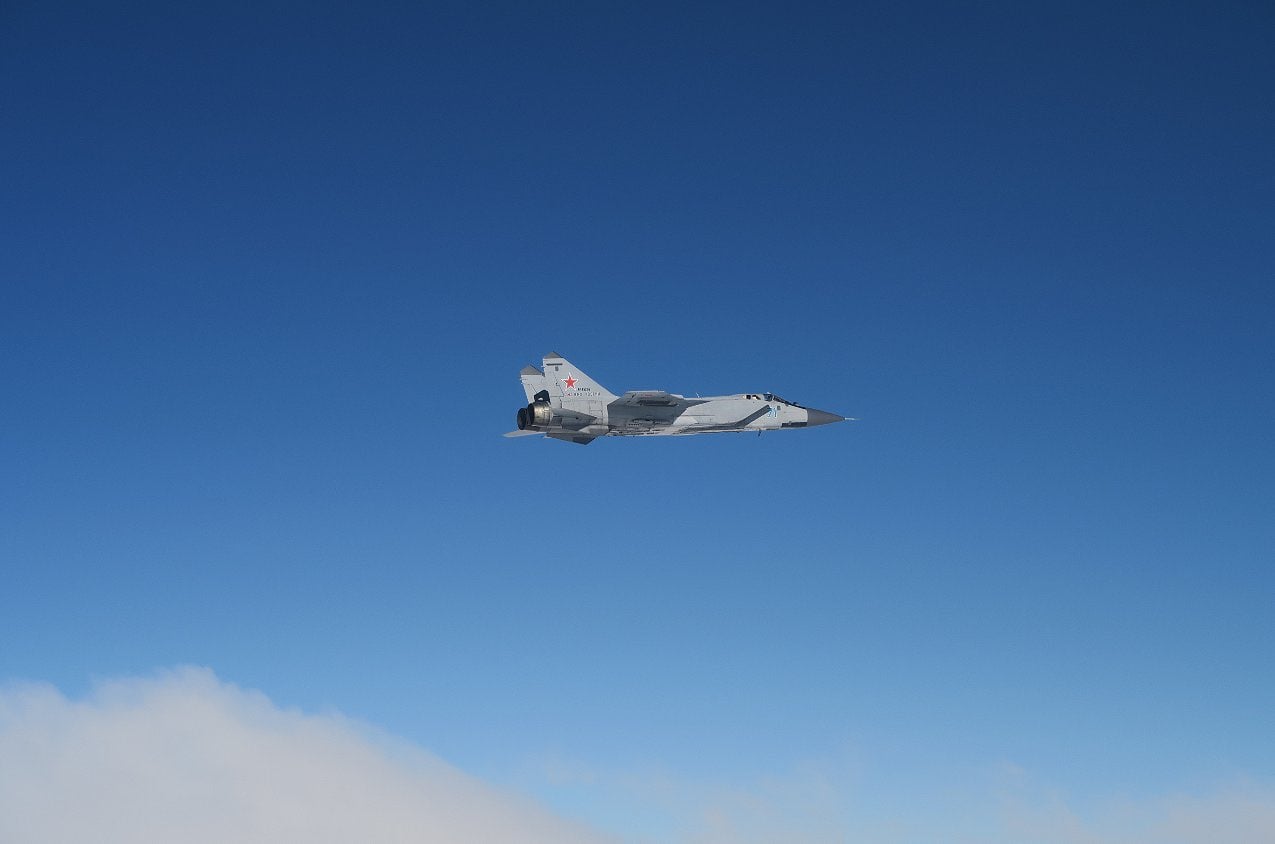
Finland and Sweden scrambled Quick Reaction Alert (QRA) fighters on September 24, 2026, to intercept and identify Russian military aircraft in international airspace over the Gulf of Finland, the first joint operational identification mission by the two air forces, according to the Finnish Defence Forces. The mission involved Finnish F/A-18 Hornet and Swedish JAS 39 Gripen jets, which identified a Russian detachment consisting of a Tu-134 transport aircraft (NATO name Crusty), MiG-31 fighters (Foxhound) and Su-30 fighters (Flanker-H).
The mission follows the arrangement the Finnish Defence Forces announced on August 28, 2026, under which Sweden contributes JAS 39 Gripen fighters and a Visby-class corvette to the surveillance and protection of Finland’s territorial integrity, at least until the end of 2026. Helsinki cited stray Ukrainian drones entering Finnish airspace and the need to sustain heightened readiness, while stating that no direct military threat is directed against Finland. Finland joined the North Atlantic Treaty Organization (NATO) on April 4, 2023, and Sweden followed on March 7, 2024.
Finland and Sweden QRA Cooperation: How the Joint Mission Worked
According to the Finnish Defence Forces, the Finnish Air Force’s Air Operations Centre led the mission. Colonel Vesa Mäntylä, Deputy Chief of Staff at Air Force Command Finland, said the deeper cooperation that began this autumn enables joint identification missions and lets QRA fighters operate from the other country’s air bases. Fighters on QRA duty stay mainly at national bases, with locations and response times tailored to the prevailing situation. Major General Jonas Wikman, who commands the Swedish Air Force, said the two forces “can now operate seamlessly together.” Swedish accounts add that the Finnish centre directed the Swedish aircraft and that jets launched from both countries before joining up.
The release does not disclose the number of aircraft on either side, the launch bases, the Russian group’s origin and destination, or whether it carried a filed flight plan or an active transponder. It also leaves open the tactical control arrangements and the Gripen version involved.
Publicly available specifications indicate that the two fleets share key building blocks. Finland’s F/A-18C/D Hornets, powered by two General Electric F404 engines and upgraded under the Mid-Life Upgrade 2 program by 2016, carry the Link 16 datalink, the AIM-120C-7 Advanced Medium-Range Air-to-Air Missile (AMRAAM) and the AIM-9X Sidewinder cued by a helmet-mounted sight. Sweden’s Gripen, a Mach 2 fighter powered in its C and D versions by a single Volvo RM12 rated at about 80 kilonewtons with afterburner, employs the AMRAAM family, the IRIS-T short-range missile and, since 2016, the MBDA Meteor beyond-visual-range missile. The shared missile family eases cross-basing logistics, although neither release describes rearming arrangements.
Nordic Air Power Framework and Finland’s Hornet-to-F-35 Transition
The mission gives operational shape to Nordic Air Power, the framework in which the Finnish, Swedish, Norwegian and Danish air forces build interoperability within NATO’s collective defense. The four air chiefs signed the first Nordic Air Commanders’ Intent on March 16, 2023, aiming to operate as one force across roughly 250 combat aircraft. Finnish and Swedish crews have flown Cross Border Training sorties almost weekly for years, and both coordinate Baltic activity with NATO Baltic Air Policing detachments, per the Finnish Defence Forces.
Earlier cases show the contrast. On April 24, 2023, Danish and Swedish QRA fighters intercepted a Russian aircraft over the Baltic Sea while remaining under their own national command, according to NATO Allied Air Command. On July 15, 2024, the same command reported that Finland and Sweden each launched QRA forces to intercept two Russian fighters flying from Kaliningrad to mainland Russia without a flight plan, civilian air traffic control contact or transponder signal.
Timing also matters for Finland. The first two Lockheed Martin F-35A Lightning II fighters landed at Lapland Air Wing in Rovaniemi on September 18, 2026, six days before the mission. Finland has ordered 64 F-35As, expects initial operational capability (IOC) in early 2028 and full operational capability by the end of 2030, and will operate Hornets and F-35As side by side until then. The Hornet fleet, in service since 1995, remains Finland’s alert-duty aircraft while the F-35A completes airworthiness and acceptance checks. The Finnish Defence Forces state that the Swedish contribution strengthens air surveillance and releases Finnish resources for repelling violations and incidents.
Analysis: The intercept itself is routine; the command architecture is not. The Finland and Sweden QRA model now has a single national Air Operations Centre leading a live identification flown by two air forces, backed by permission to operate from each other’s bases. That turns Nordic Air Power from planning documents into tested procedure. For Finland, the arrangement adds interceptor depth through a Hornet-to-F-35 transition that keeps both fleets flying until 2030. For Russia, flights near the Gulf of Finland now meet a combined response. The release places the Russian group in international airspace and reports no violation, so the mission reads as a readiness demonstration rather than escalation.
The arrangement runs at least until the end of 2026, and the official releases do not say whether it will continue into 2027. Watch for an extension decision, for any reciprocal use of Swedish bases by Finnish QRA fighters, and for command and control details the releases leave open. The next hardware milestone is IOC for the F-35A at Lapland Air Wing in early 2028.