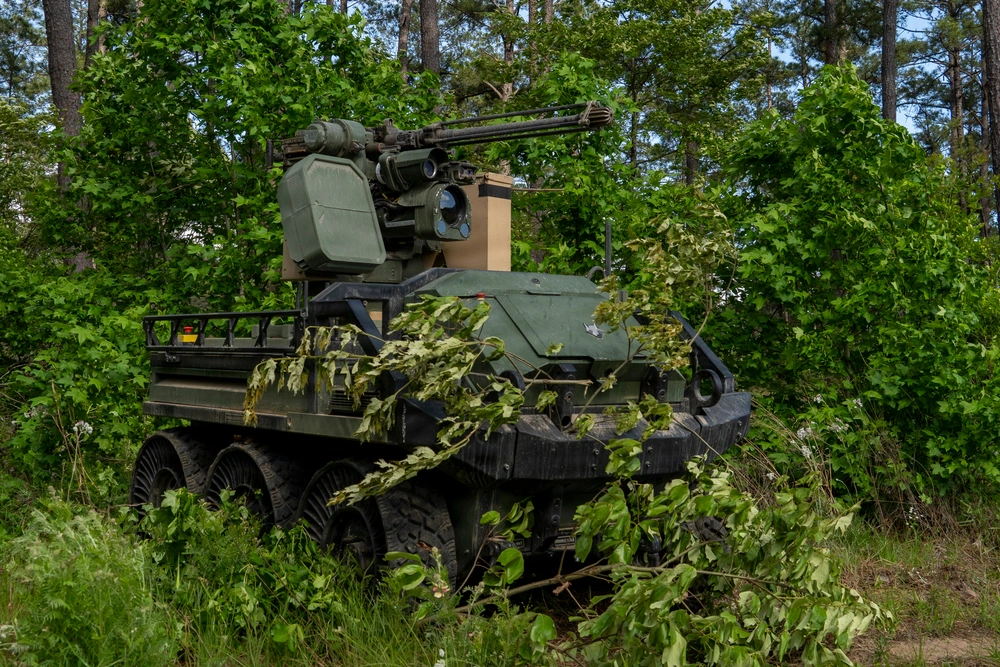
Acting Secretary of the Army Adam R. Telle signed a memorandum on October 1, 2026, directing the establishment of the U.S. Army Futures and Autonomous Systems Command (FASCOM), a new organization charged with pushing autonomous and robotic capabilities into the service’s formations. The directive, made public October 2, also orders changes to Army force structure, acquisition and personnel, and sets fiscal year 2028 as the deadline for fielding a priority list of autonomous capabilities.
The memo implements guidance from Secretary of War Pete Hegseth, who used his September 30, 2026, State of the Force address at Marine Corps Base Quantico, Virginia, to announce the Autonomous Warfare Command (AUTOWARCOM), a four-star combatant command with service-like authorities. Hegseth called on each military department to build the organizations, acquisition approaches and career fields required to accelerate autonomy. The Army signed its implementing order the next day. Telle said Hegseth had made clear that the department is “done with the bureaucratic inertia holding back modernization.”
How the Army Autonomy Command Fits Under AUTOWARCOM
Responsibility for standing up FASCOM rests with the Army Vice Chief of Staff, according to the memo. The material released with the announcement does not identify a commander, a headquarters location, manning levels or a budget line, and the Army has not said whether FASCOM will be a full Army command or a subordinate organization.
The name carries institutional history. The Army inactivated Army Futures Command on October 2, 2025, folding it and Training and Doctrine Command into the Army Transformation and Training Command (T2COM), headquartered in Austin, Texas, under Gen. David Hodne. T2COM unified force design, force development and force generation under one headquarters and inherited the requirements role Futures Command once held. FASCOM revives the Futures label one year later, and the Army has not yet explained how responsibilities will be divided between the two commands.
At the joint level, the Pentagon memo creating AUTOWARCOM states that the command will define joint needs and integrate service-provided forces in support of geographic combatant commanders. An interim effort, Project Agincourt, led by the Direct Reporting Portfolio Manager for Unmanned Systems, is laying the groundwork for the command while prototyping a new acquisition model. That design leaves the services to organize, train and equip the autonomous forces AUTOWARCOM will employ. FASCOM appears positioned to fill that force-provider role for the Army, although the public description of the memo does not define the relationship.
Portfolio Acquisition Executive for Autonomy and the FY2028 Priority List
The memo directs the Army to designate a Portfolio Acquisition Executive (PAE) for Autonomy, holding acquisition and rapid procurement authority for autonomous capabilities. Whether that role goes to a new office or to an existing PAE has not been specified publicly. Army autonomy work currently runs largely through the Capability Program Executive Office for Mission Autonomy, activated in February 2026 under Brig. Gen. Anthony Gibbs and nested inside an existing portfolio. Elevating autonomy to the portfolio level would give it direct standing in budget and priority decisions rather than leaving it as a subordinate office competing with legacy programs.
The PAE must prioritize the acquisition and fielding of autonomous fires, autonomous combat vehicles, watercraft resupply, breaching, and reconnaissance, surveillance and target acquisition (RSTA), along with collaborative teaming between crewed and uncrewed platforms, no later than FY2028. The breaching item tracks closely with a scenario CPE Mission Autonomy has already described, in which uncrewed systems conduct reconnaissance, deliver smoke and cue suppressive fires in support of a fully autonomous breach. Fiscal year 2028 ends September 30, 2028, leaving the Army roughly two years to move these categories from prototypes to fielded equipment.
Force Structure, 15X and 390A: Staffing Autonomy Inside Formations
Force structure and personnel changes run in parallel with acquisition. The Army G-3/5/7 Force Management Directorate will align force structure around autonomous capability in at least six formation areas: aviation, armor, fires, sustainment, engineer and training formations. The intent is to make autonomous systems an organic part of unit design rather than an add-on to existing tables of organization.
The Assistant Secretary of the Army for Manpower and Reserve Affairs will expand authorizations for two specialties to all applicable units. The 15X Tactical Unmanned Aircraft Systems Specialist merges the former 15E repairer and 15W operator specialties into a single enlisted career field. The 390A Robotics Technician, a warrant officer specialty first piloted within Army special operations, is designed to plan and integrate robotic and autonomous systems operations, manage attritable systems and their payloads, and serve as the subject matter expert at brigade or group level and above. Pushing both specialties closer to tactical formations answers Hegseth’s direction for new occupational frameworks in every military department.
Analysis: The directive matters less for the new headquarters than for the fact that it pulls three Army levers at once: force structure, acquisition authority and people. Autonomous systems that lack authorized positions, a dedicated budget line and trained operators and maintainers tend to remain demonstrators. By pairing a portfolio-level acquisition executive with formation redesign and wider specialist authorizations, the memo targets each of those failure points. The open risk is overlap. FASCOM, T2COM, the new PAE, CPE Mission Autonomy and the joint AUTOWARCOM will each claim part of the same problem, and the Army has yet to publish the command relationships that decide who sets requirements, who controls funding and who answers to combatant commanders.
The next milestones are organizational: naming FASCOM’s commander and headquarters, designating the PAE for Autonomy, and defining how FASCOM relates to T2COM and to AUTOWARCOM, which the Pentagon expects to stand up over the coming months. The FY2028 budget request, due in early 2027, will be the first opportunity to see whether the priority list carries dedicated funding. Until then, the FY2028 fielding deadline remains a directive rather than a funded plan.