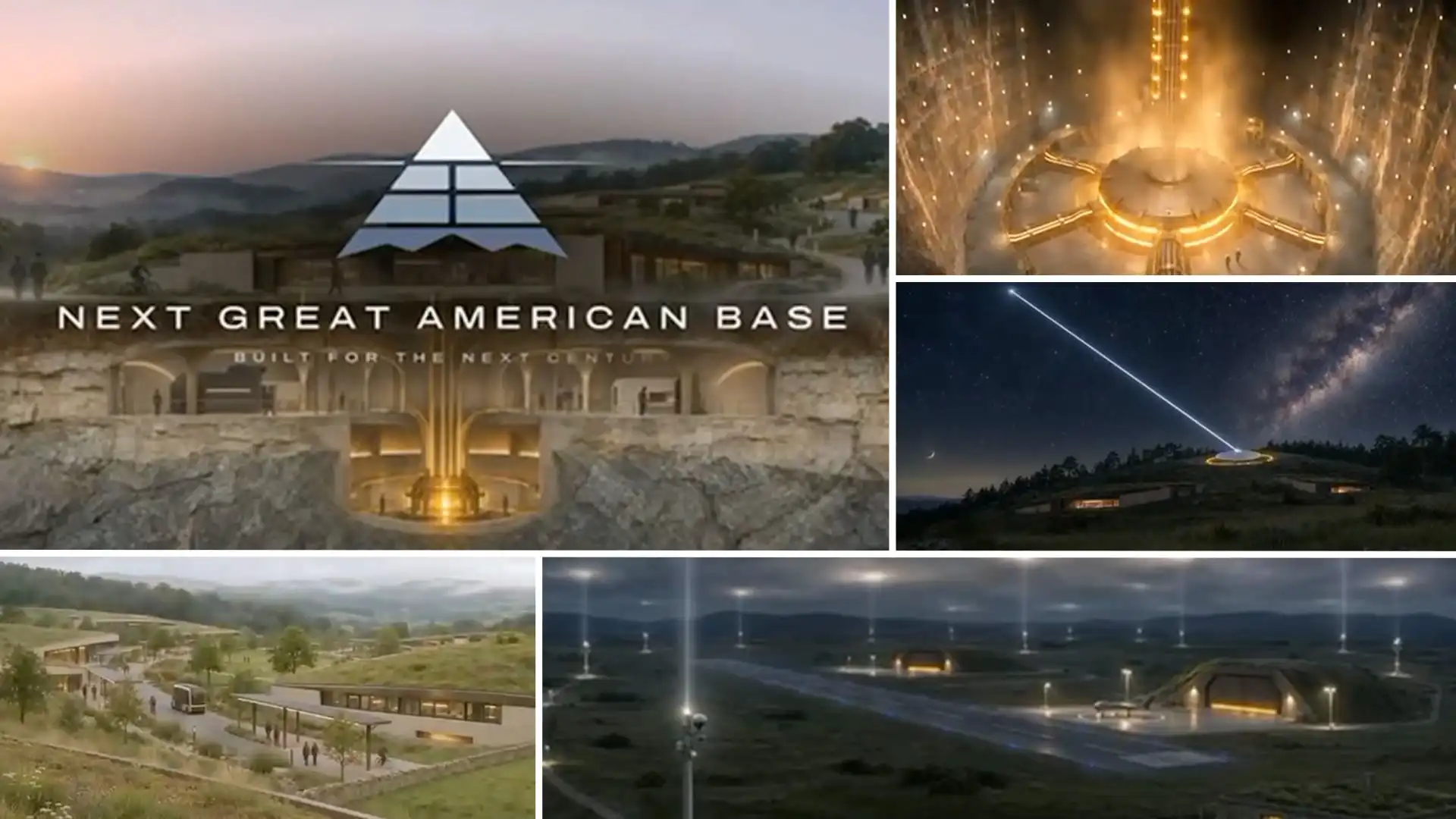
On November 17, 2026, the Department of War challenged governors to propose sites for the Next Great American Base, a prototype all-domain installation that must run 100% off-grid for up to 90 days. The challenge, issued in a video addressed to state governors and adjutants general, adds that critical acreage may need to sit hundreds of feet below the surface. Site nominations are due December 1, 2026.
Secretary of War Pete Hegseth launched the competition on September 30, 2026, during his State of the Force address at Marine Corps Base Quantico, presenting it as one of six strategic initiatives and as an alternative to rotating returning troops onto aging legacy posts. He pledged a merit-based contest among states, with pitch deliberations recorded and made public. The effort is led by Dale Marks, assistant secretary of war for energy, installations and environment, who told governors in an October 22 letter that nationwide interest had been “exceptional.” The department aims to select a site by June 2027.
Next Great American Base Requirements: Acreage, Population and Power
Marks set the tone bluntly in the new video. “We are not here to build another traditional garrison, flight line or concrete office park of the 20th century,” he said, describing a platform “postured for the next century” and built to adapt to “missions, threats and emerging domains that don’t yet have names.” He framed the installation as a “fortress of tomorrow” designed for 2050 and beyond.
Guidance issued since the September launch rests on four pillars. The first is land: 100,000 to 250,000 acres, or roughly 156 to 390 square miles, although smaller or larger sites remain eligible if otherwise compelling. The second is population: the base must support 15,000 to 25,000 active-duty personnel and their families, roughly 80,000 to 100,000 people, plus future autonomous formations. The third is self-sufficiency, built on small modular reactors, hardened microgrids and closed-loop water capture, treatment and recycling. The fourth is public-private partnership.
The November 17 video tightens the resilience standard. Citing the vulnerability of supply chains and civilian utilities, Marks said the department demands “complete operational autonomy,” meaning closed-loop self-sustainment of power, water, data and defense for up to 90 consecutive days. Earlier guidance set an interim benchmark: within its first 24 months, the base must generate full combat sorties for 30 continuous days while disconnected from the civilian grid.
Under the cost-sharing model, the department could fund the combat mission and power projection assets, with subterranean command shelters, munitions bunkers and tactical proving grounds cited as possible elements. Commercial capital would build and operate the supporting digital infrastructure. States are expected to offer land, housing, schools and community support, and host communities could contribute existing assets such as hospitals. No cost estimate has been released.
Layered Defenses and Subterranean Design Against Hypersonic Threats
Marks described the installation as “an invulnerable redoubt” that must defeat “hypersonic kinetic strikes and directed energy” as well as “cyber intrusions, orbital surveillance and electromagnetic warfare.” He called for “layered, self-healing defenses capable of repelling simultaneous, multivector assaults.” The department has not published the architecture, sensors or interceptors behind that requirement.
The survivability logic extends below ground. “In an era of pervasive space surveillance and hypervelocity weapons, vital strategic acreage may need to sit hundreds of feet below the surface,” Marks said, adding that evaluators are weighing “geological depth, subterranean cavern capacity and three-dimensional survivability alongside surface utility.” Geology thus becomes a selection variable alongside acreage and community support.
The planned tenant force reflects the same orientation. Officials have described a new operational formation including autonomous uncrewed strike wings, directed energy and counter-drone brigades, hypersonic maneuvering units and AI-driven joint operational task forces. Which services will host these units, and on what timeline, has not been specified.
Marks also stressed retention. “An impenetrable fortress must also be an inspiring home,” he said, calling for “human- and autonomous-centric, advanced livability” that blends “advanced subterranean security with top-tier quality of life.”
Analysis: The requirements describe a homeland installation designed on the premise that the continental United States is no longer a sanctuary from long-range precision strike, drone swarms or attacks on civilian infrastructure. That premise drives the costliest elements: reactor-backed islanding, deep hardening and integrated air and missile defense for a city-scale population. The 90-day autonomy target goes well beyond the 30-day interim benchmark, and small modular reactors remain at an early stage of military deployment, leaving a gap between ambition and fielded technology. The partnership model also turns site selection partly into a financial contest, favoring states able to commit land, capital and regulatory relief. Subterranean requirements will further narrow the field to candidates with suitable geology.
After the December 1 deadline, Marks’s team will engage nominees and assess each site before a panel makes the final choice, with presidential involvement possible. Officials expect the fiscal 2028 budget request to include initial funding. Key unknowns remain the program’s total cost, the weighting of selection criteria, and how Congress will authorize and fund an installation of this scale.