Ukrainian frontline units are wiring their positions with cameras, microphones and unmanned ground vehicles to watch for Russian infiltration when weather grounds their drones, while the state-backed Brave1 defense technology cluster develops a distributed ground sensor network of acoustic, seismic, optical and mini-radar sensors intended to automate that detection.
The effort responds to a structural problem. Ukrainian infantry remains chronically understrength, with some units reported at roughly 30% of authorized strength in early 2026, and Russian forces exploit the gaps by infiltrating in small groups, in some cases 10 to 15 kilometers into Ukrainian defensive depth, behind artillery positions and drone crews. Ukraine’s answer has been near-continuous aerial surveillance. That answer degrades every autumn, and Russian commanders schedule assaults for days when fog, rain and wind keep drones on the ground.
Weather Limits Drone Surveillance, Driving Ukraine Toward a Ground Sensor Network
According to the chief of staff of the unmanned systems battalion of the National Guard’s 12th Azov Special Forces Brigade, call sign “Tiran,” who described the system to Ukrainian defense outlet Oboronka, the brigade’s airspace is split into two echelons up to 30 kilometers deep. Fixed-wing reconnaissance UAVs cover the 10 to 30 kilometer band to find columns and cue long-range fires, although Russian FPV interceptor drones have made fixed-wing operations beyond 10 kilometers increasingly costly. Inside 10 kilometers, DJI Mavic, DJI Matrice and Autel quadcopters fly in continuous rotation so no sector goes uncovered during battery swaps.
Detected infantry is logged in Delta, Ukraine’s battlefield situational awareness system, and a duty officer assigns FPV or bomber drones within 1 to 15 minutes. Ground reconnaissance teams deploy only when terrain or cover denies drone access. Under heavy use and Russian electronic warfare, commercial quadcopters typically last 24 to 40 cumulative flight hours, so units avoid risking optics-equipped airframes on grenade drops.
Bad weather breaks the model. Gusts of 10 to 12 meters per second ground light quadcopters. Fog and humidity drive moisture into circuit boards and camera gimbals, a problem shared by heavy bombers such as the Vampire. Low cloud pushes fixed-wing aircraft below 500 meters, within reach of anti-aircraft guns and small arms, while frost cuts battery capacity. In summer, foliage forces daytime use of thermal drones such as the DJI Matrice 30T, Matrice 4T and Mavic 3T, which remain in short supply. At position level, Azov infantry now rely largely on hearing, emplacing wired cameras, microphones and speakers above their dugouts to monitor the perimeter from cover.
Brave1 Smart Skin Concept Links Acoustic Sensors, Cameras, and UGVs
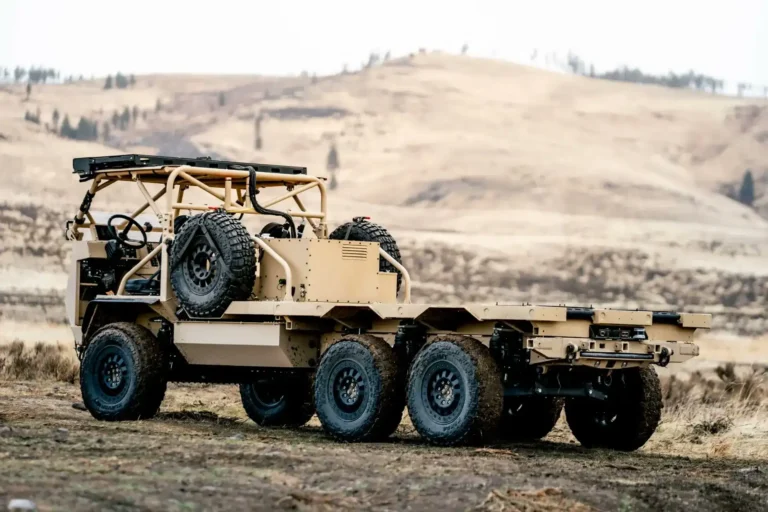
Forward units see unmanned ground vehicles as the best current stopgap. Wheeled and tracked UGVs sit along likely approaches as concealed observation posts, fitted with remote cameras, microphones and, where required, remote weapon stations or guided explosive charges. Onboard software alerts operators only when it detects motion. The 3rd Brigade’s NC13 strike UGV company already uses machine vision on turret-armed vehicles to scan assigned sectors and track moving or thermal targets.
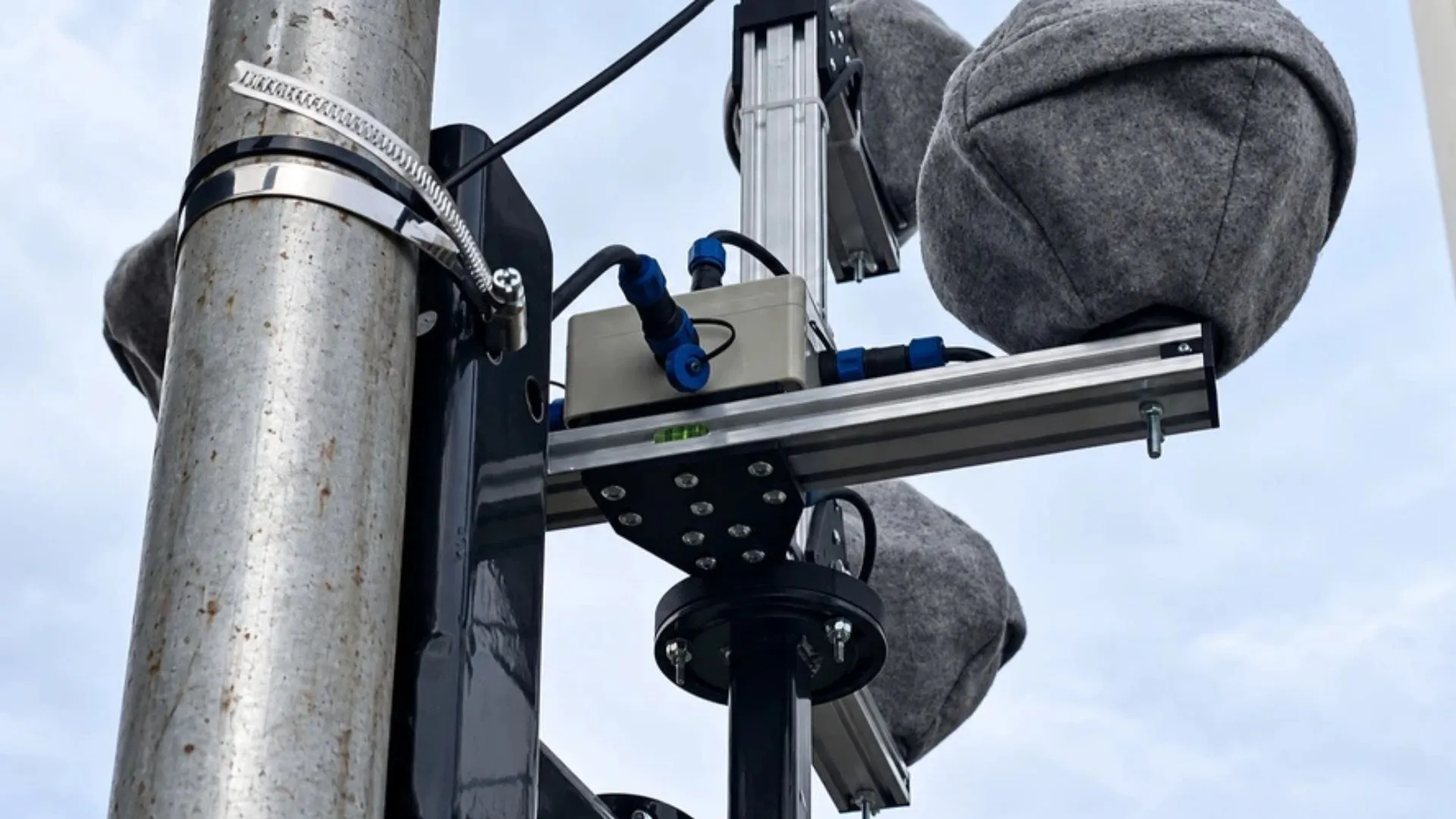
Brave1 announced in July 2026 plans to develop sensors for automatic detection of Russian forces. Andrii Hrytseniuk, head of the cluster, told Oboronka the planned ground sensor network would form a “smart skin of the earth” of acoustic and seismic sensors, cameras and mini-radars, with acoustic nodes seen as most promising where optics fail. Nodes sleep until triggered by sound, vibration or motion, process data locally, and send short messages over a mesh network through repeaters or gateways. When a camera loses a target behind grass or buildings, another node is expected to reacquire it.
The industrial base exists. Zvook.Tech developed the Zvook.Tracking system to track air targets. Vidar Systems has deployed pre-production acoustic artillery detection kits that the company says locate guns up to 25 kilometers away. Octava Defence’s FENEK, approved for service, detects Shahed-type drones at up to 3 kilometers and cruise missiles at up to 5 kilometers, per the manufacturer, which also claims ground applications. Hrytseniuk names fragmentation, not sensor quality, as the main barrier: the goal is one situational awareness loop that can later learn enemy routes and activity patterns.
Analysis: Ukraine’s drone-centric kill chain is fast but fair-weather, and Russia has learned to schedule its infantry around it. A passive ground layer cueing drones and strike UGVs would decouple detection from flying conditions and manpower, two variables Kyiv cannot fix quickly. Unattended ground sensors are not new; the US military fielded them under Operation Igloo White in Vietnam. What has changed is the cost curve and machine vision, and NATO armies planning eastern flank defenses with thin infantry should treat Ukraine’s integration effort as a preview of their own requirement.
Brave1 has not published a fielding timeline, unit cost, sensor quantities or a standard for integrating the ground sensor network with Delta. The 2026 to 2027 autumn and winter season will show whether unit-level improvisation and early cluster prototypes can narrow the detection gaps before Russia’s next bad-weather offensive cycle.