The Missile Defense Agency (MDA) has awarded Long Wall $75 million to complete flight testing of the Cyclops low-cost interceptor, the company announced on October 22, 2026. The Long Beach, California, firm will add $75 million of its own capital over the period of performance, bringing the combined effort to $150 million.
The award backs a program Long Wall began funding internally in 2024 and unveiled in December 2025, and it lands as US ballistic missile defense magazines run thin. Estimates of Terminal High Altitude Area Defense (THAAD) expenditure during the June 2025 Israel-Iran war range from 92 to more than 150 rounds, and Operation Epic Fury, launched against Iran in late February 2026, drew stocks down further. Analysts at the Center for Strategic and International Studies put remaining US THAAD holdings at 234 to 278 rounds. “Demand for interceptors has surged, while low production capacity and high unit costs remain major challenges to replenish expanded magazine depth,” said Dan Piemont, Long Wall co-founder and chief executive officer.
Cyclops Interceptor Design: Exoatmospheric Kill Vehicle and Containerized Launch
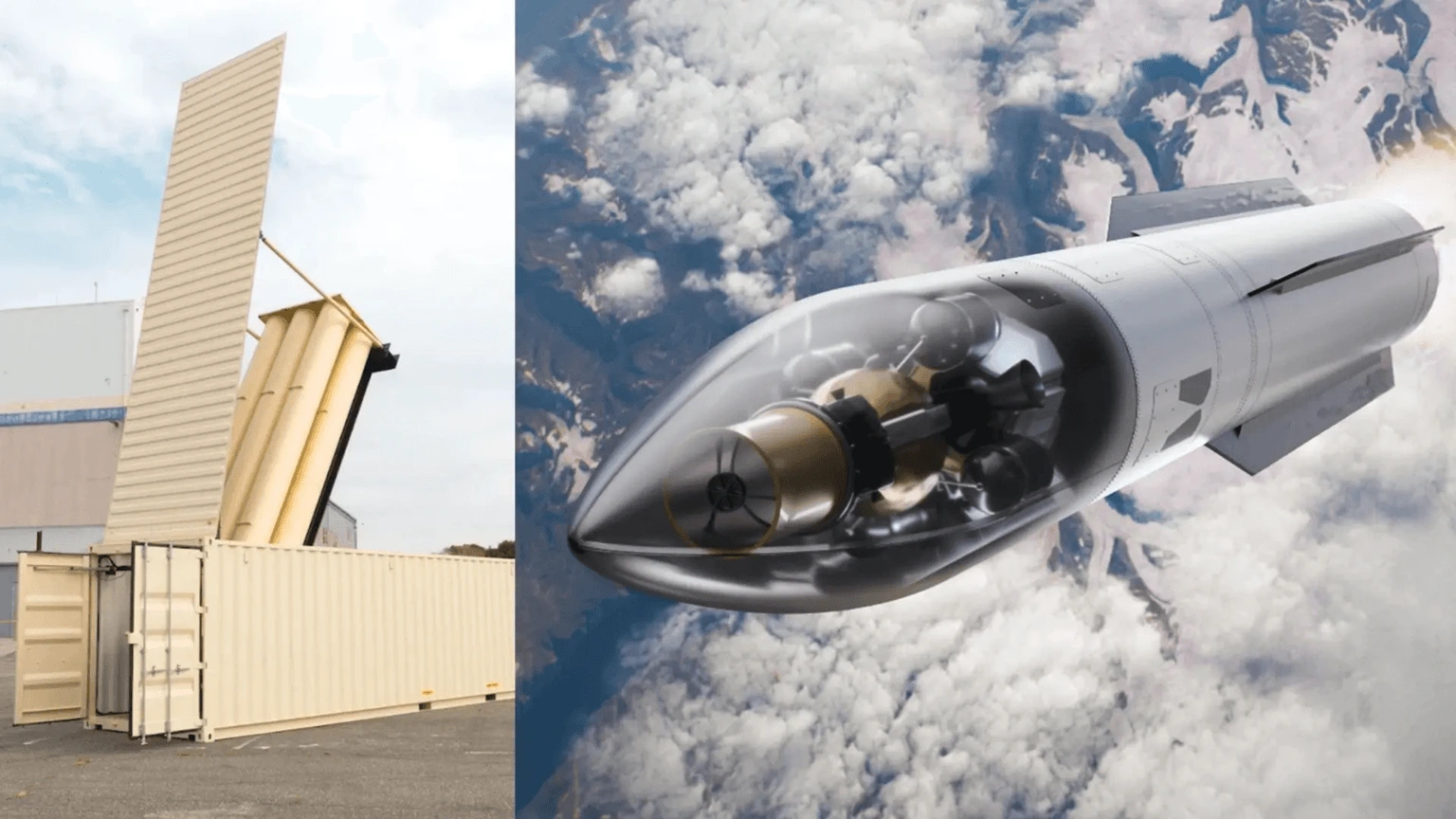
Cyclops is a surface-launched, exoatmospheric interceptor built to engage ballistic missiles in the midcourse phase of flight, when warheads coast above the atmosphere and can deploy decoys and other countermeasures. Its exoatmospheric kill vehicle (EKV) destroys targets by direct impact rather than blast fragmentation, the same hit-to-kill principle used by the Standard Missile-3 (SM-3), THAAD and the Ground-Based Interceptor.
Long Wall has not released dimensions, weight, stage count, propellant type, seeker band or engagement range. Company leadership has said only that Cyclops sits toward the upper end of the US interceptor range class and is designed for high closing velocity engagements; neither claim has been verified in flight.
The company treats the EKV as its main cost lever, citing EKV propulsion and seekers as the subsystems most likely to bottleneck production because some design choices leave only a few possible vendors. Long Wall built and began testing a first EKV prototype in 2025, drawing on commercial advances in computing, optics and propulsion manufacturing.
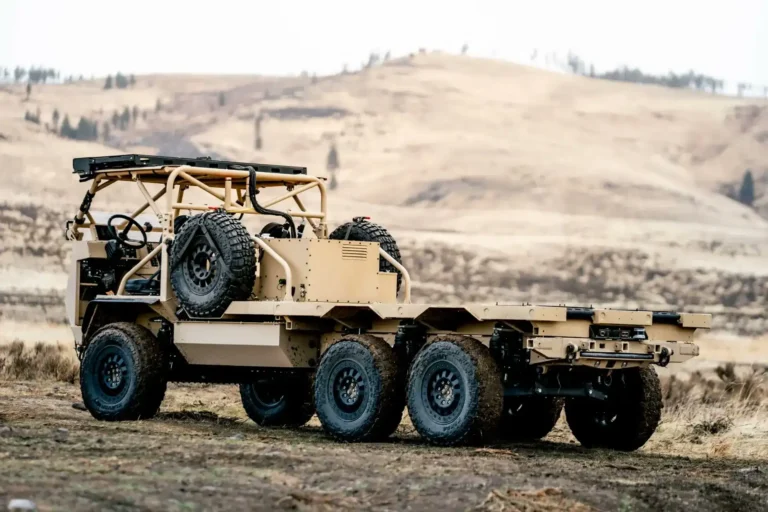
Basing is the second design driver. Long Wall’s Containerized Launching Station (CLS) packs the Cyclops interceptor into a shipping container that can fire from bare ground or a ship’s deck. A first CLS test unit was built in 2025 and exercised in a self-funded campaign using six THAAD simulators. The company also claims compatibility with existing land and sea launchers, without naming specific systems.
The company claims Cyclops will cost a fraction of legacy midcourse rounds but has published no unit price target. Pentagon budget data put an SM-3 Block IIA at roughly $28 million per round and a THAAD interceptor at about $12.7 million.
How Long Wall Plans to Flight Test and Mass Produce Cyclops
The MDA funding covers completion of the Cyclops flight test program. Neither party has disclosed the contract vehicle, the length of the period of performance, the number of planned intercept attempts or the test ranges.
Long Wall plans to compress that schedule with its own test assets. RSX, a liquid-fueled booster evolved from the RS1 launch vehicle the company built as ABL Space Systems, doubles as a hypersonic test vehicle and ballistic missile target, reducing reliance on the scarce government targets that often pace interceptor campaigns.
The industrial footprint has also grown. In December 2025, Long Wall said more than 160,000 square feet of facilities could produce over 100 Cyclops rounds per year at full utilization. It now reports more than 180,000 square feet and 100 acres across three major facilities, with operations in California, Alaska and Alabama, but has not updated its output estimate. “As technologists, there has never been a better time to make a mass-producible interceptor in this class,” said Harry O’Hanley, Long Wall co-founder, chairman and president.
Analysis: The matching private investment is the most telling feature of the award. MDA funds flight testing of a new midcourse interceptor while Long Wall commits an equal sum of its own to Cyclops design and development, limiting government exposure if Cyclops underperforms. That risk is concrete: the company’s flight heritage is thin, and its RS1 rocket failed on its only orbital launch attempt in January 2023. If Cyclops meets its cost and performance claims, it would give the US a midcourse production line independent of the SM-3 industrial base and fit the volume logic of the Golden Dome homeland defense architecture, where interceptor count weighs as heavily as single-shot performance.
The next milestones are the first Cyclops flight tests and, ultimately, an intercept against a representative ballistic missile target. Long Wall has not published a test calendar, a unit cost target or a production decision timeline. Those answers will decide whether Cyclops becomes a program of record or stays a funded demonstrator.