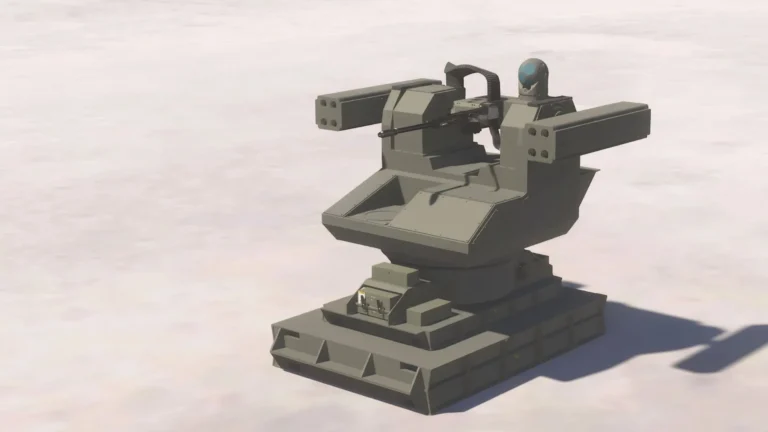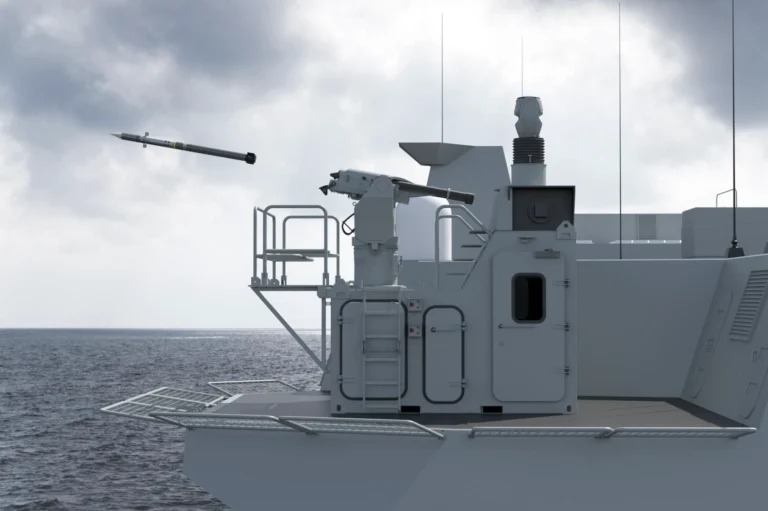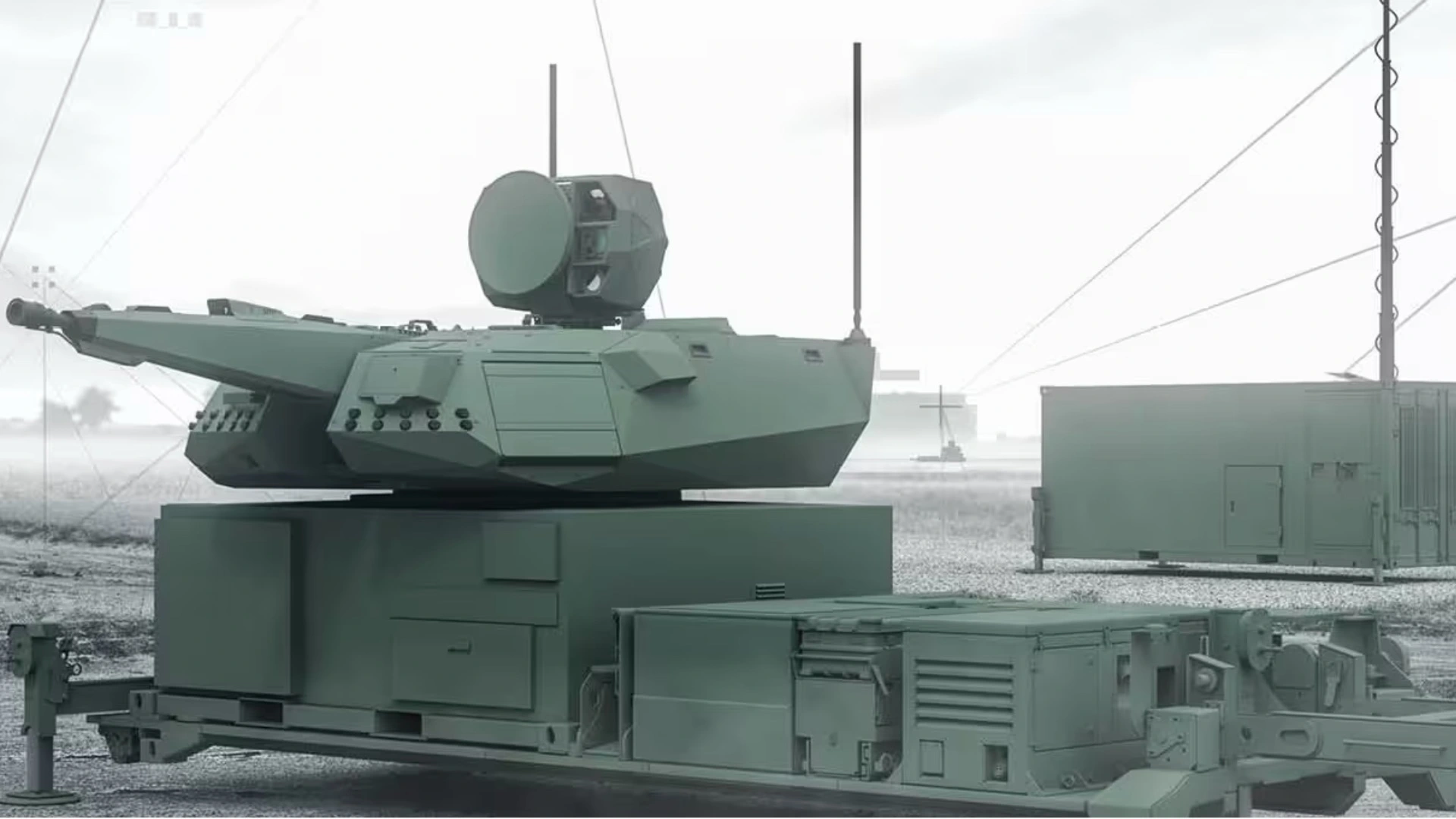
Rheinmetall has won a contract to supply Belgium with 20 Skyranger 30 systems for the stationary protection of Belgian territory and critical infrastructure, the German group announced on November 9, 2026. The package, which includes associated logistics, is valued in the mid three-digit million euro range, with deliveries scheduled to begin at the end of 2028.
The order fills the very short range layer of Blue Dome, the air defense umbrella Belgium is building after roughly two decades without a meaningful ground-based capability. On July 8, 2026, at the NATO summit in Ankara, Belgium and the Netherlands signed a cooperation agreement underpinning a €3.1 billion Belgian package of 10 Kongsberg National Advanced Surface-to-Air Missile Systems (NASAMS), 14 Thales Ground Master 200 radars, 20 Skyranger 30 systems, 54 Iveco command vehicles, and ammunition. Urgency sharpened in November 2025, when drone sightings over Kleine-Brogel Air Base coincided with repeated flight suspensions at Brussels Airport.
20 Skyranger 30 Systems on Hooklift Platforms for Static Defense
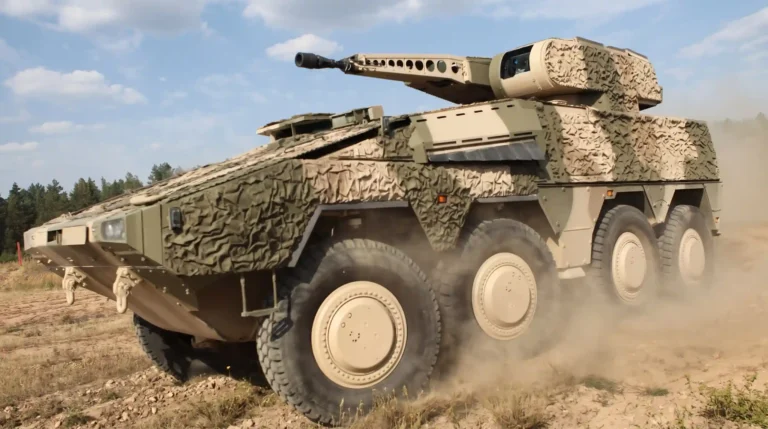
Rheinmetall said the 20 systems will be installed on a hooklift platform, a configuration that separates the Belgian order from the vehicle-integrated turrets bought by other European customers. Germany selected the Boxer 8×8, Austria the Pandur Evolution, and Denmark the Piranha V. A hooklift mount lets a truck deliver and recover a firing unit, which points to a relocatable capability rather than fire on the move. Rheinmetall has not identified the truck, the mounting design, or the number of defended sites.
The configuration matches a mission Belgium has already outlined. At the Brussels European Defense Exhibition and Conference in March 2026, Rheinmetall presented a concept placing static Skyranger 30 units around NASAMS batteries, with Ground Master 200 radars generating the air picture. A Belgian Army officer told Janes at the same event that the Belgian Air Force would operate both Skyranger 30 and NASAMS.
The Netherlands offers the closest template. Its December 11, 2025, contract with Rheinmetall covers mobile Skyranger 30 systems on the tracked ACSV Gen 5, static mounts, hooklift transport vehicles, tactical control nodes, and simulators, following a January 2025 decision to buy 22 systems. Rheinmetall said Belgium’s program proceeded in close consultation with the Netherlands to keep implementation coherent across all parties. Belgian officials have said the joint architecture is meant to maximize cooperation in training, maintenance, logistics, and deployments. Rheinmetall did not specify whether the contract runs through the Dutch framework that Belgian plans cited in July. Kongsberg’s NOK 10 billion NASAMS contract, announced on September 29, 2026, was signed with the Dutch armed forces procurement authority on Belgium’s behalf.
Skyranger 30 Turret Specifications and Counter-Drone Engagement Envelope
Rheinmetall has not published the Belgian configuration. Publicly available manufacturer specifications for the baseline Skyranger 30 indicate an unmanned, remote-controlled turret armed with the 30×173 mm Oerlikon KCE-ABM revolver cannon, with a nominal rate of fire of 1,200 rounds per minute and a rapid single-shot mode of 200 rounds per minute. Effective gun range reaches 3,000 meters. An elevation arc of minus 10 to plus 85 degrees supports engagements against steep diving attacks, and the turret carries up to 300 linked ready rounds.
The cannon fires programmable airburst ammunition based on Advanced Hit Efficiency And Destruction (AHEAD) technology. The PMC308 round releases 162 tungsten sub-projectiles ahead of the target, a pattern suited to small drones and loitering munitions that would make poor targets for NASAMS interceptors on cost grounds.
Detection relies on a 3D active electronically scanned array (AESA) search radar in X-band or S-band, with a 20-kilometer instrumented range and 360-degree coverage, paired with a stabilized electro-optical tracker. Open-source data credit the Hensoldt Spexer 2000M 3D MkIII, used by current production customers, with detecting small unmanned aerial vehicles at 9 kilometers and micro-drones at 6 kilometers. Belgium has not confirmed its radar choice. Rheinmetall’s announcement also mentions no missile fit, although the manufacturer quotes a 6,000-meter range for missile-equipped turrets.
Blue Dome Command Integration and the Belgian Industrial Supply Chain
Rheinmetall said the Skyranger 30 will be fully integrated into the Blue Dome command and control (C2) architecture, but neither the company nor Belgian officials have detailed the C2 system or its interfaces with NASAMS and Ground Master 200 sensors. Roman Köhne, CEO of Rheinmetall Air Defence, said evolving airborne threats demand “cutting-edge, fully integrated defence systems.”
Rheinmetall described Belgian industrial participation as a key pillar of the program, without naming companies or workshare. A July statement from Belgian Defense Minister Theo Francken listed ScioTeq, Intersoft, Advionics, John Cockerill, MOL, and OIP as contributors to Skyranger 30 displays, radar components, and maintenance. Rheinmetall also signaled its willingness to extend cooperation into stationary and deployable drone defense.
The company presents the deal as an extension of a 50-year relationship dating to the Gepard self-propelled anti-aircraft gun, supplied by Oerlikon Contraves with Krauss-Maffei. Its statement cites 36 vehicles, while open-source records list 55 delivered to Belgium between 1977 and 1980. Armed with twin 35 mm Oerlikon KDA cannons on a Leopard 1 hull, the Belgian Gepards were gradually retired after 1994.
Analysis: The hooklift decision defines what Belgium is buying. As described, the 20 systems provide a relocatable point-defense layer for NASAMS batteries, air bases, and critical infrastructure; they do not restore organic air defense to maneuver units on the move. That trade addresses the threat Belgium confronted in 2025. It also exposes the limit of a 20-unit fleet: with a 3,000-meter gun envelope, coverage will remain site-specific, making firing unit allocation and C2 quality more consequential than the headline quantity.
The next confirmed milestones are the delivery of a leased NASAMS unit in 2027 and the start of Skyranger 30 deliveries at the end of 2028. Open questions include the exact contract value, the delivery completion date, the missile fit, the radar selection, and the basing plan. Belgium’s long-range layer also remained undecided as of July, with Patriot and SAMP/T under consideration.