L3Harris Technologies is staging a live multi-domain network demonstration in Taiwan from November 11 to 13, 2026, linking counter-drone systems, AI-enabled targeting software and civil emergency communications into a single Joint All-Domain Operations (JADO) architecture. The event, called EVEREST: Pacific Vigilance, is hosted in Taiwan at the facilities of partner firms TiSPACE and Rayvatek and runs scenarios built around U.S., Taiwanese and allied forces.
The demonstration extends a format L3Harris launched with Project EVEREST at the UK Ministry of Defence BattleLab in Dorset in June 2023, followed by a Dutch edition. The Pacific iteration shifts the problem set from a NATO maneuver force to a smaller state facing a larger neighbor, where sensing starts at the homeland, networks must survive electronic attack and anti-access/area-denial (A2/AD) pressure, and military units must interoperate with police, fire and medical services. That framing tracks Taiwan’s own push toward whole-of-society defense resilience, formalized through a presidential committee in 2024.
Inside the L3Harris EVEREST Demonstration: Sensing, C-UAS and AI Fusion
L3Harris software-defined radios and waveforms form the transport layer, while the Palantir-built Maven Smart System fuses intelligence and sensor feeds across tactical networks in real time, with the stated aim of compressing the timeline from target acquisition to engagement. Amazon LEO commercial satellite internet supplies beyond-line-of-sight connectivity and Link 16 tactical data links provide the line-of-sight backbone, giving the network multiple independent paths across echelons. Kevin Steubing, L3Harris vice president for international business development, said the event “brings together dozens of disparate technologies and systems into a unified network.”
The early-detection scenario chains a joint electronic warfare center, which flags threats through electromagnetic-spectrum signature analysis, with an airborne early warning and control (AEW&C) system providing real-time warning of incoming objects. The company did not identify the AEW&C platform used.
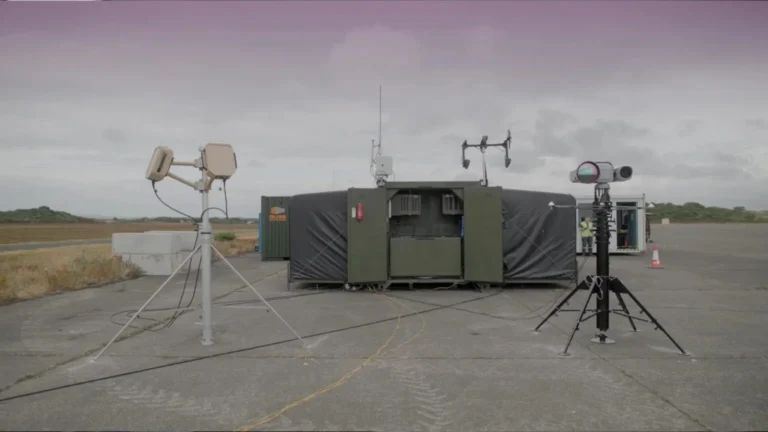
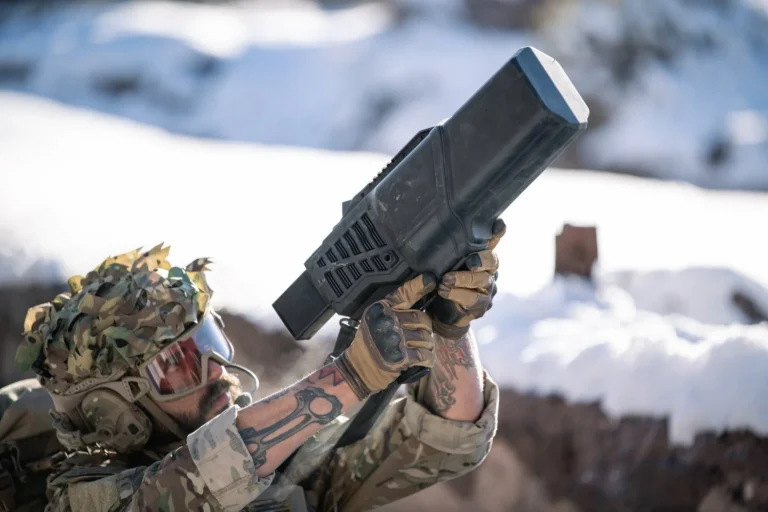
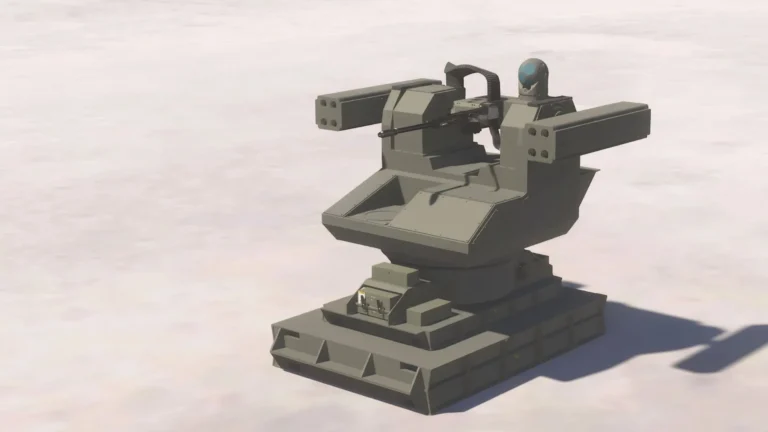
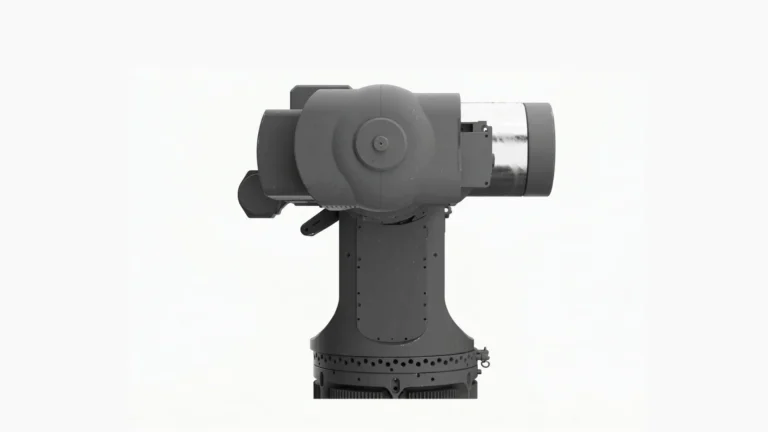
Counter-unmanned aerial system (C-UAS) coverage combines L3Harris’ VAMPIRE and Drone Guardian systems with electro-optical/infrared (EO/IR) sensors to detect swarming drone attacks and cue a kinetic response. Publicly available specifications indicate VAMPIRE, short for Vehicle-Agnostic Modular Palletized ISR Rocket Equipment, is a palletized kit that mounts on commercial pickup trucks and fires 70mm Advanced Precision Kill Weapon System (APKWS) laser-guided rockets, cued by a WESCAM MX-series EO/IR turret; the system has been supplied to Ukraine. For Taiwan, a rocket-based interceptor addresses the cost asymmetry of engaging cheap drones with high-end air defense missiles.
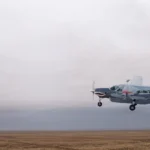
At the tactical edge, a Rayvatek electric vertical takeoff and landing (eVTOL) unmanned aircraft was showcased as a platform for embedded L3Harris radios, and Wraith Shield software added sense-and-protect C-UAS functions to software-defined radios, turning communications nodes into distributed drone detectors.
How Wraith and P25 Bridge Fires and Civil Defense Networks
For long-range and coastal defense fires against large platforms, the demonstration pairs a next-generation C5ISR shelter from Champion Auto with a Booz Allen Tactical Operations Center Light (TOC-L). The TOC-L supplies deployable edge compute and bridges Project 25 (P25) public-safety radio networks with military tactical communications. L3Harris’ Wraith mobile ad hoc network (MANET) waveform carries anti-jam voice and data into a precision fires network the company describes as controlled by RTX Sentry; L3Harris did not detail the Sentry role or which effectors were modeled. The scenario mirrors Taiwan’s investment in shore-based fires, including M142 HIMARS launchers and the Harpoon Coastal Defense System purchased from the United States.
The final scenario addresses civil-military hybrid resilience. Dismounted elements equipped with night-vision systems operate in low light, while P25-enabled tactical radios support the handling of prisoners of war and injured or displaced persons, maintaining links with civilian police, fire and medical responders. Additional listed partners include Kratos, Microsoft, Aireon, DataShapes AI and Quartermaster.
Analysis: EVEREST: Pacific Vigilance is a vendor showcase, not a fielded program, and should be read that way. Its significance lies in the bet it makes: that Taiwan’s defense problem is as much about keeping C2 alive under jamming and integrating civil agencies as it is about individual platforms. By placing Maven, a commercial low Earth orbit constellation and P25 public-safety networks on one fabric, L3Harris is pitching a U.S.-compatible command backbone that would ease coalition interoperability, while deepening reliance on U.S. commercial providers whose availability during a blockade remains untested.
L3Harris has not announced contracts, confirmed Taiwanese government participation or released performance data from the scenarios. Indicators to watch include any Taiwanese request for VAMPIRE, Drone Guardian or Wraith-equipped radios through Foreign Military Sales or direct commercial sales, and whether Amazon LEO, still building out its constellation, gains a regulatory foothold in Taiwan.