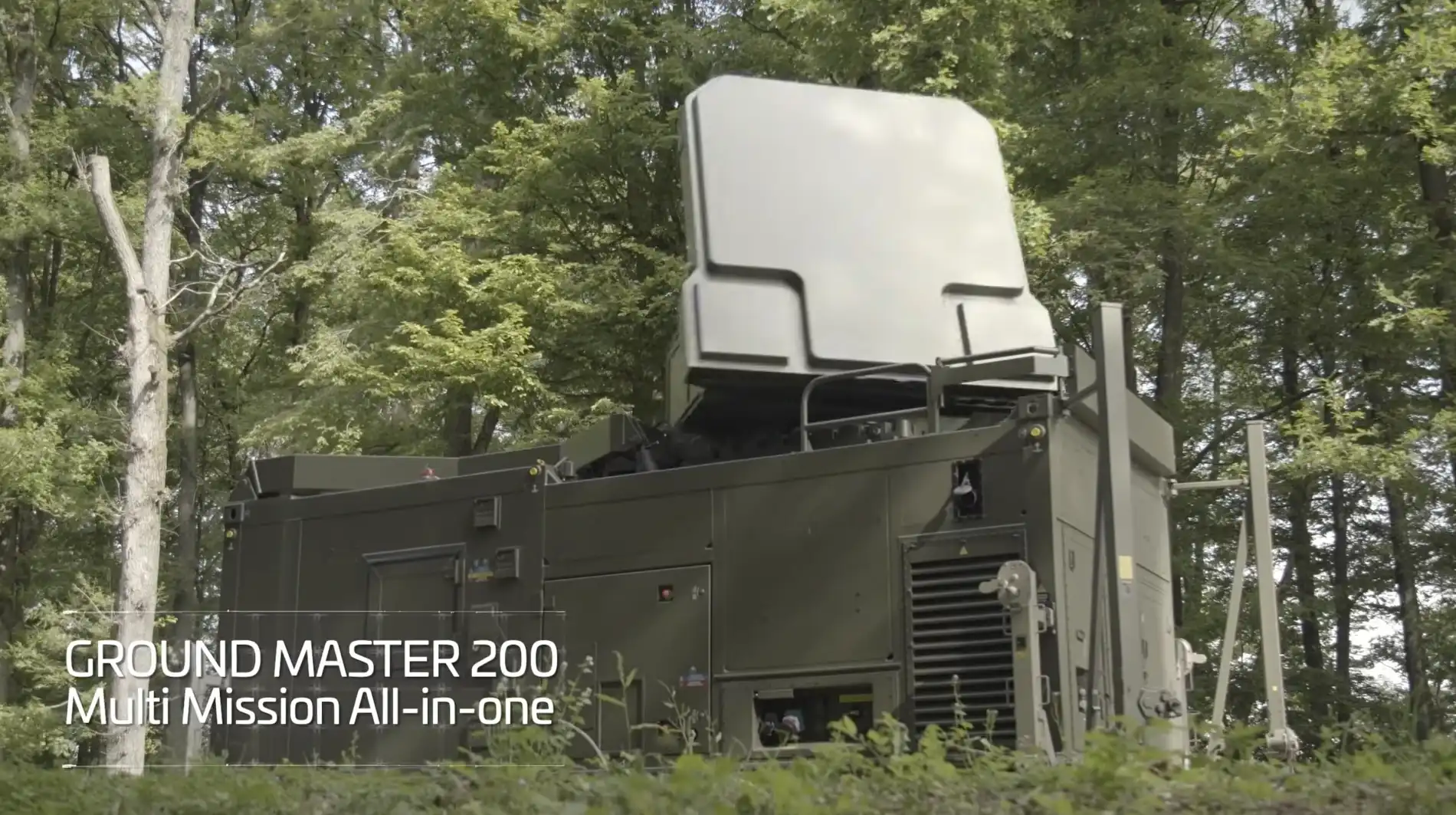
Switzerland’s Federal Office for Defence Procurement, armasuisse, has selected Thales Suisse SA to supply the Ground Master 200 Multi-Mission All-in-one (GM200 MM/A) as the Swiss Air Force’s new deployable medium-range air surveillance radar, the agency announced in Berne on November 19, 2026. The French-built 4D active electronically scanned array (AESA) radar will replace the TAFLIR tactical radar, due for decommissioning at the end of 2028.
The Swiss recognized air picture rests today on the long-range, stationary FLORES radars of the Florako air surveillance and command system, with TAFLIR deployed temporarily to cover areas in the radar shadow of the fixed sites. Procured in the 1980s, TAFLIR is described by armasuisse as outdated, difficult to maintain and no longer compliant with current requirements. Parliament approved its replacement in the Armament Program 2026, which carries about CHF 2.4 billion in commitment credits, including CHF 150 million for the medium-range radar. armasuisse has not disclosed the contract value, the number of systems ordered or a delivery schedule; the Swiss Armed Forces have indicated troop introduction from 2030.
Thales GM200 Radar Brings 4D AESA Coverage to Swiss Airspace
The GM200 MM/A is the all-in-one member of the Thales GM200 Multi-Mission family, which draws on technology from the Ground Master 400 Alpha long-range radar and the NS100 and NS200 naval radars. The MM/A is designed and built in France and targets air surveillance and ground-based air defense (GBAD) up to the medium-range air defense (MRAD) tier.
Publicly available specifications indicate the entire system fits in a 20-foot ISO container weighing under 10 tonnes, integrating a power generator, an antenna raised to roughly 8 meters and space for two operator workstations. Thales states the radar can be operational within 15 minutes of arriving on site. The manufacturer claims a 40% performance increase over the baseline GM200, which tracks targets out to 250 km, and advertises detection out to 350 km. The Swiss Armed Forces cite a range of about 200 km for the new capability, double the 100 km maximum of TAFLIR; the Swiss configuration has not been published.
According to armasuisse, the system detects, classifies and tracks targets in the lower, medium and upper airspace and identifies them through Identification Friend or Foe (IFF). In Thales terminology, its 4D AESA design adds in-depth analysis of each target’s Doppler signature, over an extended time on target, to range, azimuth and elevation. That supports classification of small, fast and low-flying targets, the drone and missile threats cited in the funding request. Radar data will densify the air picture, support engagement of hostile targets and alert ground troops to air threats, while rapid relocation is intended to improve survivability against enemy fire.
Swiss Industrial Participation Decided the GM200 MM/A Award
armasuisse invited four European manufacturers to bid in April 2026 and received offers covering five systems. The agency did not name the competing bidders. Thales Suisse SA, the group’s Swiss subsidiary, prevailed on criteria that included greater involvement of Swiss industry in project implementation and a transfer of technology for the subsequent maintenance of several critical radar components.
That rationale follows the Armament Policy Strategy approved by the Federal Council on June 20, 2025. The strategy aims to source 60% of Swiss defense procurement volume domestically where possible and a further 30% from neighboring and other European countries. It also requires systems identical to or compatible with those of other states, neighbors first, so that Switzerland can cooperate defensively in an armed conflict, and argues that sourcing from neighbors eases supply chain management in a crisis. Keeping maintenance of critical components in the country shortens repair cycles for a sensor designed to relocate under threat.
The award extends a run of European sensor and effector choices. In October 2025, armasuisse selected the Leonardo Tactical Multi-Mission Radar (TMMR) for semi-mobile short-range surveillance of the lower airspace. In July 2025, Switzerland signed for five IRIS-T SLM medium-range GBAD systems as part of the European Sky Shield Initiative (ESSI), and the Armament Program 2026 adds about CHF 1 billion for further IRIS-T SLM units.
Analysis: The GM200 MM/A fills the mobile medium-range sensor layer beneath FLORES that the Swiss Integrated Air Defence concept needs as IRIS-T SLM enters service. Alpine terrain masking leaves fixed radars with structural blind spots, and a medium-range shooter is only as effective as the cueing it receives. armasuisse frames the new radar as strengthening the sensor-to-shooter loop with survivable gap-filling coverage, but has not said whether it will cue IRIS-T SLM fire units directly. Timing is the sharper issue: TAFLIR retires at the end of 2028, while its successor reaches troops from 2030. The Armament Program 2026 request itself sought to order the new systems early to avoid a lasting capability gap once TAFLIR is retired. Unless deliveries accelerate or TAFLIR remains in service longer, the Air Force faces a medium-range coverage gap that the shorter-range TMMR can only partly offset.
Contract value, quantity and delivery timeline remain undisclosed. Integration of the GM200 MM/A into Florako and the wider air defense command chain, together with the scope of Swiss industrial work packages, will determine whether the program meets its 2030 target and how much of the CHF 150 million credit stays in the domestic industrial base.