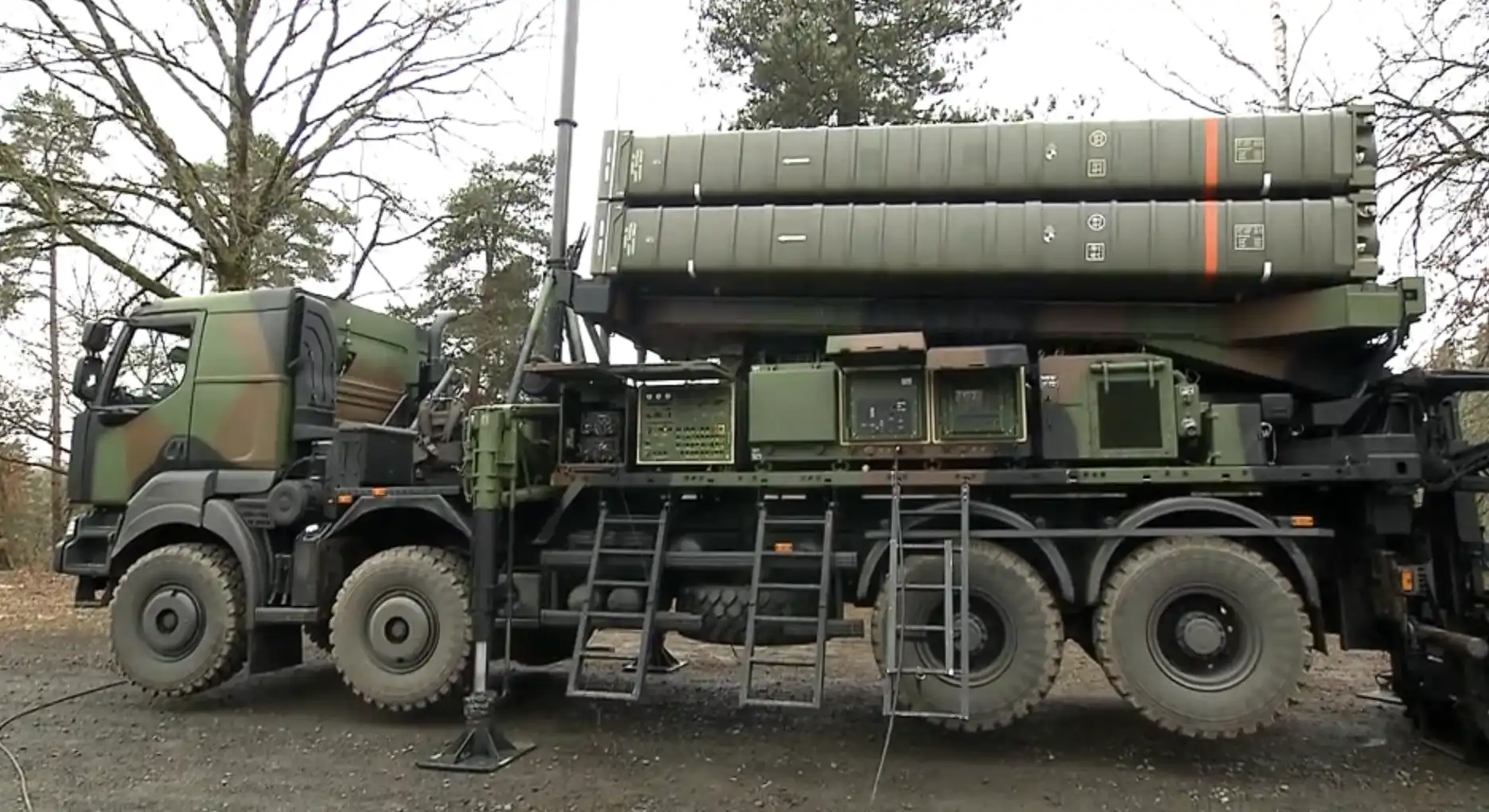
France is working directly with Ukraine on the SAMP/T NG long-range air and missile defense system, Alice Rufo, France’s Minister Delegate for the Armed Forces and Veterans, said in an interview published November 19, 2026, by the French Ministry of the Armed Forces. “We are working with Ukraine on the SAMP/T NG to give it the means to defend its airspace,” Rufo said, describing the Franco-Italian system and Patriot interceptors as the only equipment whose technologies are capable of stopping Russia’s ballistic missiles.
The remarks, given to the ministry’s magazine Esprit défense during an interview conducted at the Hôtel de Brienne in September, come as Russia sustains ballistic missile and drone strikes against Ukraine’s critical civilian infrastructure. Rufo said the Kremlin seeks to weaken Ukrainian resistance “at a time when the Russians are advancing little on the front line.” Her statement follows two political milestones: a November 17, 2025, declaration of intent opening the way for Ukraine to acquire eight SAMP/T systems with six launchers each, and a July 14, 2026, Franco-Ukrainian joint declaration making Ukraine the first combat user of the NG variant, with France deploying two current-generation SAMP/T systems in the interim.
SAMP/T NG Architecture and the Ukraine Air Defense Gap
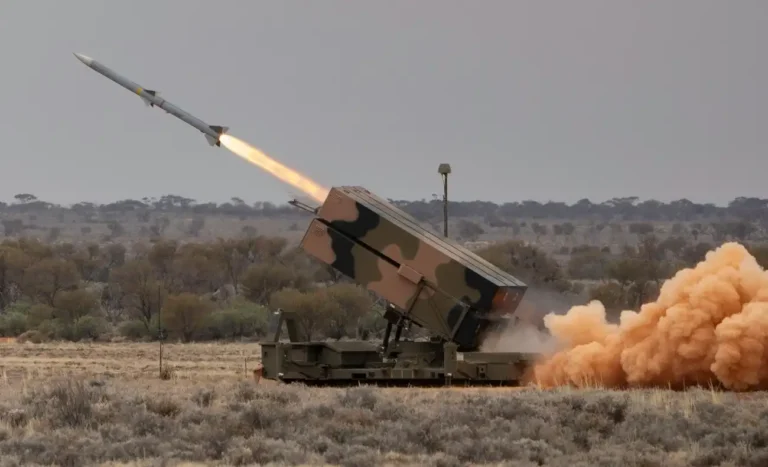
The SAMP/T NG is developed by Eurosam, the joint venture of MBDA and Thales, as the successor to the SAMP/T in French and Italian service, known as Mamba in the French forces. A battery combines a multifunction radar, the ME-NG engagement module for command and fire control, and up to six truck-mounted launchers carrying eight Aster missiles each, for 48 ready-to-fire interceptors.
France fields the Thales Ground Fire 300, a rotating S-band active electronically scanned array radar built on gallium nitride transmit-receive modules, with an instrumented range of up to 400 km and 360-degree azimuth and 90-degree elevation coverage. Italy has selected the Leonardo Kronos Grand Mobile High Power radar. Both replace the Arabel radar of the legacy system and provide persistent all-around coverage, a key requirement against salvos arriving from multiple axes.
The decisive change is the Aster 30 Block 1 NT interceptor, which introduces a Ka-band active radar seeker and a new onboard computer. Eurosam states the NG system can detect and intercept maneuvering ballistic missiles with ranges beyond 600 km. Publicly available specifications indicate an intercept range of about 150 km against aircraft and an engagement ceiling above 20 km. The legacy Aster 30 Block 1 was optimized for short-range ballistic missiles up to roughly the 600 km class, which covers the Iskander-M but leaves less margin against faster, maneuvering profiles.
From Stock Transfers to Co-Production Under the EU Loan
Rufo framed the SAMP/T NG effort as part of a structural shift in French support. “We have moved from support through handing over equipment from stocks to co-production and technological development with Ukraine,” she said. Early transfers were calibrated so as not to put French stocks in difficulty; the approach is now “more focused on co-production and the use of the European loan.”
That loan is the European Union’s €90 billion Ukraine Support Loan covering 2026 and 2027, of which €60 billion is earmarked for defense needs, including air defense. Defense procurement under the loan is to go to companies in the EU, Ukraine, or EEA-EFTA countries, with purchases elsewhere only where no equivalent product is available, and first disbursements were made in June 2026. Zelenskyy said in September that Kyiv was ready to buy more SAMP/T systems and missiles with EU loan money and was working on producing them in Ukraine. In July, he said France had agreed to licensed production of Aster missiles for Ukraine.
Rufo tied the effort to a wider French posture. She said the 2019 and 2023 military programming laws, plus the 2026 acceleration, have doubled France’s defense budget in ten years, and that resilience of critical infrastructure, cyber networks, and maritime and air routes is now a priority because Russian strategic documents treat information, food, electricity, and energy as targets.
Analysis: The binding constraint on SAMP/T NG for Ukraine is industrial throughput, not technology. Denmark’s first export contract for the system, announced by Thales on April 21, 2026, covers four systems for about €1.47 billion with deliveries from 2028, while France and Italy, which ordered eight and ten NG systems respectively in September 2024, are recapitalizing their own fleets in the same window. Ukrainian batteries will therefore compete for the same Aster 30 Block 1 NT production capacity. The European preference of the EU loan also matters: it favors the SAMP/T NG over Patriot for Ukrainian air defense spending, giving Eurosam a funded customer at the moment it needs volume to justify higher production rates.
Key unknowns remain. The July declaration states Ukraine’s intention to order four SAMP/T NG systems, against eight in the November 2025 declaration of intent, with financing to be requested under the 2026 and 2027 tranches of the EU loan. It gives no contract value. France committed to deploy the NG modules progressively from 2027 once delivered and qualified, with a first Ground Fire 300 radar in Ukraine before the end of 2026, and France and Italy pledged to authorize licensed Aster 30 production in Ukraine before the end of 2026. The next indicators will be a signed contract financed under the EU loan, the arrival of that first radar, the start of licensed Aster production, and any announced increase in Aster 30 Block 1 NT output by MBDA.