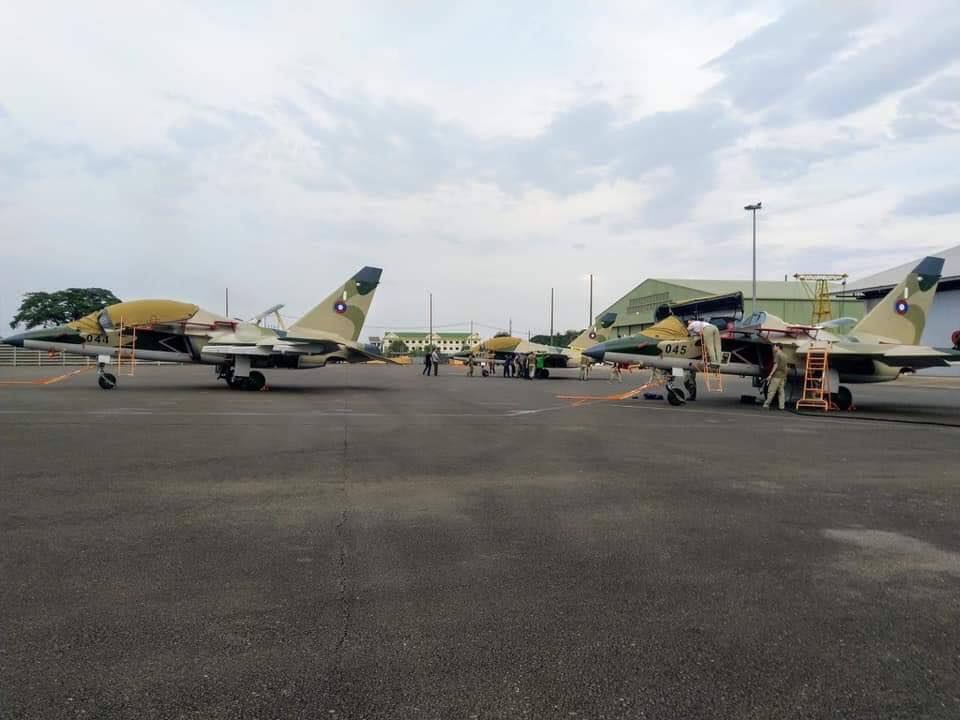
China’s Ministry of National Defense said on September 29, 2026, that two jointly run military institutions, the China-Laos Joint Support and Training Center and the China-Laos Friendship Aviation Academy, are now operational at Ban Keun Airport in Laos. Beijing says the facilities will help the Lao People’s Liberation Army Air Force (LPLAAF) train its pilots, giving the People’s Liberation Army (PLA) a third publicly acknowledged overseas footprint after Djibouti and Cambodia.
The move extends inland a model Beijing first applied at Cambodia’s Ream Naval Base, where the China-Cambodia Ream Naval Base Joint Support and Training Center opened on April 5, 2025. Laos, the only landlocked state in Southeast Asia, borders China, Vietnam, Thailand, Cambodia and Myanmar, and its ties with Beijing have deepened since the 1,035-kilometer China-Laos railway linking Kunming to Vientiane opened in December 2021. Military ties have followed: the two armies held a 20-day “Friendship Shield” exercise in Laos in May 2023, and Chinese and Lao personnel opened a joint humanitarian medical exercise in Vientiane earlier this month.
Chinese Military in Laos: What Beijing Disclosed About Ban Keun
The defense ministry statement is thin on specifics. It said the two institutions are “jointly maintained and operated by both sides” and are meant to “help Laos strengthen the training of its air force pilots.” It gave no figures for PLA personnel, aircraft, infrastructure or funding, and did not say whether Chinese aircraft will be based at the field. Ban Keun lies roughly 64 kilometers north of Vientiane, according to regional reporting; runway length, apron capacity and fuel storage at the site have not been disclosed.
The ministry described the arrangement as the product of equal consultation between the two governments and said the Laos operations are “not directed against any third party.” The wording closely mirrors its statement for the Ream inauguration.
The aviation academy is the more revealing element. The LPLAAF is a small force: open-source orders of battle credit it with fewer than 40 aircraft, led by Russian-built Yakovlev Yak-130 advanced jet trainers delivered from December 2018 under a 2017 government contract. Publicly available specifications indicate the Yak-130 is powered by two Ivchenko-Progress AI-222-25 turbofans of roughly 2,500 kgf thrust each, reaches about 1,060 km/h and carries up to 3,000 kg of stores on nine hardpoints, restoring a jet combat capability Laos had lacked since its MiG-21 fleet was withdrawn. The same sources list Chinese-built Hongdu K-8 jet trainers, Harbin Z-9 helicopters and MA600 transports alongside Soviet-era Mi-17 and An-26 types.
That mixed fleet defines the stakes. A Chinese-staffed academy would shape Lao aircrew syllabi, maintenance standards and, over time, procurement, favoring Chinese types such as the K-8, which publicly available specifications credit with a single turbofan, a top speed near 800 km/h and five hardpoints. Moscow has competed for the same role: Lao provincial officials said in 2021 that Russian deminers were clearing about 500 hectares of unexploded ordnance in Xieng Khouang province for a new airport with a dedicated military zone.
From Djibouti to Ream: How Ban Keun Extends the PLA Network
The PLA opened its first acknowledged overseas facility, the PLA Support Base in Djibouti, in August 2017 to support Gulf of Aden escort missions. At Ream, Chinese funding produced a 300-meter deep-water pier, a 5,000-ton dry dock and a 1,000-ton slipway, and at least 100 Chinese sailors on temporary duty took part in the April 2025 inauguration. Phnom Penh says the base is open to warships under 20,000 tonnes from any friendly nation with prior notice and denies that Chinese troops are stationed there, while Washington has repeatedly raised concerns about an expanded Chinese presence.
Djibouti and Ream are both built around naval access. Ban Keun is an inland airfield, making it the first publicly acknowledged PLA-linked facility centered on air operations and the first in a country sharing a land border with China. It can be supplied overland from Yunnan by rail and road rather than through contested sea lanes. It also sits north of a capital that faces Thailand, a US treaty ally, across the Mekong River, and next door to Vietnam, Laos’ traditional fraternal partner and a South China Sea claimant at odds with Beijing.
Analysis: Beijing has now used the same formula twice within 18 months: a host-owned site, a “joint” label, a training mission and an undisclosed PLA footprint. It avoids declaring a sovereign base while establishing rights of presence that can expand incrementally. For the US and regional militaries, the pilot academy itself is not the concern; the question is what infrastructure accompanies it. Fuel storage, maintenance hangars, air traffic control and communications equipment would give the PLA a potential logistics and surveillance node on the Indochina peninsula that does not depend on maritime access. None of that has been confirmed, and the LPLAAF’s modest size makes the stated training rationale credible on its own terms.
The next indicators will come from commercial satellite imagery of Ban Keun: new hangars, fuel farms, a runway extension or PLA Air Force aircraft on the apron would point to a footprint beyond instruction. Other markers include any Lao order for additional Chinese trainers and official responses from Bangkok, Hanoi and Washington. Beijing has not said how many personnel will rotate through the center or under what legal arrangement they will operate, and those remain the central unknowns.