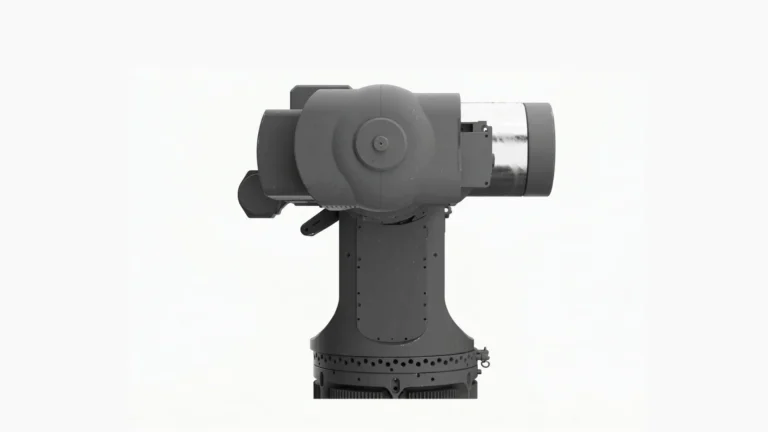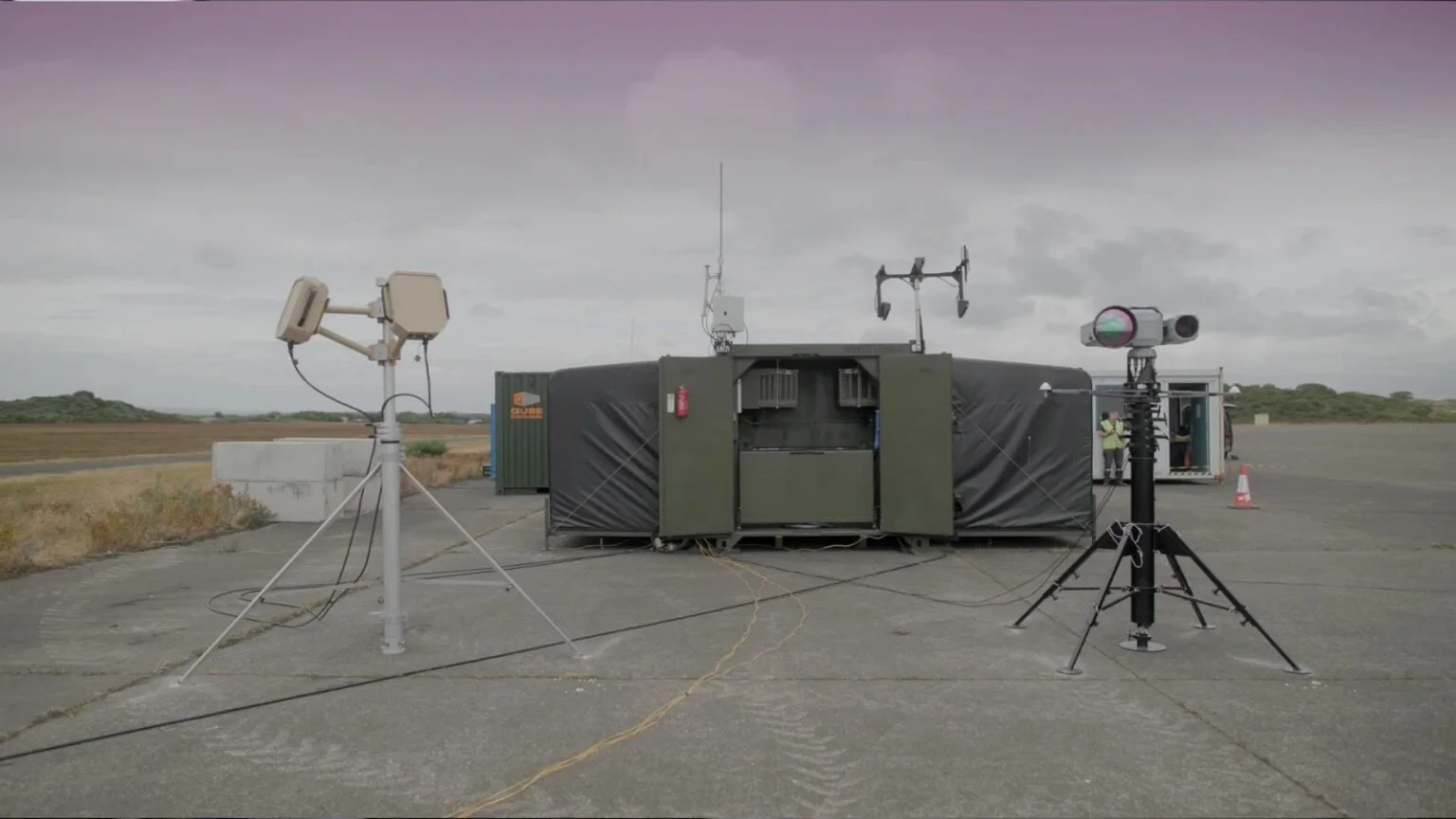
Echodyne’s EchoShield radar has been selected and integrated into the BAE Systems Anti Threat System (BATS), the British group’s software-defined counter-uncrewed systems capability, the Kirkland, Washington-based radar maker announced on November 10, 2026. It joins the system’s “sense, decide, effect” mission chain as one of several sensors, supplying tracks, threat classification and location data to command systems, optical sensors and effectors.
BAE Systems’ Digital Intelligence business took BATS from concept to integration and deployment testing in eight months, a phase announced in July 2026 and conducted alongside Norwich-based MSI-Defence Systems. The system then completed two weeks of live trials in Scotland, announced on October 1, 2026, linking detection to an integrated gun system and to a full electronic warfare engagement chain through a single command-and-control architecture. BAE Systems, Europe’s largest defense company with equipment fielded by more than 25 European nations, is now moving BATS toward operational deployment.
EchoShield Radar Specifications and MESA Architecture in BATS
EchoShield is a medium-range, software-defined, pulse-Doppler radar built on Echodyne’s metamaterials electronically scanned array (MESA) technology, which steers its beam through a metamaterial structure rather than the thousands of phase shifters used in conventional arrays. Echodyne credits that design for the radar’s low size, weight and power (SWaP) and for its commercial-scale manufacturability.
Publicly available manufacturer specifications indicate the radar operates in Ku-band between 15.4 and 16.6 GHz, with a field of view of 130 degrees in azimuth by 90 degrees in elevation and track accuracy better than 0.5 degrees in both axes. It refreshes tracks at 10 Hz and holds more than 1,000 objects of interest simultaneously. The unit measures about 42.9 by 32.9 by 18.7 cm, weighs 19.2 kg, and draws under 250 W in operation and under 100 W in hot standby.
Manufacturer data cites typical, not maximum, drone tracking ranges of 3 to 5.3 km for the smallest Group 1 radar signatures, 5.3 to 7.2 km for Group 2 and 7.2 to 12.5 km for Group 3, with vehicles tracked beyond 12.5 km. Neither company has disclosed how the radar performs inside BATS.
The radar’s 4D output, adding Doppler velocity to range, azimuth and elevation, matters most to the BATS decision layer. Group 1 and Group 2 drones present radar cross sections that overlap with birds, and stable velocity data over successive updates lets a fusion engine separate a quadcopter from clutter before cueing an electro-optical sensor or assigning an effector. Compared with Echodyne’s short-range K-band EchoGuard, which tracks up to 20 objects across a 120 by 80 degree field of view, EchoShield offers a wider search volume, more than fifty times the track capacity and at least twice the angular precision.
How BATS Fuses Sensors and Effectors After Scotland Trials
BAE Systems describes BATS as a modular decision engine built around a secure, resilient data core that ingests feeds from sensors and effectors supplied by BAE Systems, third parties or a customer’s existing inventory. The architecture fuses sensing, intelligence, command and control, decision support and countermeasures, and connects to existing air defense and command-and-control (C2) systems through open interfaces. It scales from point defense to wide-area protection across fixed-site, semi-mobile and mobile missions for military, government and critical infrastructure users.
The Scotland trials exercised three scenarios. In the first, a critical infrastructure protection case, BATS built a common operational picture from passive sensors. In the second, the system correlated multiple sensors to separate friendly, neutral and hostile drones, recommended a course of action, and operators defeated a designated hostile drone with Kirintec’s K-CEMA radio frequency jammer. The third combined active and passive sensors in a more complex tactical scenario, with operators confirming the identification of several drone categories and applying the appropriate effect to each threat.
Neither company has stated whether EchoShield took part in those trials, and Echodyne’s announcement names neither the other BATS sensors nor a contract value.
Louise Heywood, Head of Strategy at BAE Systems Digital Intelligence & Land, said that using the EchoShield feed, BATS “applies rapid decision logic and connects operators with the most appropriate effector.” Echodyne CEO Eben Frankenberg put the dependency more bluntly: “Every decision and every effect is only as good as the sensor data beneath it.”
Analysis: The selection says more about how BAE Systems intends to compete in counter-UAS than about a single radar. BAE Systems is building its offer as a software layer rather than a closed hardware package, and an active radar is the sensor that anchors the track picture where passive RF detection fails, notably against drones flying without a control link. Pairing that layer with a US radar already integrated into hundreds of counter-UAS systems, which Echodyne plans to produce at more than 30,000 units a year from its new Washington State facility, reduces the risk of sensor supply constraining fielding. It also ties BATS to allied procurement channels: many Echodyne-equipped systems are listed on the Joint Interagency Task Force 401 (JIATF-401) C-UAS Marketplace, which Romania, Poland, Australia and South Korea have signed agreements to access.
Key unknowns remain. BAE Systems has not named a launch customer, a fielding date or the full BATS sensor and effector roster. The milestones to watch are completion of the BATS assurance phases, a first order from a UK or European operator, and whether BAE Systems pursues US channels such as the JIATF-401 marketplace for the integrated system.