Finnish forces downed a target drone with an interceptor drone for the first time in Finland during Mallet Strike 2/26, an international air defense exercise with about 1,500 troops at Lohtaja, November 10–19, 2026. Finnish units are training alongside air defense troops from the United Kingdom, Sweden and Norway against multiple target types in a contested electromagnetic environment, according to NATO’s Allied Joint Force Command Norfolk (JFCNF).
Mallet Strike is the Finnish Defence Forces’ principal ground-based air defense (GBAD) exercise, held twice a year at the Lohtaja Firing Range and Training Area near Kokkola, on Finland’s western coast. This edition is the first autumn iteration since Finland, Sweden and Denmark moved from Joint Force Command Brunssum to JFC Norfolk on December 5, 2025, placing every Nordic Ally and the UK under one NATO operational headquarters. The spring edition, Mallet Strike 1/26, drew about 1,900 participants from Finland’s three services, the Border Guard and Norway in May.
Mallet Strike Air Defense Drill Puts Drones at the Center
The exercise is split into a live-fire phase from November 10 to 14 and a combat phase from November 15 to 19. Most participants are conscripts, with the largest contingents drawn from the Armoured Brigade, the Karelia Brigade and the Jaeger Brigade, and Army aviation also taking part, according to the Finnish Defence Forces. Colonel Mano-Mikael Nokelainen, Finland’s Inspector of Air Defence, leads the event and describes it as the main exercise for Finland’s conscripts.
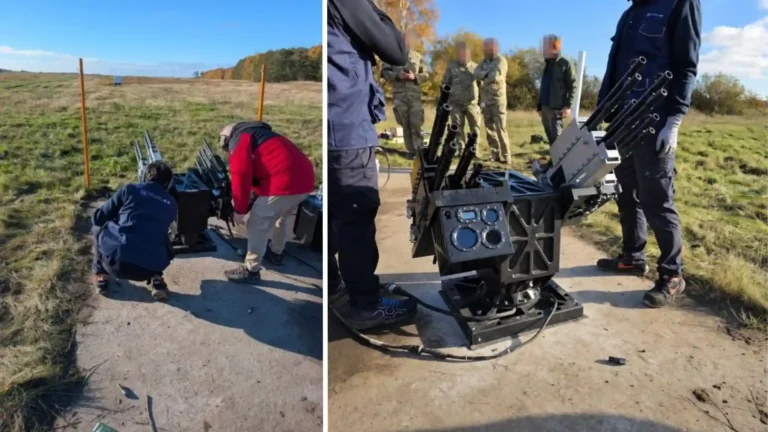
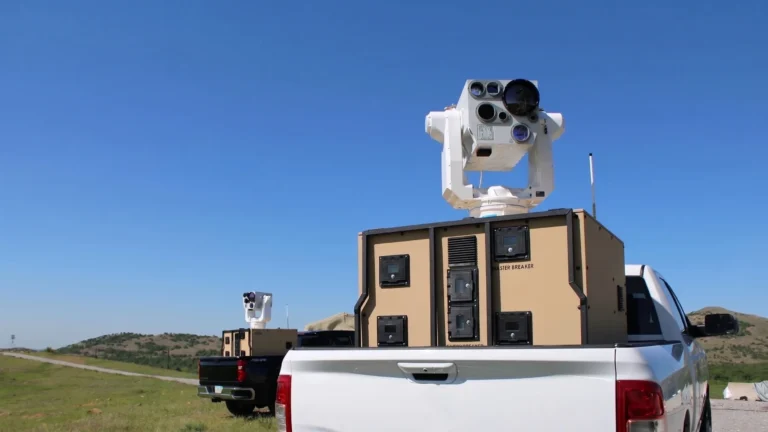
Counter-unmanned aircraft systems (C-UAS) are the central theme. The interceptor drone destroyed its target during the live-fire phase, exercise deputy director Lieutenant Colonel Rauno Leppiviita told Yle, describing it as a successful interception. The type of interceptor has not been disclosed. Finnish units are training a layered response: new C-UAS systems to detect and engage small drones, 23 mm guns returned to the training cycle, guns and missiles against larger airframes, and shotguns or assault rifles against the smallest targets, alongside electronic jamming. Conscripts are firing rifles fitted with smart sights for the first time.
Leppiviita said the spread of drones in warfare has forced the Defence Forces to adapt. Troops now rehearse fortification, cover, camouflage, concealment and decoys, partly based on lessons from Ukraine.
From Marksman Guns to NASAMS: Finland’s Layered GBAD Architecture
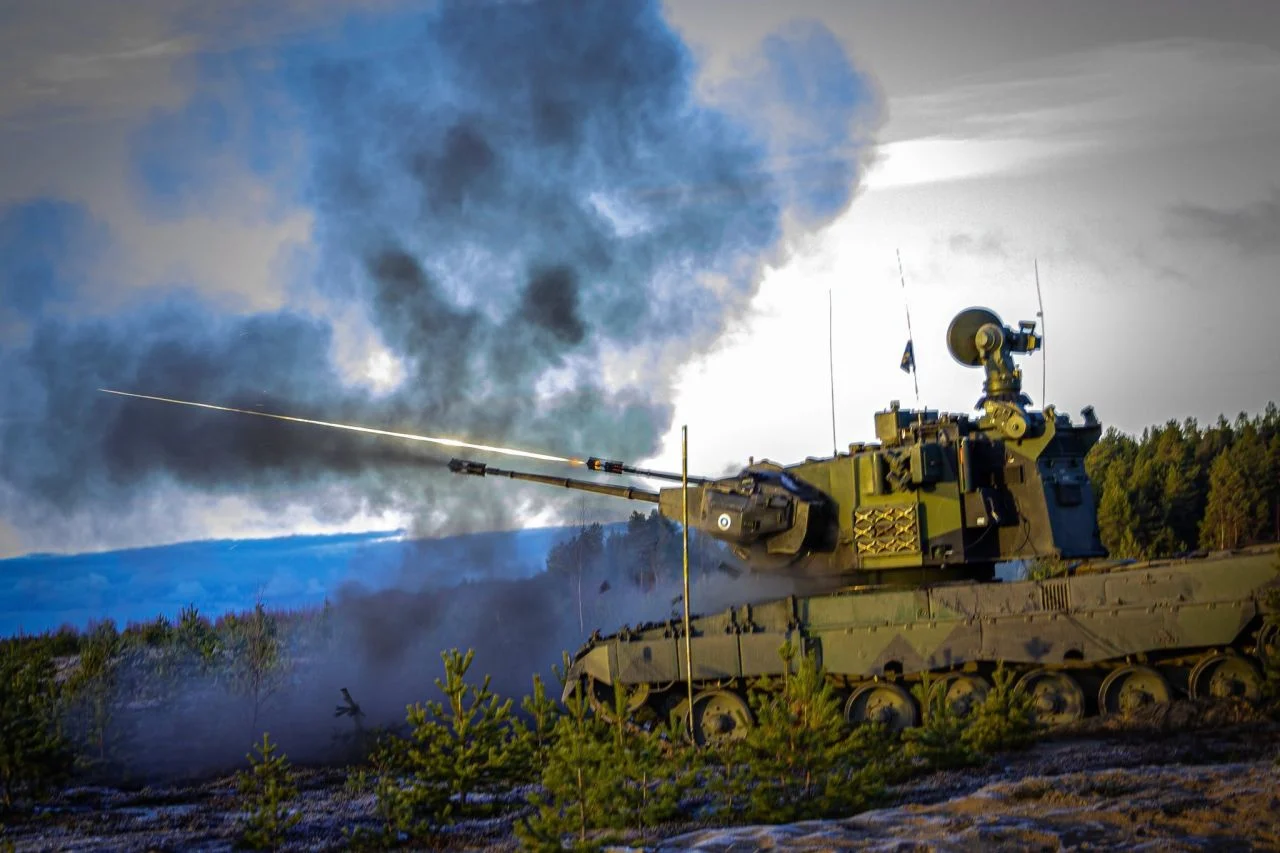
One system confirmed on the range is the ItPsv Leopard 2 Marksman self-propelled anti-aircraft gun, which mounts a British Marksman turret on a Leopard 2A4 chassis. Publicly available specifications indicate twin 35 mm Oerlikon KDA cannons with a combined rate of fire of 1,100 rounds per minute, an effective anti-air range of about 4 km, and a Marconi Series 400 radar with a search range of up to 12 km. Finland operates seven. Against low-cost drones, cannon fire offers a cost-per-engagement that missiles cannot match.
Above the gun layer, open-source inventory data show Finland operating the ITO 15 (FIM-92 Stinger), the ITO 05 (vehicle-mounted ASRAD-R) and ITO 05M (man-portable), both firing RBS 70 missiles, the ITO 90M (Crotale NG) and the medium-range ITO 12, a NASAMS II variant firing AIM-120 AMRAAM. The 2/25 edition fired the ITO 90M, ITO 05 and ITO 05M alongside 35 ITK 88 and 23 ITK 61/95 guns. The full list of systems fired in 2/26, and the equipment brought by the British, Swedish and Norwegian contingents, has not been published.
Analysis: Mallet Strike 2/26 shows Finland rebuilding the lower end of its air defense layers around the cost-exchange problem that mass drone use has created. Returning 23 mm guns to training, issuing smart sights to riflemen and testing interceptor drones all aim to keep expensive missiles for aircraft and cruise missiles. Running the drill under jamming with three Allied contingents, now all under JFC Norfolk, tests whether Nordic and British GBAD can operate as one regional network rather than as national systems sharing a range.
The combat phase concludes on November 19, after which Finnish and NATO officials are expected to release outcomes. Key unknowns remain the interceptor drone type, Allied system contributions and whether Finland will accelerate C-UAS procurement after the exercise. Based on the twice-yearly cycle, the next iteration would take place in spring 2027.