The US Senate Appropriations Committee proposes $77.108 million for the B94 nuclear bomb, a previously unknown air-dropped weapon, in its draft FY2027 Energy and Water bill released last week. The B94 is the first entirely new designation for an American nuclear gravity bomb in more than three decades, and the explanatory statement accompanying the draft Fiscal Year 2027 (FY2027) Energy and Water Development appropriations bill does not describe the weapon.
The line item was first spotted by Eliana Johns of the Federation of American Scientists (FAS) and publicized by Jeffrey Lewis of Stanford University. The War Zone (TWZ), which first analyzed the find in depth, assesses that the most plausible candidate is the Nuclear Deterrent System-Air-delivered (NDS-A), a nuclear bunker buster in development since at least 2022 and the only new air-delivered nuclear bomb publicly known to be in the pipeline. Neither the National Nuclear Security Administration (NNSA) nor the committee has confirmed the link, and the statement appears to be the only public reference to the B94.
B94 Nuclear Bomb Designation Ends a Three-Decade Gap
The US government assigns nuclear weapons designations in a single alphanumeric sequence. Air-dropped gravity bombs, including nuclear depth bombs for anti-submarine warfare, carry a B prefix, while warheads for ballistic and cruise missiles, air-launched types included, carry a W prefix. The B94 follows directly from the W93, the new warhead in development for the Trident II D5 submarine-launched ballistic missile (SLBM).
The last new bomb designation before the B94 was the B90 Nuclear Depth/Strike Bomb (NDSB), a dual-role weapon configurable as an anti-submarine depth bomb or a land-attack gravity bomb, developed to replace the similarly flexible B57. The B90 was canceled in September 1991 as part of the US nuclear drawdown that accompanied the collapse of the Soviet Union.
Since then, gravity bomb modernization has run almost entirely through the B61 family, the longest-serving bomb series in the current stockpile. The B61-12 introduced a precision guidance tail kit, and the higher-yield B61-13 derived from it is already being fielded; the first B61-13 production unit was completed in May 2025, less than two years after the program was announced in 2023. The B61-13, however, lacks the deep-penetration capability of the B61-11. That is what makes the B94 stand out: it is the first time since the B90 that a gravity bomb has received an entirely new number rather than a variant suffix on an existing design.
NDS-A Funding Trail and the Hard Target Problem
An NNSA spokesperson told TWZ earlier this year that the weapon will “provide the President with additional nuclear options to defeat Hard and Deeply Buried Targets,” adding that the program is moving aggressively and that more details will be released when strategically beneficial.
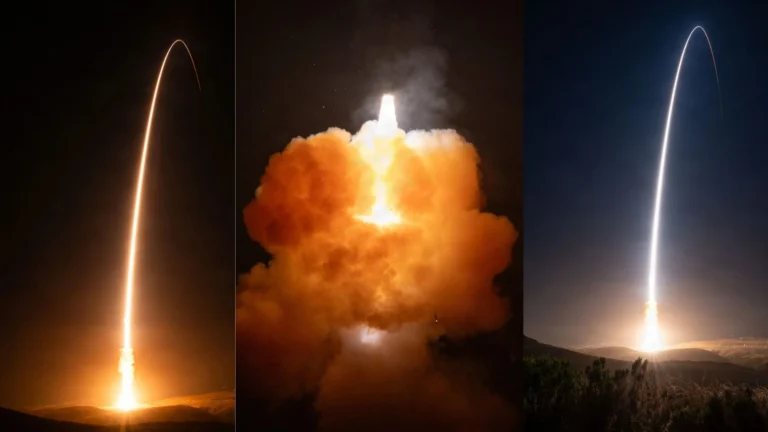
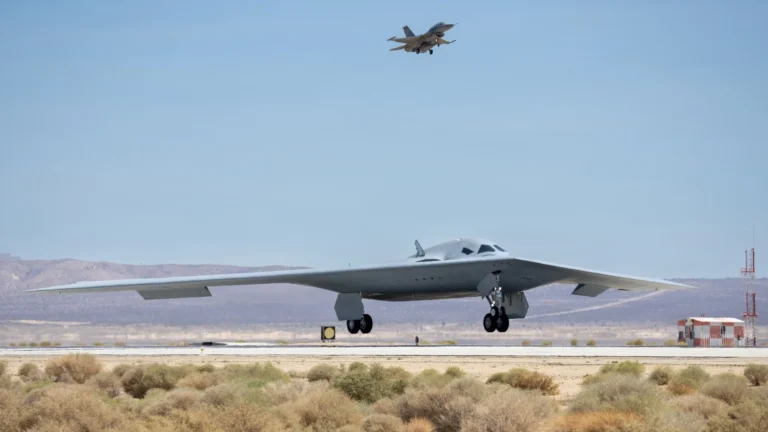
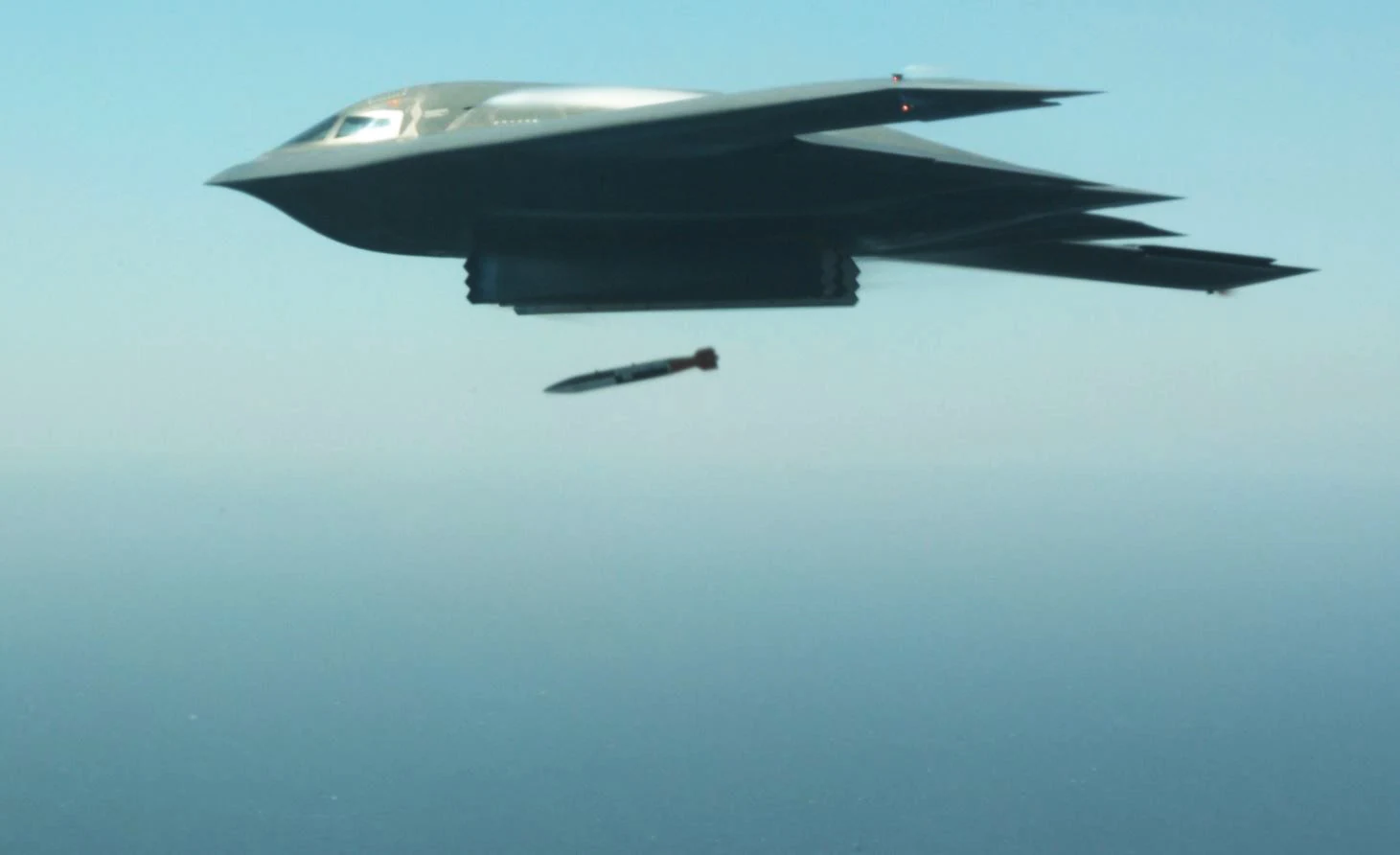
Budget documents, first detailed by TWZ, trace the effort’s growth. The Air Force received just over $39 million in FY2025 under a Hard and Deeply Buried Target Defeat System (HDBTDS) Prototyping line, then requested nearly $57 million for FY2026 under a renamed Nuclear Delivery Systems Prototyping line. Air Force FY2025 budget documents pointed to flight testing on the F-15E Strike Eagle, with final prototype demonstrations on the B-2 Spirit. On the Department of Energy side, the FY2027 request sought $99.794 million for a new Future Programs line covering a Phase 6.X effort known as Phase 1 NDS-A, plus production assessments for two Rapid Capability Team projects. How the Senate’s $77.108 million B94 line relates to that request has not been explained.
The current hard-target inventory rests on two weapons. The B61-11 earth penetrator carries a reported maximum yield of 340 to 400 kilotons, according to open-source estimates, with fewer than 100 believed to remain in the stockpile. The megaton-class B83-1 lacks penetration features but offers enough yield to hold hardened and large-area targets at risk. NDS-A could replace either bomb or both; no rendering or model has been released, and it is unknown whether the design draws on the Robust Nuclear Earth Penetrator (RNEP), publicly canceled in 2005, or on B61-12/13 guidance technology.
Analysis: If the B94 is NDS-A, a formal stockpile designation would indicate the effort has matured beyond exploratory study into a defined weapon. The driver is a target set that has grown sharply since 2005. The B61-11 was shaped largely by Russia’s Kosvinsky Kamen command bunker in the northern Urals; today, China is building new intercontinental ballistic missile (ICBM) silo fields and a new underground command center near Beijing, while North Korea and Iran continue hardening key facilities. The program also fits a broader triad recapitalization that includes the W93, the LGM-35A Sentinel ICBM, the B-21 Raider, and the Columbia-class submarine.
The $77.108 million figure is a draft Senate committee recommendation, not enacted funding. Open questions: whether NNSA confirms that B94 is NDS-A, whether the weapon replaces the B61-11, the B83-1, or both, and its yield class and delivery platforms. TWZ judges it far less likely that the designation covers a separate, undisclosed gravity bomb.