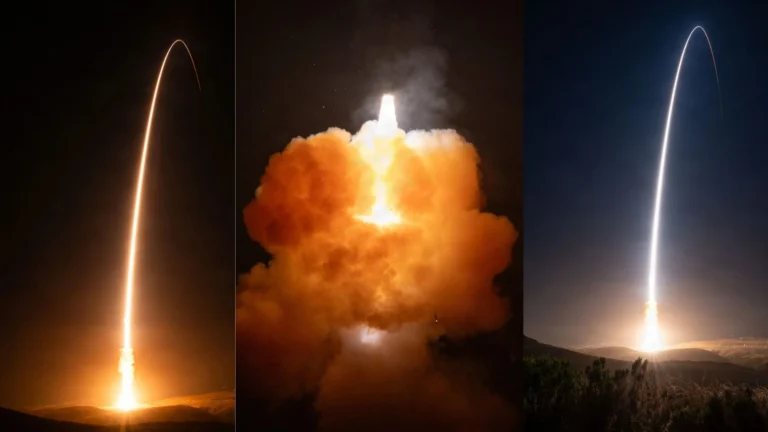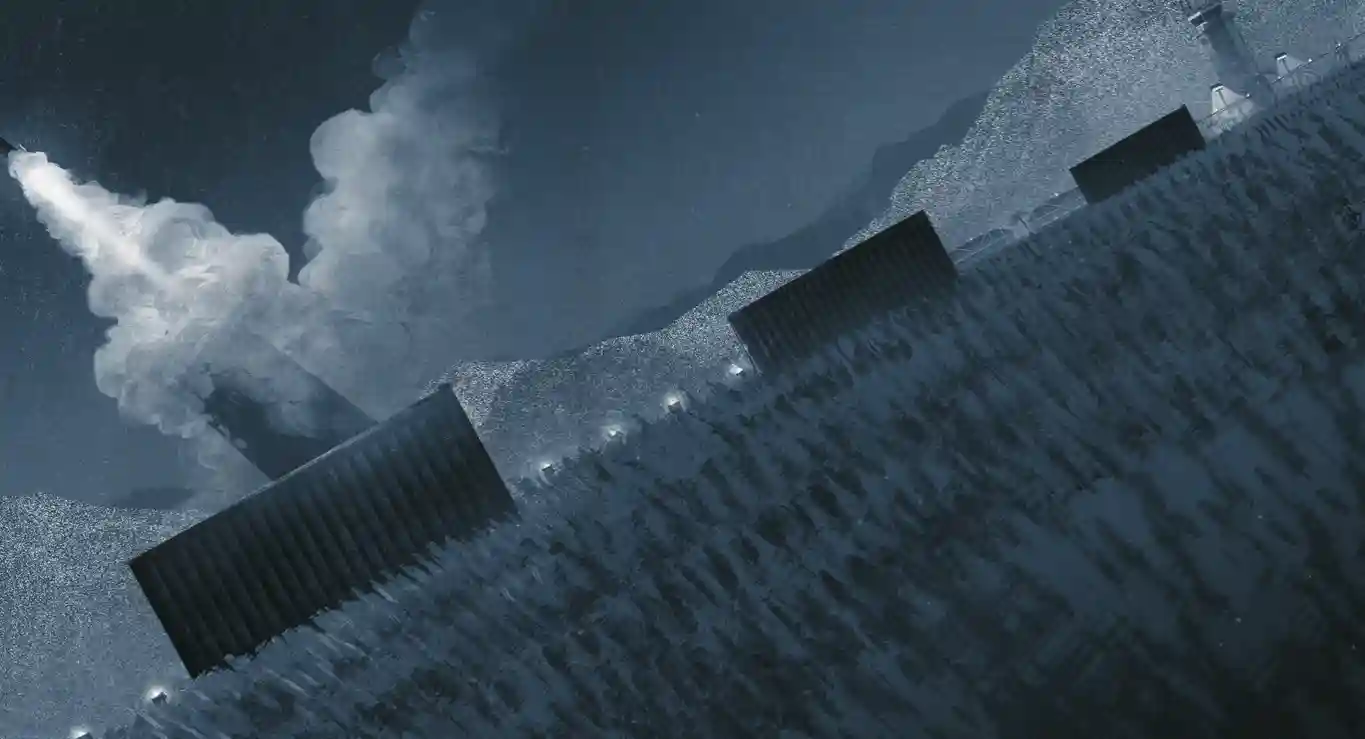
Castelion has won two U.S. Air Force prototype contracts under the Counter-Air Missile Program (CAMP), covering a ground-launched counter-air missile, launch pod and Containerized Launcher, the Torrance, California-based company announced on November 16, 2026. The Air Force Life Cycle Management Center’s Armament Directorate, Disruptive Futures Division (AFLCMC/EBZ) at Eglin Air Force Base, Florida, awarded the agreements on September 22, 2026. Neither the company nor the service has disclosed their value.
CAMP is the Air Force’s attempt to buy counter-air munitions in volumes that current interceptors and air-to-air missiles cannot reach. The fiscal 2025 reconciliation law identified the requirement as a future class of the Affordable Mass Munitions portfolio, and AFLCMC solicited white papers in November 2025 for a missile priced at roughly $500,000 per round, with potential full-rate output of 1,000 to 3,500 units a year. Phase 1 is a two-year effort to develop and demonstrate a ground-launched prototype. Phase 2 would transition the design into a program of record, and later phases aim to evolve it into a low-cost air-to-air missile.
Inside Castelion’s Counter-Air Missile Program Prototype Award
Under the contracts, Castelion will design, build and flight test the missile, launch pod and Containerized Launcher through several design cycles over approximately two years, matching the Phase 1 window. The awards follow the Ground Launched Counter Air Enterprise Test Vehicle (GLCA ETV) solicitation released on July 1, 2026, which sought both prime missile vendors and launcher system vendors for a new supersonic counter-air weapon class and an associated Common Containerized Launcher. Proposals closed on August 3, and the service planned to execute one or more Prototype Other Transaction agreements under 10 U.S.C. 4022. The two contracts appear to mirror that missile-and-launcher split, although Castelion has not specified how the scope divides between them.
The solicitation prioritizes affordability, digital engineering, an open and modular architecture, high producibility and the use of commercial or minimally modified subsystems. The Air Force has not released range, engagement altitude, seeker or guidance requirements, and Castelion has published no specifications for its design, including propulsion, dimensions, speed or warhead. Castelion ties the work to the offensive counter-air mission, the doctrinal task of destroying or neutralizing enemy air power as close to its source as possible. Program language describes GLCA as an affordable, long-range offensive counter-air missile, which points to engaging hostile aircraft at extended range from dispersed ground positions rather than terminal point defense.
The launcher is designed to be weapon-agnostic. Air Force requirements call for a fire-control system that handles launch commands, missile status and data from external battle management networks. Anduril Industries announced on November 12, 2026, that it had received a separate CAMP prototype contract to develop a containerized launcher, beginning with a 10-month preliminary design phase and integration testing with missiles from other manufacturers. Anduril’s design provides common power, computing, thermal management, communications and software interfaces for different missile configurations.
From Blackbeard to CAMP: Castelion’s Containerized Launch Pedigree
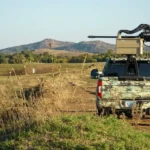
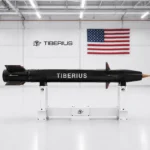
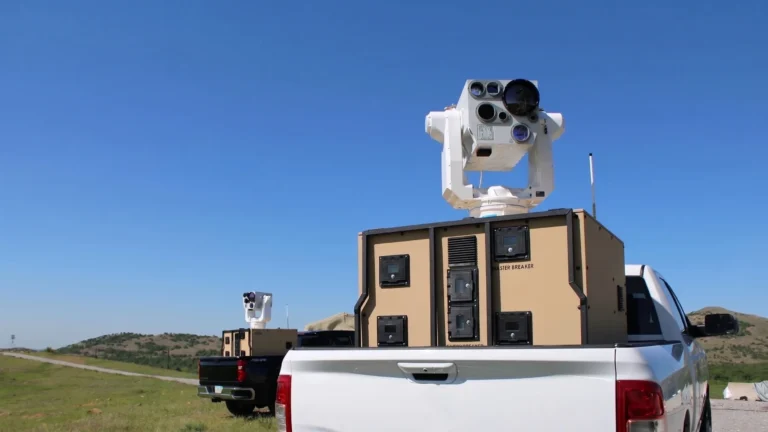
Castelion enters CAMP from the strike side of the market. Its Blackbeard hypersonic weapon received a U.S. Navy production delivery order valued at up to $200 million in September 2026, following a $23.4 million order in June for 50 early operational capability rounds. A separate $105 million Navy contract covers integration on the F/A-18 Super Hornet, with early operational capability planned for 2027. The U.S. Army is funding a ground-launched variant for High Mobility Artillery Rocket System (HIMARS) family launchers, and in October 2026 Castelion released an image of Blackbeard leaving a containerized launcher mounted on a truck chassis.
That ground-launch work is directly relevant to the CAMP launcher requirement. The company also has capital behind it: Castelion raised a $1 billion Series C round in August 2026 to scale production and broaden its portfolio to longer-range strike weapons and defensive systems. It is building Project Ranger, a 1,000-acre manufacturing campus near Rio Rancho, New Mexico, and operates additional facilities in Texas and California. CAMP is the first counter-air award Castelion has announced.
Analysis: CAMP’s structure matters as much as the individual awards. By separating the missile from a common, weapon-agnostic launcher and fire-control layer, the Air Force is buying an architecture into which several missile designs can compete, rather than a single closed system. That limits vendor lock-in and keeps price pressure on a $500,000-class round. For Castelion, the containerized launch and high-rate manufacturing experience from Blackbeard transfers cleanly; seeker performance and fire control against maneuvering airborne targets do not, and that is where the two-year design cycles will test the company. Operationally, a ground-launched offensive counter-air missile would let dispersed launchers hold enemy aircraft at risk without tying fighters to constant combat air patrols, a relevant option in a Pacific theater where U.S. airbases face heavy missile threats.
The next markers are the first CAMP flight tests, for which no date has been announced, and the Phase 2 decision on a program of record, potentially feeding a Ground Launched Counter Air branch of the Family of Affordable Mass Missiles. Key unknowns remain: contract values, the number of missile vendors under contract, and the engagement range the Air Force expects the round to achieve.