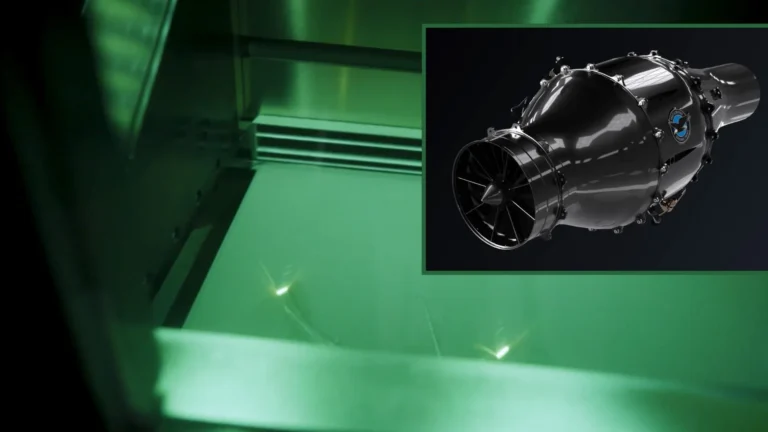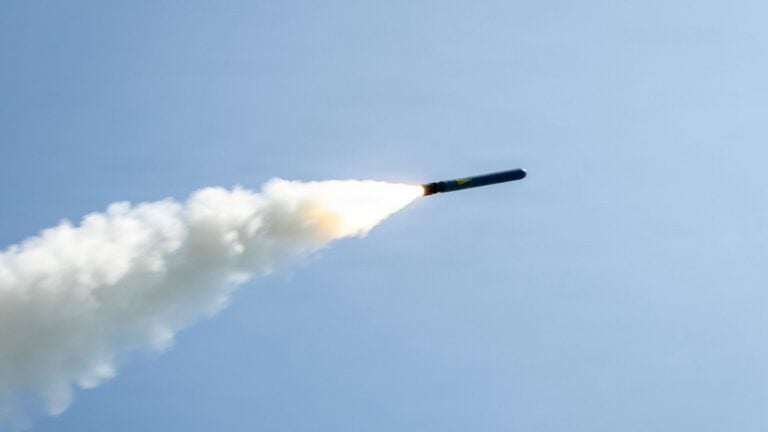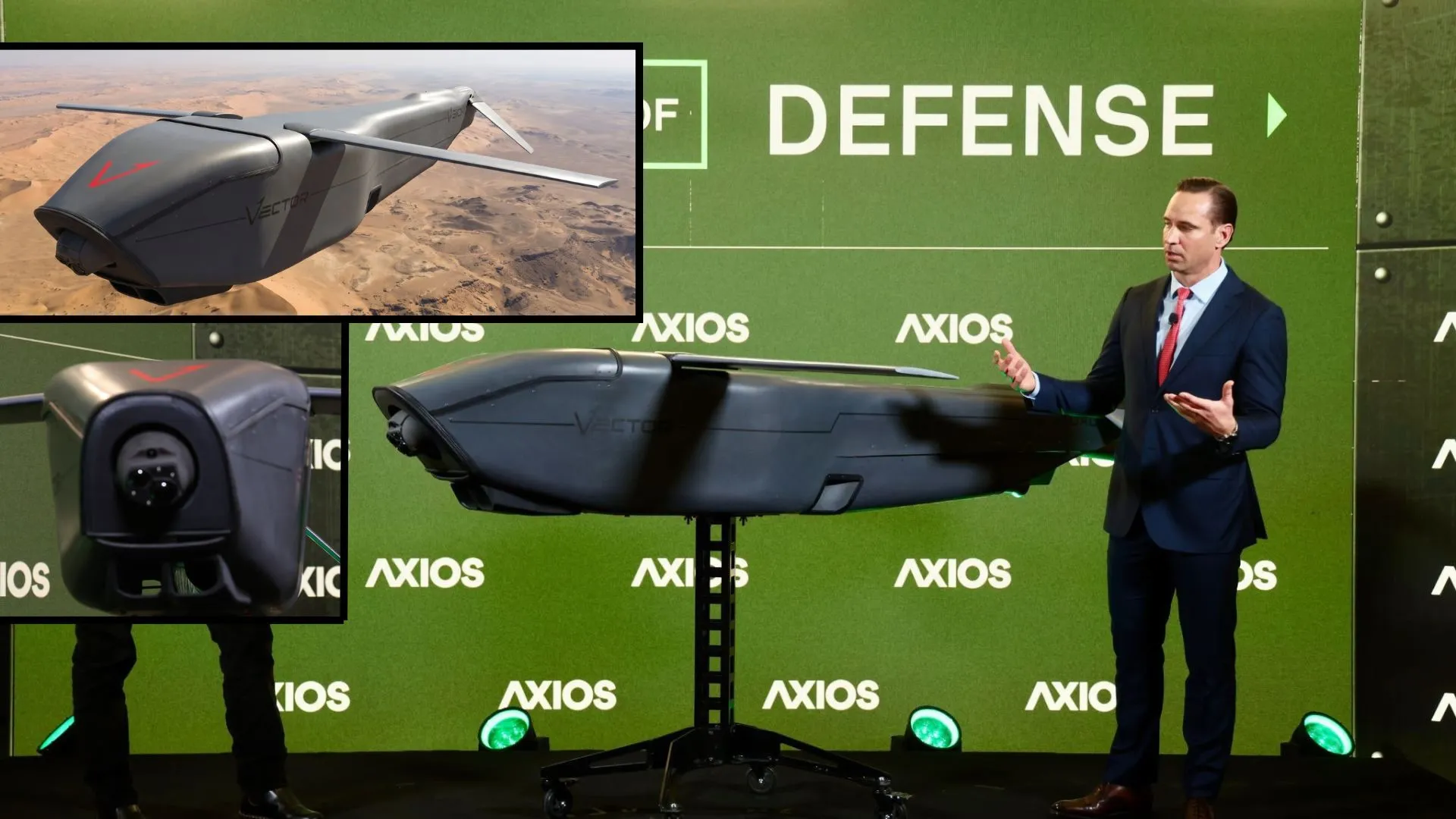
Vector, a Bluffdale, Utah-based drone maker, unveiled BOMBARD on November 19, 2026, a pulse-jet one-way attack drone it says can strike targets 1,100 km away with a 50 kg (110 lb) payload. The ground-launched system, presented at the Axios Future of Defense Summit in Washington, cruises at 378 km/h and remains in development, and a locally built version will be marketed in Saudi Arabia as SKYWASP through the SR2Vector joint venture.
The launch takes Vector beyond the small quadcopters and short-range attack drones that have defined its catalog since its founding in 2024, including the Hammer FPV and the Blue UAS-cleared Longbow. It also arrives as the Pentagon moves offensive one-way attack drones from concept to combat: U.S. Central Command’s Task Force Scorpion Strike, stood up on December 3, 2025, used the SpektreWorks Low-cost Unmanned Combat Attack System (LUCAS) in combat for the first time during Operation Epic Fury, which began on February 28, 2026. Vector ties BOMBARD directly to Ukraine, where jet-powered long-range strike drones have become a growing component of both Ukrainian and Russian operations and their speed has complicated air defense engagements.
BOMBARD Attack Drone Specifications: Range, Payload, and Pulse-Jet Propulsion
Per company figures, BOMBARD cruises at 378 km/h (235 mph) and has a maximum takeoff weight of 127 kg (281 lb). The 50 kg payload therefore represents roughly 39 percent of gross weight, a high ratio for a long-range expendable airframe. At its stated cruise speed, a maximum-range sortie would last just under three hours. Vector has not disclosed wingspan, length, fuel load, or launcher configuration beyond describing the system as ground-launched.
Propulsion is the defining design choice. Vector describes a fuel-agnostic pulse-jet architecture with minimal moving parts, intended to simplify domestic mass production and reduce sustainment. Pulse jets ignite fuel in rapid intermittent cycles and need no compressor or turbine, which keeps unit cost and manufacturing complexity low; the same principle powered Germany’s V-1 flying bomb in World War II. As a class, pulse jets also carry known penalties, including high fuel consumption, intense vibration, and a strong acoustic signature. Vector has published no data on how BOMBARD mitigates them.
Speed is the operational payoff. Publicly available estimates put the cruise speed of Iran’s piston-engine Shahed-136 at roughly 185 km/h, so BOMBARD would close on a target about twice as fast. That compresses the engagement window for the gun-based and short-range counter-UAS systems that have proven effective against slower propeller-driven drones, the same pressure Russia’s jet-powered Geran-3 places on Ukrainian defenses.
On mission systems, the company lists autonomous flight from launch through terminal engagement, GPS-denied navigation, Open C2 integration, and a Modular Payload Interface to accommodate different mission requirements. The prototype shown at the summit carried a nose-mounted sensor, Axios reported, but Vector has not identified that sensor’s role, the systems behind the GPS-denied navigation claim, or the warhead types qualified for the payload bay.
Mass Production Model and the Saudi SKYWASP Line
Vector says it designed BOMBARD for high-volume manufacturing from the outset, drawing on its experience producing first-person-view drones for the Defense Innovation Unit’s Drone Dominance Program. “Our teams are close to the fight, working alongside military personnel and understanding what capabilities they need next,” said Andy Yakulis, Vector’s chief executive and co-founder. The company has not released a unit price, a production rate, or a U.S. military customer.
Against LUCAS, the closest fielded U.S. comparison, BOMBARD’s published figures point to greater reach and payload. LUCAS is reported to fly roughly 650 to 800 km, depending on the source, with a payload of about 40 lb (18 kg), and U.S. Central Command has put its unit cost at about $35,000. Published LUCAS range figures vary, and BOMBARD remains in development, so any comparison rests on manufacturer claims rather than test data.
The Saudi line adds an export dimension. SR2Vector, based in North Riyadh, will manufacture BOMBARD locally under the SKYWASP name and serve what Vector called an established pipeline of sales to the Kingdom. The venture began building a factory near Riyadh in May 2026 for SKYWASP, then described as a Shahed-style design with a range of up to 1,500 km. Vector has not reconciled that figure with BOMBARD’s 1,100 km or clarified whether the two airframes share the same configuration.
Analysis: BOMBARD reflects a shift in U.S. industry from treating long-range one-way attack drones as a threat to defeat toward treating them as a domestic production category. Choosing a pulse jet over a small turbojet is a bet that manufacturability and cost per kilometer matter more than fuel efficiency or low signature in an attritable strike weapon. Whether that bet holds depends on figures Vector has yet to disclose: unit cost, accuracy without GPS, and survivability against air defenses now adapting to faster drones.
Vector says BOMBARD is advancing through development and testing, with further engineering validation and flight testing planned. Chief executive Andy Yakulis told Axios that a variant of the system has already flown. The next markers are a full-range flight test, a published unit price, any U.S. Army or Special Operations Command evaluation, and the start of SKYWASP output in Riyadh, for which no timeline has been given.