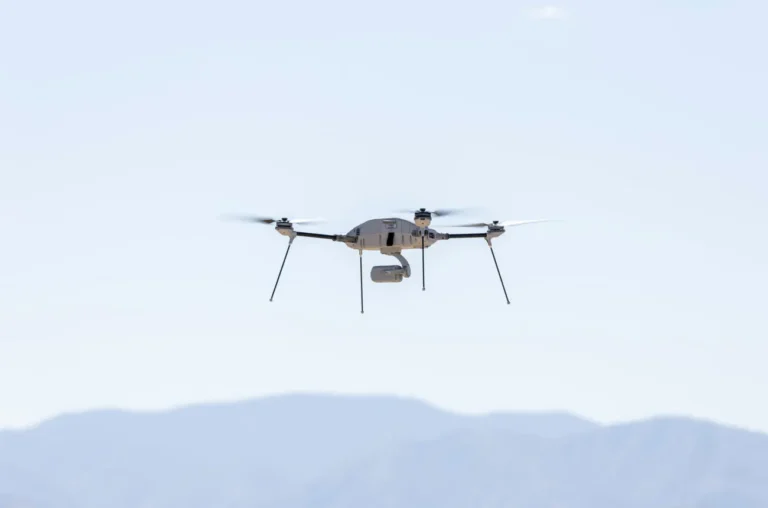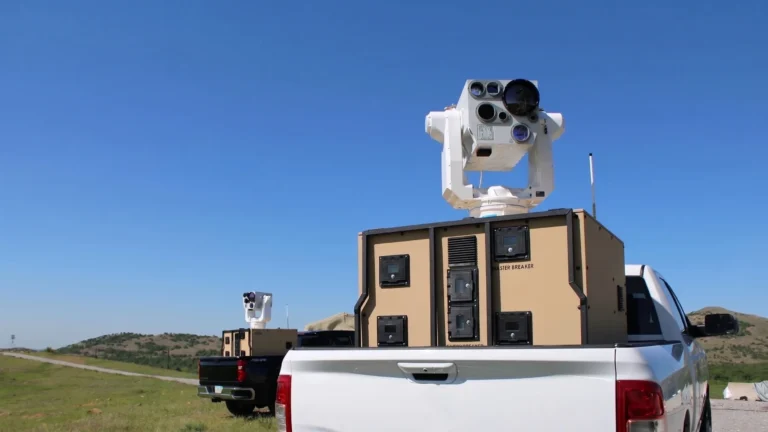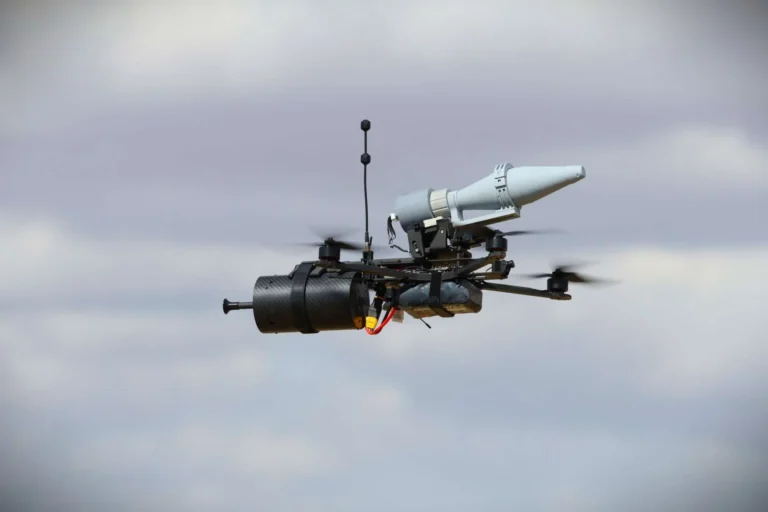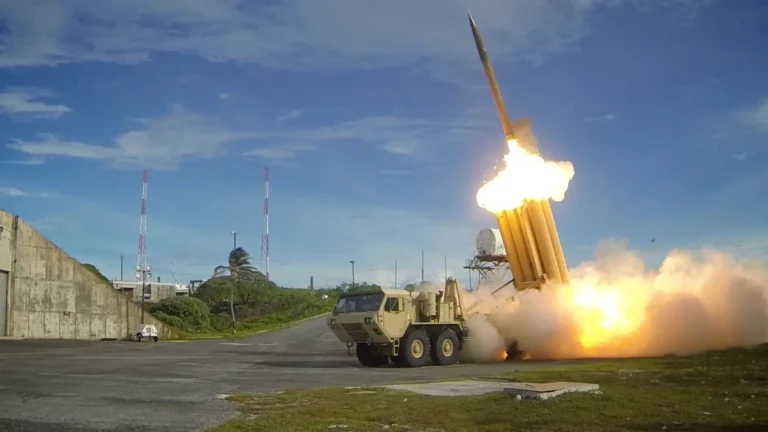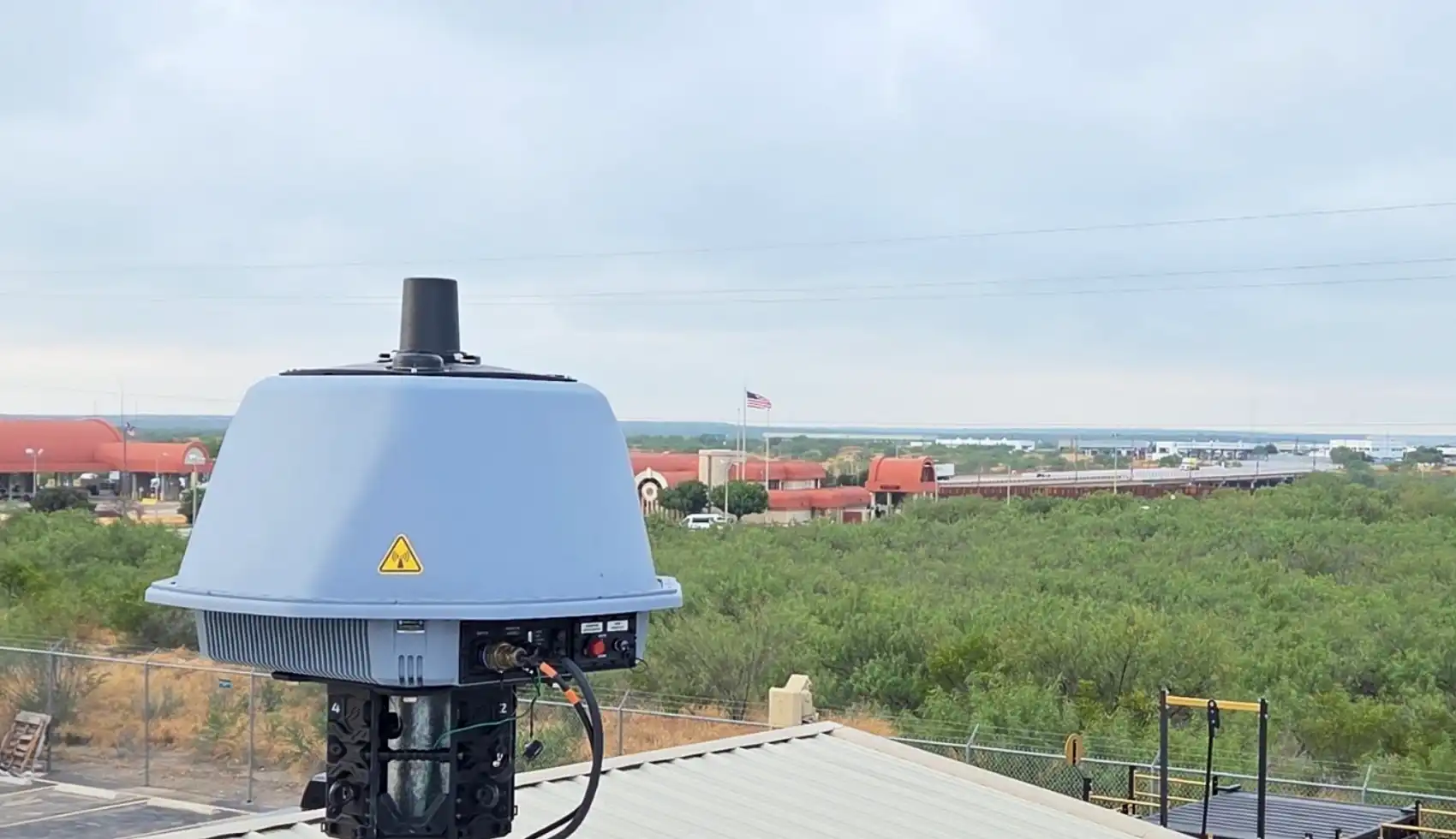
DroneShield has reached Initial Operational Capability (IOC) for a layered, fixed-site counter-UAS solution supporting the Pentagon’s Joint Interagency Task Force 401 (JIATF-401), the company announced on November 23, 2026. The deployed architecture pairs DroneShield’s radio frequency (RF) sensing and electronic countermeasures with EchoShield radar technology from Echodyne to identify, track and respond to small drones over designated locations.
The milestone marks the shift from equipment delivery and installation to operational readiness, and it extends DroneShield’s JIATF-401 work from vehicles to fixed sites. In September 2026, the company declared IOC for DroneSentry-X Mk2 systems installed on U.S. Infantry Squad Vehicles roughly 80 days after contract award. JIATF-401, established in August 2025 to replace the Joint Counter-small Unmanned Aircraft Systems Office, leads the Department of War’s counter-drone acquisition and fielding effort under Army Brig. Gen. Matt Ross.
DroneShield Counter-UAS Layers: RF Sensing Paired With EchoShield Radar
The announcement does not name the DroneShield hardware installed, the number of sites or their locations. It confirms a two-sensor detection layer: passive RF sensing that picks up drone control and video links, and active radar that tracks airframes regardless of their emissions. Electronic countermeasures provide non-kinetic mitigation; no kinetic effector is mentioned.
EchoShield is a Ku-band (15.4 to 16.6 GHz) pulse-Doppler radar built on Echodyne’s metamaterials electronically scanned array (MESA) architecture, which steers its beam without moving parts. Manufacturer specifications list a 130-degree azimuth by 90-degree elevation field of view, a 10 Hz track update rate, angular accuracy better than 0.5 degrees and capacity for more than 1,000 simultaneous tracks. The 17.8 kg unit tracks targets with a radar cross section of -20 to -10 dBsm, typical of small multirotor drones, at 2.7 to 4.8 km, and uses micro-Doppler signatures to classify the objects it tracks.
The pairing addresses a known gap. RF detection is passive and can classify a drone by its emissions, but it cannot see aircraft flying pre-programmed routes without an active link. Radar covers that case and supplies the precise tracks needed to cue other sensors or effectors.
From Vehicle Kits to Fixed Sites Under JIATF-401
Fixed-site coverage complements the mobile layer DroneShield already delivered. DroneSentry-X Mk2 provides vehicle-mounted detection and electronic countermeasures, and three more units are planned under a contract modification. The new solution provides persistent coverage for designated locations, protecting operational sites, personnel and critical assets.
DroneShield and Echodyne have shared JIATF-401 work before. On June 2, 2026, the task force awarded a $13.8 million contract for Joint Task Force-Southern Border under which DroneShield serves as lead systems integrator for technologies from Echodyne, Silentium and Sentrycs. The same day, DroneShield announced a separate JIATF-401 contract for mobile and fixed-site counter-drone systems that requires it to purchase and install third-party interoperable solutions alongside its own products. The company did not say which contract covers the new IOC. On September 29, 2026, both firms received Domestic Shield indefinite-delivery/indefinite-quantity (IDIQ) awards, with ceilings of $500 million for DroneShield and $250 million for Echodyne. DroneShield is also listed on the JIATF-401 C-UAS Marketplace, which reached IOC in February 2026.
“Effective counter-UAS defense requires more than any single technology,” DroneShield CEO Angus Bean said.
Analysis: The milestone shows how JIATF-401 is buying counter-drone protection: as integrated, multi-vendor packages assembled by a lead integrator rather than as standalone systems. For DroneShield, long an RF and electronic warfare specialist, the fixed-site IOC demonstrates the integration of third-party radar into an operational architecture, a credential that strengthens its position for task orders under Domestic Shield. The limitation sits in the defeat chain. DroneShield’s systems can also deny satellite navigation, but a drone flying with neither an RF link nor satellite guidance offers nothing to jam, so radar closes the detection gap but not necessarily the defeat gap unless kinetic or directed-energy layers are added.
Undisclosed details include site locations, the DroneShield products and command-and-control software involved, the contract vehicle and cost. The next markers are full operational capability for the fixed-site architecture, task orders under the Domestic Shield IDIQs, and whether JIATF-401 adds a kinetic layer to the configuration.