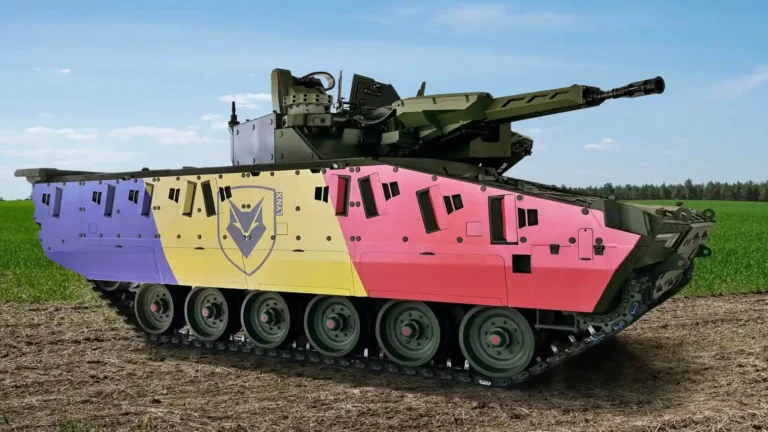
BAE Systems has won a $90 million contract from the Danish Ministry of Defence Acquisition and Logistics Organisation (DALO) to deliver a tiered suite of CV90 MkIIIC simulators to the Danish Armed Forces, the company announced on November 26, 2026. The package combines high, medium, and low-fidelity training devices running on a single software baseline, and will be produced with Slovak simulation specialist VRM as subcontractor.
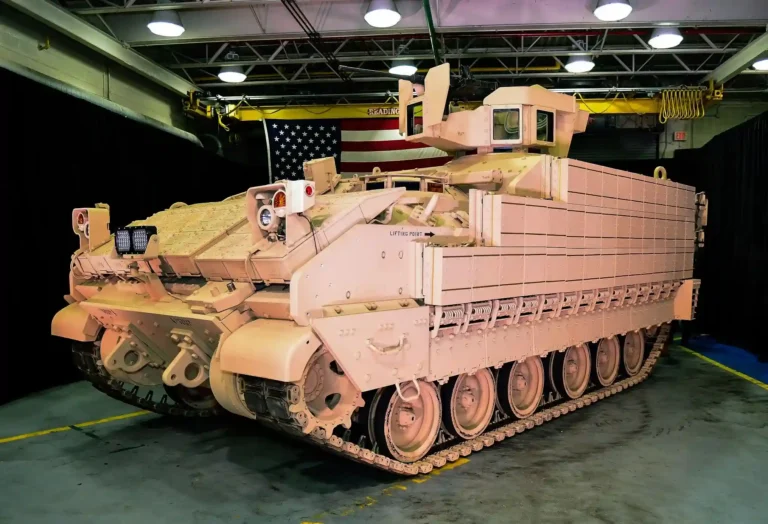
The award follows Denmark’s rapid recapitalization of its tracked infantry fighting vehicle (IFV) fleet. DALO ordered 115 CV9035 MkIIIC vehicles in December 2024 under a joint framework with Sweden, then added 44 more in November 2025 under a contract worth approximately $450 million. That second order replaced a planned mid-life upgrade of the 44 CV9035DK vehicles fielded from the late 2000s and sets the future Royal Danish Army fleet at 159 MkIIICs, with deliveries scheduled from 2027 to 2030. Fielding that many new vehicles in roughly four years requires a training pipeline that can convert crews faster than live range time alone allows.
Three Fidelity Tiers Define the Danish CV90 Simulators Package
The contract covers three classes of device, each assigned a distinct training role. The high-fidelity simulators deliver advanced procedural and tactical training using original turret controls, realistic audio, and failure and emergency simulation. The medium-fidelity crew simulators replace physical hardware with virtual controls for the commander, gunner, and driver, and are intended for whole-crew tactical drills as well as platoon and company-level training. At the entry level, portable desktop computer-based simulators fitted with original control handles provide cost-efficient basic training.
All three tiers share the same software baseline. According to BAE Systems, this ensures that future vehicle software or hardware upgrades are reflected in the training environment, avoiding the familiar gap in which crews train on a configuration that no longer matches the vehicle they operate. Tommy Gustafsson-Rask, general manager of BAE Systems Hägglunds, described the simulators as “complete, future-proof training ecosystems for crews.”
The vehicle the simulators replicate is considerably more complex than the CV9035DK it replaces. The MkIIIC is built to the same standard as the Dutch CV90 mid-life upgrade and carries the new-generation CV90 turret. Publicly available specifications indicate a 35 mm Bushmaster III chain gun capable of firing programmable airburst ammunition against dug-in infantry, light armor, and low-flying unmanned aircraft, and a coaxial 7.62 mm machine gun. Programmable airburst engagements against small drones demand precise fire control procedures and rapid target handoff between commander and gunner, the kind of procedural and tactical skills the high-fidelity simulators, with their original turret controls, are intended to train.
Synthetic Training Economics and the Slovak Industrial Link
BAE Systems frames the package as part of a broader shift toward synthetic training in modern armed forces. Moving a significant share of crew instruction into a software-driven environment reduces fuel and ammunition consumption, limits wear on vehicles, and makes training available regardless of weather, range access, or operational commitments. The simulators also allow crews to rehearse rare, complex, and hazardous scenarios safely, while automated recording and assessment tools support objective performance measurement.
For a force absorbing 159 new vehicles, those savings compound. Every hour of gunnery procedure or emergency drill moved into a simulator preserves track life, engine hours, and 35 mm ammunition stocks for live-fire validation.
The new award also deepens an established relationship. In February 2024, DALO signed a 15-year framework agreement with BAE Systems valued at approximately $400 million covering repair and maintenance of the existing Danish CV90 fleet.
The choice of VRM extends BAE Systems Hägglunds’ supplier network in Central Europe. VRM specializes in the design, development, production, and support of military and civil simulation and training systems. Slovakia ordered 152 CV90 MkIV vehicles in December 2022 under a government-to-government agreement with Sweden valued at $1.37 billion, a deal that included training and tactical simulation systems and a substantial local industry share. Czech firm VR Group is separately developing the simulation training system for the Czech Republic’s 246 CV90 MkIV vehicles. The Danish announcement does not indicate whether VRM’s work draws on any existing Slovak CV90 training effort.
What the CV90 Simulators Deal Means for MkIIIC Crew Conversion
Analysis: The $90 million simulator award equals roughly 20 percent of the value of Denmark’s 44-vehicle November 2025 order, a ratio that signals DALO is treating training infrastructure as an integral part of fleet conversion rather than a follow-on purchase. The common software baseline is the more consequential design choice. CV90 users are steadily layering new capabilities onto the platform, and a simulator architecture that tracks vehicle software changes reduces the risk that training lags fielded configuration. With Sweden also procuring the same MkIIIC standard, a shared training baseline would also offer a practical path to combined Nordic crew training, although the announcement does not address cross-national interoperability.
The next milestone is the start of MkIIIC vehicle deliveries in 2027, and the value of the simulator package will depend on whether devices arrive in time to support crew conversion from the first deliveries. DALO and BAE Systems have yet to publish a delivery timeline, simulator quantities per tier, installation sites, or the work share allocated to VRM.