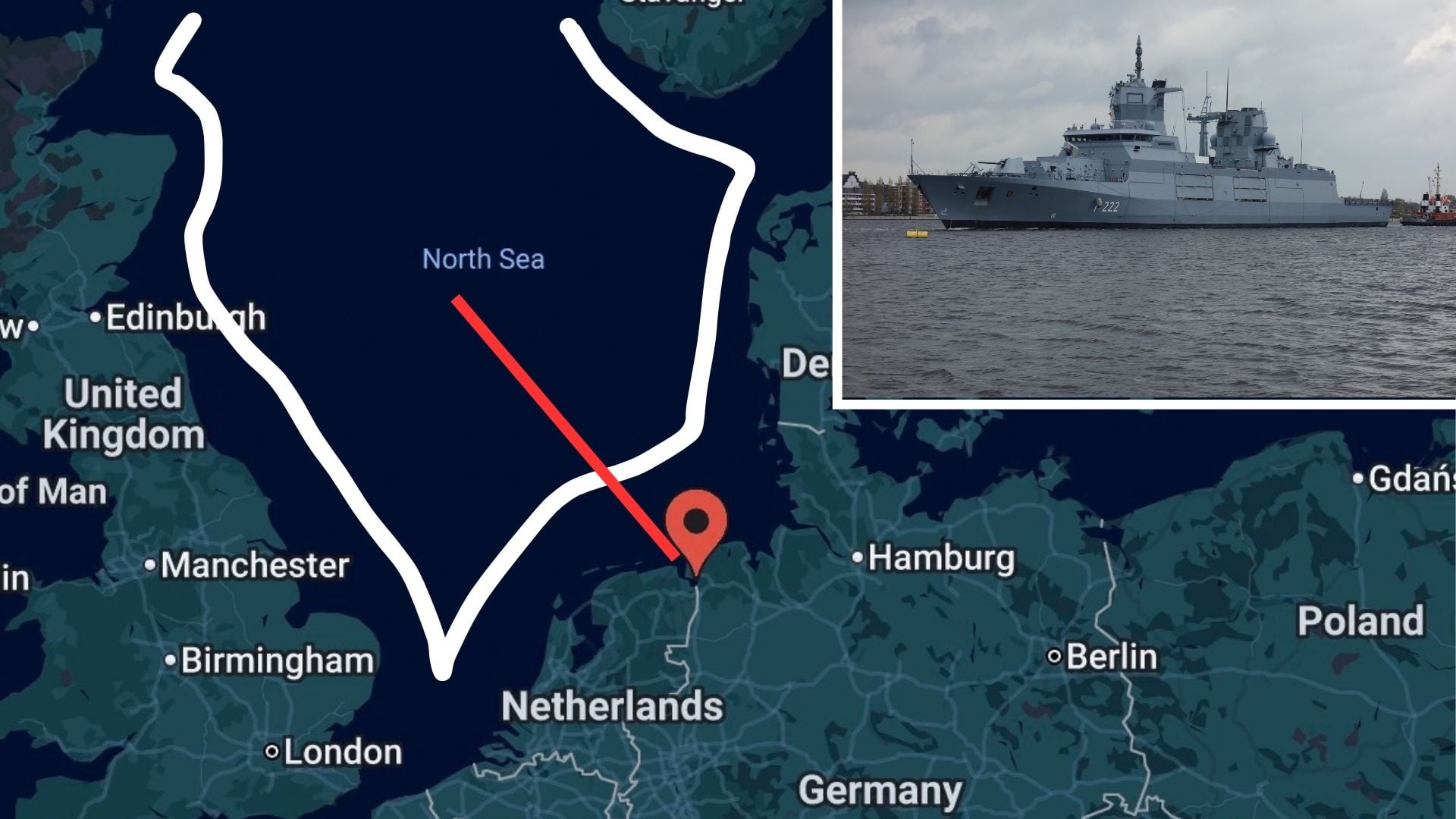
Germany’s Federal Ministry of Defence (BMVg) signed a letter of intent on October 5, 2026, with the state of Lower Saxony, the Institute for Federal Real Estate (BImA) and the city of Emden to build a new German Navy base in Emden, the country’s westernmost seaport. The ministry said a Navy site review ranked Emden as the best option for a second North Sea naval port alongside Wilhelmshaven.
The agreement is not legally binding, but it starts the formal process. The ministry ties the requirement to the current threat situation, NATO defense planning and capability targets, and national requirements including Operation Plan Germany (OPLAN DEU), the framework governing Germany’s role as a host and transit nation for allied forces. The Bundeswehr plans to grow from roughly 186,000 active personnel to at least 260,000 by the mid-2030s, backed by 200,000 reservists. For the Navy, that means more crews to house and train and more hulls to berth, supply and maintain.
Emden Naval Base Plan Answers Wilhelmshaven Capacity Limits
Wilhelmshaven is the German Navy’s only North Sea base and the largest Bundeswehr location in the country. It hosts the 2nd Flotilla (Einsatzflottille 2), one of the Navy’s three major commands, with its frigates, combat support ships and fleet tankers, alongside a naval arsenal and a logistics center. The ministry stated that Wilhelmshaven alone will not meet future requirements for berths, pier length and support capacity in the North Sea, the Navy’s gateway to the North Atlantic and the High North.
The Navy assessed new sites and existing ports against criteria including navigational conditions, strategic position and infrastructure connections. Defence Minister Boris Pistorius said Emden offers ideal conditions, citing fast access to the Atlantic and the High North, while acknowledging that hydraulic engineering, transport links and barracks construction remain major hurdles.
Figures reported in German media before the signing, and not confirmed by the ministry, put the Navy’s land requirement at 40 hectares, with an option on 10 more. The same reports describe berths for seven frigates, ten mine countermeasures vessels and ten tugs, with a workforce of soldiers and civilians in the thousands. If accurate, that footprint describes a second fleet hub rather than an overflow pier. Emden itself hosted a naval base until 1997.
Rysumer Nacken Site Offers Tidal Access and Hinterland Links
The site under consideration, Knock/Rysumer Nacken, is a port expansion area on the Ems estuary west of the city. It sits in Emden’s tide-open outer harbor, seaward of the sea locks serving the inner port, and was long earmarked for civilian port development. The land is not federally owned and must first be sold to BImA; Lower Saxony and Emden have pledged support for the transfer.
That location carries operational weight. Berths outside the locks let warships sortie without a lock transit, removing a chokepoint that would slow a surge or constrain movement under attack. Emden is also Germany’s third-largest North Sea port, with a double-track rail line toward the Rhine-Ruhr region and direct access to the A31 motorway, links that matter for ammunition, fuel and spare parts flowing to the fleet.
Lower Saxony Minister-President Olaf Lies cited the site’s geography, available land and maritime tradition, and said the state can approve and build large infrastructure quickly. Emden Mayor Tim Kruithoff called the base an opportunity for the port, local jobs and the regional economy. The ministry has not published dredging, quay construction or cost estimates.
Frigates, Minehunters and the NATO Northern Flank Mission
The reported berth mix maps onto the Navy’s stated priorities. Its core mission remains securing NATO’s northern flank across the Baltic Sea and the Norwegian Sea, and its long-term force plan calls for warships able to conduct multidimensional naval warfare at long range in the North Atlantic.
The surface fleet is being rebuilt to match. Germany cancelled the F126 frigate program on June 24, 2026, and turned to up to eight MEKO A-200 DEU frigates from Thyssenkrupp Marine Systems (TKMS). The Bundestag budget committee approved the first four on July 8, 2026, at about €6.3 billion, with an option for four more due by the end of 2026 at about €5.3 billion. The 121-meter, roughly 4,000-ton ships are optimized for anti-submarine warfare (ASW), with first delivery targeted for 2029.
The minehunter berths stand out. The Navy’s mine countermeasures squadron is currently based in Kiel on the Baltic, and its force plan foresees the Frankenthal-class (Type 332) minehunters giving way to a successor class supported by unmanned systems by 2035. A North Sea mine warfare base would put those assets beside the sea lanes allied reinforcements would use. On September 29, 2026, the ministry committed about €1.35 billion through 2031 to upgrade Bremerhaven as a NATO logistics hub. Pistorius argued in July that Germany needs a second North Sea port both as a fallback and to handle the arrival of hundreds of thousands of allied troops and their equipment in a crisis.
Analysis: Emden is as much a resilience decision as a capacity fix. Concentrating the entire North Sea fleet, its arsenal and its logistics at Wilhelmshaven presents a single target set for long-range precision strike or sabotage in the opening phase of a conflict. A second base on the Ems disperses that risk, and pairing frigates with mine countermeasures forces near Bremerhaven ties the Navy’s North Sea posture directly to OPLAN DEU: keeping approaches clear for allied sealift is as much a naval task as hunting submarines in the Norwegian Sea.
The ministry says detailed feasibility studies will conclude shortly, followed by the final decision. Official statements leave key questions open: the construction budget, the timeline to initial operating capability, which units would move to or stand up in Emden, and how the project will be sequenced with the Bremerhaven works and frigate deliveries from 2029. The land sale to BImA and approvals for quay and fairway works are the first milestones to watch.