Britain’s opposition Conservative Party on October 6, 2026 unveiled “Britannia Shield,” a proposed £10 billion (about $13.3 billion) program to defend the United Kingdom’s critical infrastructure and military bases against drone and missile attack. The plan would fuse new radars, command and control, surface-to-air interceptors and counter-drone systems into one integrated network, with spending spread over a decade and an initial capability promised within the first term of a future Conservative government. Party leader Kemi Badenoch has said coverage would extend to British installations in Cyprus and the Falkland Islands.
The pledge arrives as homeland air defense becomes a live political issue. On September 27, 2026, police arrested five men near RAF Fairford on suspicion of terrorism and explosives offenses. The base hosts U.S. Air Force B-1B Lancers used in strikes on Iran, and Iran’s Islamic Revolutionary Guard Corps declared it a legitimate target in July, though no Iranian link to the arrests has been publicly established. Washington has since pulled a dozen B-1Bs from Fairford, citing a possible plot. Government funding is modest by comparison: the June 2025 Strategic Defence Review earmarked up to £1 billion for homeland air and missile defense, and the Defence Investment Plan published June 30, 2026 allocates £790 million to integrated air and missile defense (IAMD) through fiscal 2029/30.
What the £10 Billion Britannia Shield Is Designed to Defend
Badenoch has worked to distance Britannia Shield from the Iron Dome comparison drawn in the party’s own launch material and picked up in early coverage, arguing in a broadcast interview that the UK does not face Israel’s persistent short-range rocket fire and needs no equivalent density of coverage. The concept she outlined is closer to a defended asset list: identify the airbases, ports, energy infrastructure, communications nodes and command facilities most critical to national resilience, then build progressively denser layers around them rather than a continuous umbrella over roughly 242,000 square kilometers.
The threat model is short-warning. Badenoch cited a scenario in which an adversary operates in the English Channel to launch drones or missiles at targets in Britain, compressing reaction time and placing a premium on maritime surveillance, sensor fusion and rapid engagement authority. That implies an offshore outer layer of naval patrols, maritime patrol aircraft and intelligence collection to find the launch platform before it fires.
What the party has not published matters more than what it has. Defended-site numbers, radar and launcher quantities, interceptor stockpile targets, the counter-drone share and through-life support costs all remain undisclosed. Those parameters will determine whether £10 billion buys a network or a down payment. Gen. Sir Richard Barrons, former commander of UK Joint Forces Command, told the House of Commons Defence Committee in July that an entry-level counter-rocket, artillery and mortar (C-RAM) air defense system protecting the UK would probably cost £80 billion, eight times the Conservative figure.
Extending coverage to RAF Akrotiri in Cyprus and Mount Pleasant in the Falklands adds cost, since each overseas site needs its own radars, launchers, crews, munitions and sustainment, without the NATO network that backs sites in Great Britain.
Sky Sabre, Sea Viper and DragonFire: Britain’s Existing Defensive Layers
The existing inventory is thin relative to the target set. The British Army’s Sky Sabre pairs a Saab Giraffe Agile Multi-Beam (AMB) 3D surveillance radar with a published range of 120 kilometers, a Rafael-supplied command-and-control node, and MBDA Land Ceptor launchers firing the Common Anti-Air Modular Missile (CAMM). Publicly available specifications credit CAMM with about 25 to 28 kilometers of range and the compatible CAMM-ER with roughly 45 kilometers. Open-source reporting puts the Army’s fleet at seven systems, one of them in the Falklands. A £118 million contract signed in August 2025 for six more Land Ceptor launchers is meant to double deployable Sky Sabre capacity.
At sea, the Royal Navy’s six Type 45 destroyers carry Sea Viper, with 48 vertical launch cells for Aster 15 and Aster 30 interceptors cued by the SAMPSON multifunction radar. The Sea Viper Evolution program is upgrading Aster 30 rounds to the Block 1 standard for anti-ship ballistic missile defense, with full operational capability targeted for autumn 2032. Type 45 availability remains constrained by propulsion and maintenance problems, and the ships often deploy far from home waters.
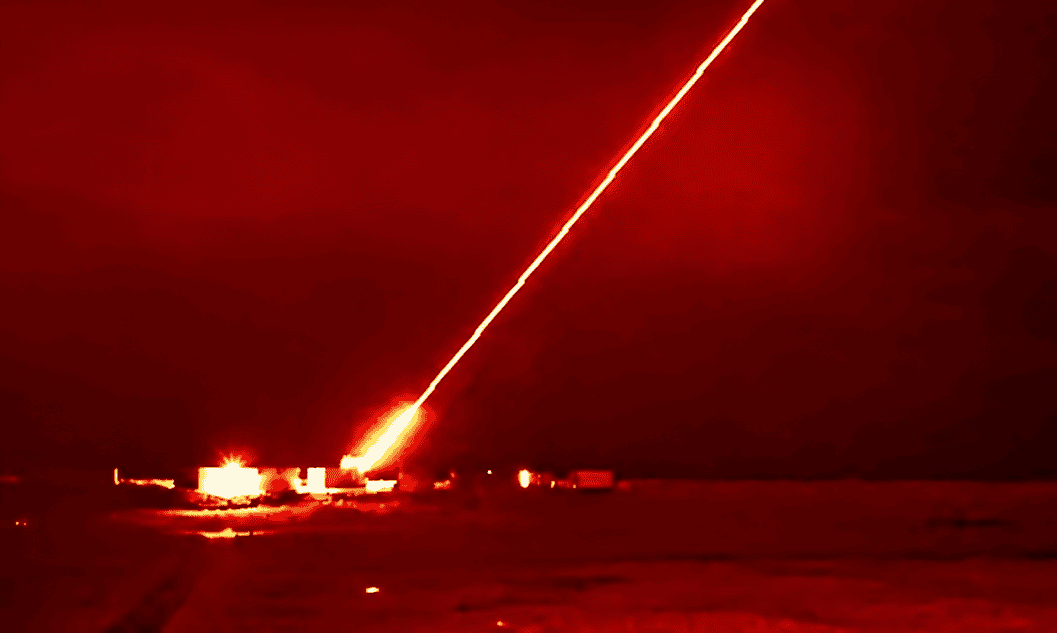
Directed energy is the most cost-relevant addition in the pipeline. MBDA UK holds a £316 million contract, awarded in November 2025, to deliver DragonFire, a 50-kilowatt-class laser built with Leonardo UK and QinetiQ, with the first fit on a Type 45 due in 2027. The Ministry of Defence puts the cost per shot at roughly £10. The Defence Investment Plan also funds an Integrated Air, Space and Missile Defence Operations Centre, with £40 million in initial funding.
The structural gap sits at the upper tier: the UK fields no ground-based long-range interceptor in the class of Patriot or SAMP/T and no land-based ballistic missile defense, and nothing announced so far suggests Britannia Shield would change that.
Comparing Britain’s Plan With Iron Dome, Golden Dome and Steel Dome
Israel’s Iron Dome, operational since 2011, is a counter-rocket, artillery and mortar system later extended to drones and cruise missiles. A battery combines an Elta EL/M-2084 multimission radar, a battle management center and three to four launchers holding 20 Tamir interceptors each, engaging targets between roughly 4 and 70 kilometers. Open-source estimates place a battery at about $50 million and each Tamir between $40,000 and $100,000. Iron Dome is only the lowest missile layer in a stack that includes David’s Sling, Arrow 2, Arrow 3 and the Iron Beam laser, whose first unit was handed to the Israel Defense Forces on December 28, 2025. It also defends a country about one-eleventh the land area of the UK.
The U.S. Golden Dome, ordered by executive order in January 2025, sits at the opposite end of the scale. Its director, Space Force Gen. Michael Guetlein, puts the objective architecture at $185 billion through 2035, covering threats up to intercontinental ballistic missiles, with space-based interceptors. The Congressional Budget Office put an illustrative architecture at about $1.2 trillion over 20 years in May 2026, a figure the program office disputes. Congress has appropriated $22.5 billion for the program so far, but Guetlein warned in August 2026 that work could stall without a new funding vehicle for fiscal 2027.
Türkiye’s Steel Dome, built by a fellow NATO member, is the closest analogue. Launched by Ankara in August 2024, it networks indigenous effectors from the 35mm KORKUT gun system through HİSAR-A+ (about 15 kilometers), HİSAR-O+ (about 25 kilometers) and SİPER, whose Block 1 variant exceeds 100 kilometers and entered service in January 2026. Aselsan delivered an initial 47 vehicles worth $460 million on August 27, 2025, and is building a $1.5 billion technology base at Oğulbey to double production capacity. Steel Dome’s defining feature is industrial sovereignty, a dimension Britannia Shield has yet to address.
Interceptor Economics, Magazine Depth and the Russian Ballistic Threat
Cost-exchange arithmetic will shape any British architecture more than headline budgets. Firing Aster or CAMM rounds, generally reported to cost from several hundred thousand pounds to more than £1 million each, at one-way attack drones costing tens of thousands is unsustainable in a long campaign. A credible design would push the low end of the threat onto electronic warfare, radar-cued guns, low-cost interceptors and lasers, reserving missiles for cruise missiles and aircraft. The RAF has already moved this way, fielding laser-guided rockets on Typhoons against drones in the Middle East this year.
Magazine depth is the second constraint. Ukraine has shown how massed drone raids can drain interceptor stocks, and Western production of precision munitions has not kept pace with wartime consumption. A network with too few reloads offers far less protection than its launcher count suggests.
The threat may also start inside the perimeter. Ukraine’s Operation Spiderweb on June 1, 2025, prepared over roughly 18 months, launched small drones from trucks parked near Russian airbases, bypassing long-range air defenses entirely. Protecting Fairford therefore involves counter-intelligence, access-route surveillance, low-level detection and hardened shelters as much as missile batteries.
Finally, the proposal appears weighted toward drones and shorter-range missiles. Russia, the most capable threat to the UK, fields ballistic missiles, the air-launched Kh-47M2 Kinzhal and the Oreshnik intermediate-range ballistic missile, none of which a lower and middle-tier network is built to stop. Britain joined the German-led European Sky Shield Initiative in October 2022 but has made no national commitment to an upper-tier land system.
Analysis: Britannia Shield is better read as a defended-asset program than a dome. At roughly £1 billion a year, it would still run at about five times the annual rate of the Defence Investment Plan’s £790 million IAMD line, yet at one-eighth of Barrons’ entry-level estimate and about one-fourteenth of Golden Dome’s annual spend. Its value will depend on sequencing: sensors and command-and-control integration first, then cheap effectors and deep magazines, with expensive interceptors last. For NATO, the stakes reach beyond Britain: the UK hosts U.S. bomber, fighter and tanker forces at Fairford, Lakenheath and Mildenhall, bases now openly treated as targets. Both major parties accept a homeland IAMD requirement; the dispute is over scale, funding and pace.
No Britannia Shield money, framed as part of a Conservative pledge to reach 3% of GDP on defense by 2030, can flow before a change of government, and the next UK general election is due no later than August 2029. Until the party publishes a site list, sensor and interceptor quantities and a stockpile target, the £10 billion figure cannot be tested. Nearer-term markers sit on the government side: the first DragonFire fit on a Type 45 in 2027, delivery of the six additional Land Ceptor launchers, stand-up of the new operations center, and Sea Viper Evolution’s full capability in autumn 2032.