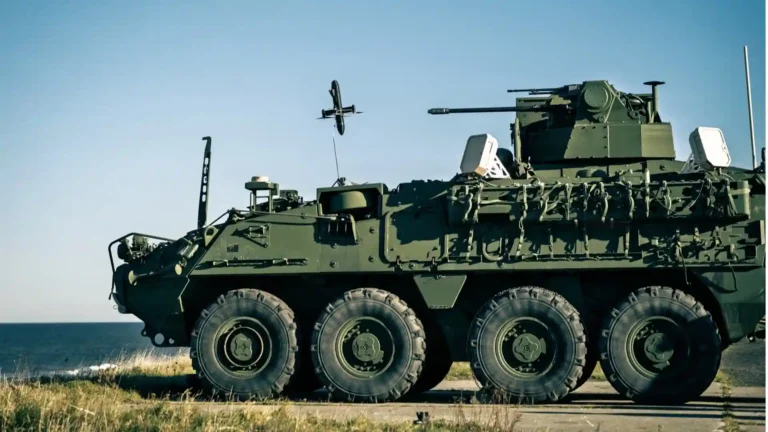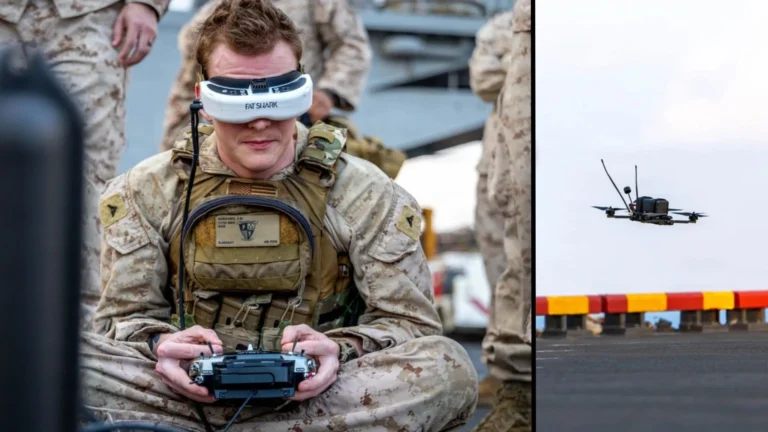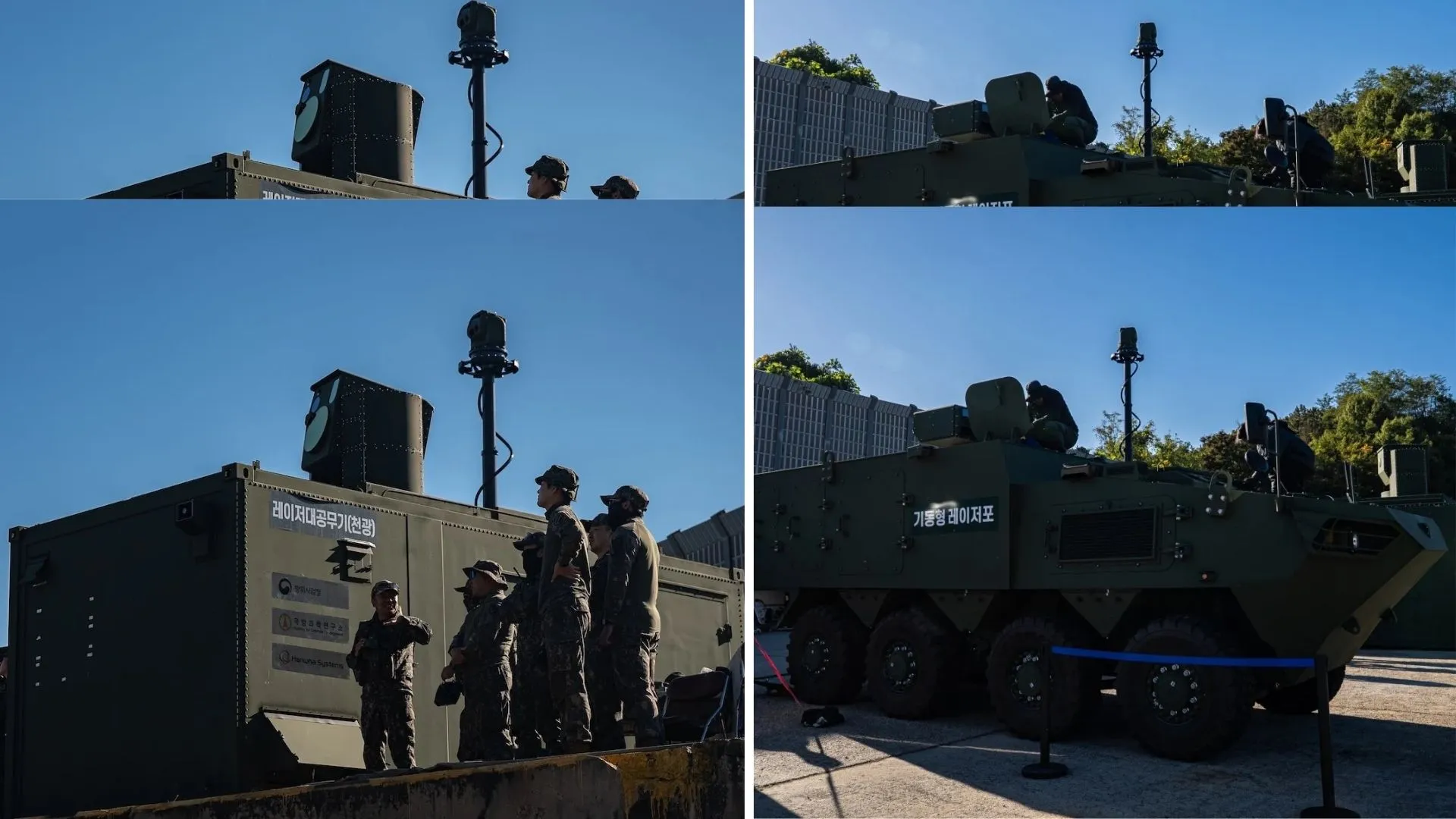
South Korea’s Cheongwang laser weapon and a 30-kilowatt-class vehicle-mounted high-energy laser destroyed all three target drones flown against them on October 14, 2026, during the Republic of Korea Army’s Army TIGER+ Future Warfare Integrated Combat Exercise in Yangpyeong, Gyeonggi Province, manufacturer Hanwha Systems said. About 500 attendees, including the Army Chief of Staff, watched.
The result is Cheongwang’s second public live-fire success in a month as Hanwha pivots toward exports. On September 16, 2026, at the Ministry of National Defense’s 2026 Defense Drone Technology Exhibition, the system neutralized four drones and two larger unmanned aerial vehicles (UAVs) in succession. Eight days earlier, Hanwha had unveiled a company-funded 50-kilowatt Laser Armored Vehicle for overseas customers at MSPO 2026 in Kielce, Poland. Development began in 2019, but urgency grew after December 26, 2022, when five North Korean drones crossed the border and fighter jets and attack helicopters failed to down any of them.
Cheongwang Laser Weapon Block-I: Fiber Laser Design and Fielding Status
Cheongwang, meaning “light of the sky,” is the operational name of the Laser Air Defense Weapon Block-I, developed by Hanwha Systems with the Agency for Defense Development (ADD) under an 87.1 billion won budget. The Defense Acquisition Program Administration (DAPA) signed a production contract worth about 100 billion won, roughly $72 million, in June 2024, and the first unit entered service in December 2024. Hanwha describes Cheongwang as the world’s first operationally deployed laser weapon.
Block-I is a static, fiber-laser system rated in the 20-kilowatt class. It holds a beam on a target’s airframe or electronics until failure. DAPA puts the cost per shot at about 2,000 won, or roughly $1.50, and the weapon fires as long as it has electrical power, removing the magazine-depth constraint that limits missile and gun-based short-range air defense. Officials keep the engagement range classified; publicly available estimates place it at 2 to 3 kilometers against small UAVs.
About five units now protect major state facilities, including the Ministry of National Defense building in Seoul, with roughly 10 more planned for key sites such as the National Assembly. In late May 2026, ADD and Hanwha Systems completed a domestic laser oscillator, the beam-generating core previously imported from Germany, raising Block-I’s localized content from 76 percent to 90 percent by value. DAPA said the new oscillator improves output and other key parameters by more than 50 percent, cutting time to defeat a first-person-view (FPV) drone from two to four seconds to one to two seconds, and fixed-wing drone kills from more than 10 seconds to a few seconds. Shorter dwell time directly increases the number of targets one emitter can service during a saturation attack.
From Fixed Sites to Maneuver Forces: Hanwha’s 30kW and 50kW Laser Vehicles
The October 14 firing also placed a 30-kilowatt-class vehicle-mounted laser cannon in front of Army leadership, signaling interest in moving directed energy from fixed-site defense to maneuver formations. Hanwha did not disclose engagement ranges, drone types, time-to-kill, or how the three targets were split between the two lasers, and it released no specifications for the vehicle-mounted system or any Army procurement plan. Hanwha’s 2020 concept models showed a truck-mounted 30-kilowatt Block-II on a K239 Chunmoo chassis, targeted for 2030, but no official source links that concept to this week’s system.
DAPA has confirmed that Block-II will pursue higher output and precision with reduced size and weight. The agency has also acknowledged that Block-I performance degrades in rain and fog, a limit atmospheric absorption and scattering impose on every high-energy laser. DAPA’s own power thresholds define the ceiling: 20 kilowatts handles small FPV drones, cruise and tactical guided missiles require at least 100 kilowatts, and ballistic missiles or fighter aircraft demand hundreds of kilowatts to megawatt-class output.
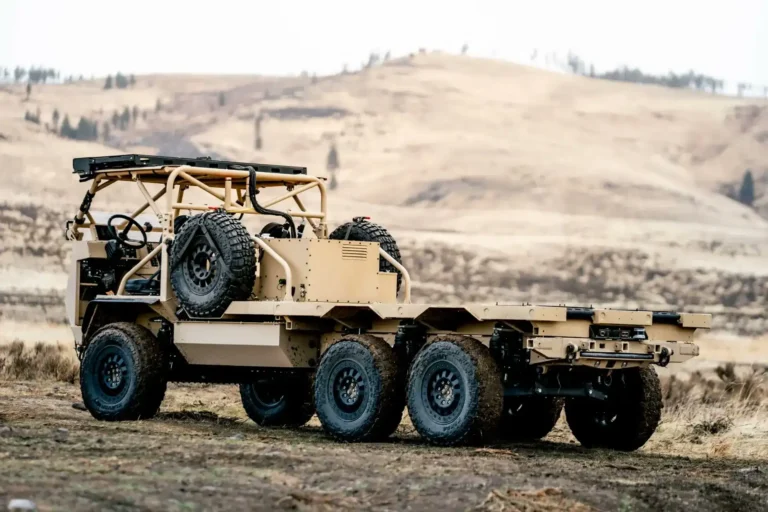
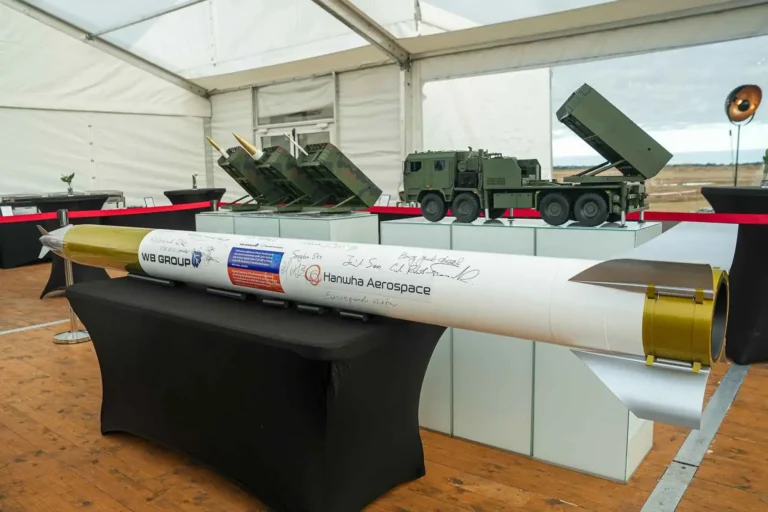
The 50-kilowatt Laser Armored Vehicle sits between those tiers. Hanwha is funding it internally for export, pairing higher output than Block-I with tactical mobility, but has named no customer and released no timeline, range, or chassis data. The MSPO debut targeted a receptive market: Poland already operates Hanwha’s K9 howitzers and Chunmoo-based rocket artillery, and European armies are rebuilding short-range air defense against the drone threat seen in Ukraine. Israel’s Ministry of Defense and Rafael Advanced Defense Systems delivered the first operational Iron Beam, publicly reported as a 100-kilowatt-class system, to the Israel Defense Forces on December 28, 2025. Joohun Shin, head of Hanwha Systems’ Laser Systems Business Center, said: “Laser weapons are core assets that will fundamentally change the game of air defense.”
Analysis: Cheongwang’s value lies less in the demonstration than in the operational learning curve behind it. With Block-I in service since December 2024 and its core oscillator now domestically produced, South Korea controls a full development loop, from emitter to fielded system, that few nations possess, and it can iterate on real employment data rather than prototype trials. For NATO buyers facing interceptor shortages, a $1.50-per-shot layer that absorbs low-end drones would preserve costly missiles for threats lasers cannot yet defeat.
Three markers will show whether the momentum converts into capacity: delivery of the roughly 10 additional Block-I units with the domestic oscillator, a formal DAPA schedule for Block-II, and any Army decision on the 30-kilowatt vehicle-mounted laser. For the 50-kilowatt Laser Armored Vehicle, a first named export customer and released performance data, including engagement range and adverse-weather results, will determine whether Hanwha’s claims hold under buyer scrutiny.