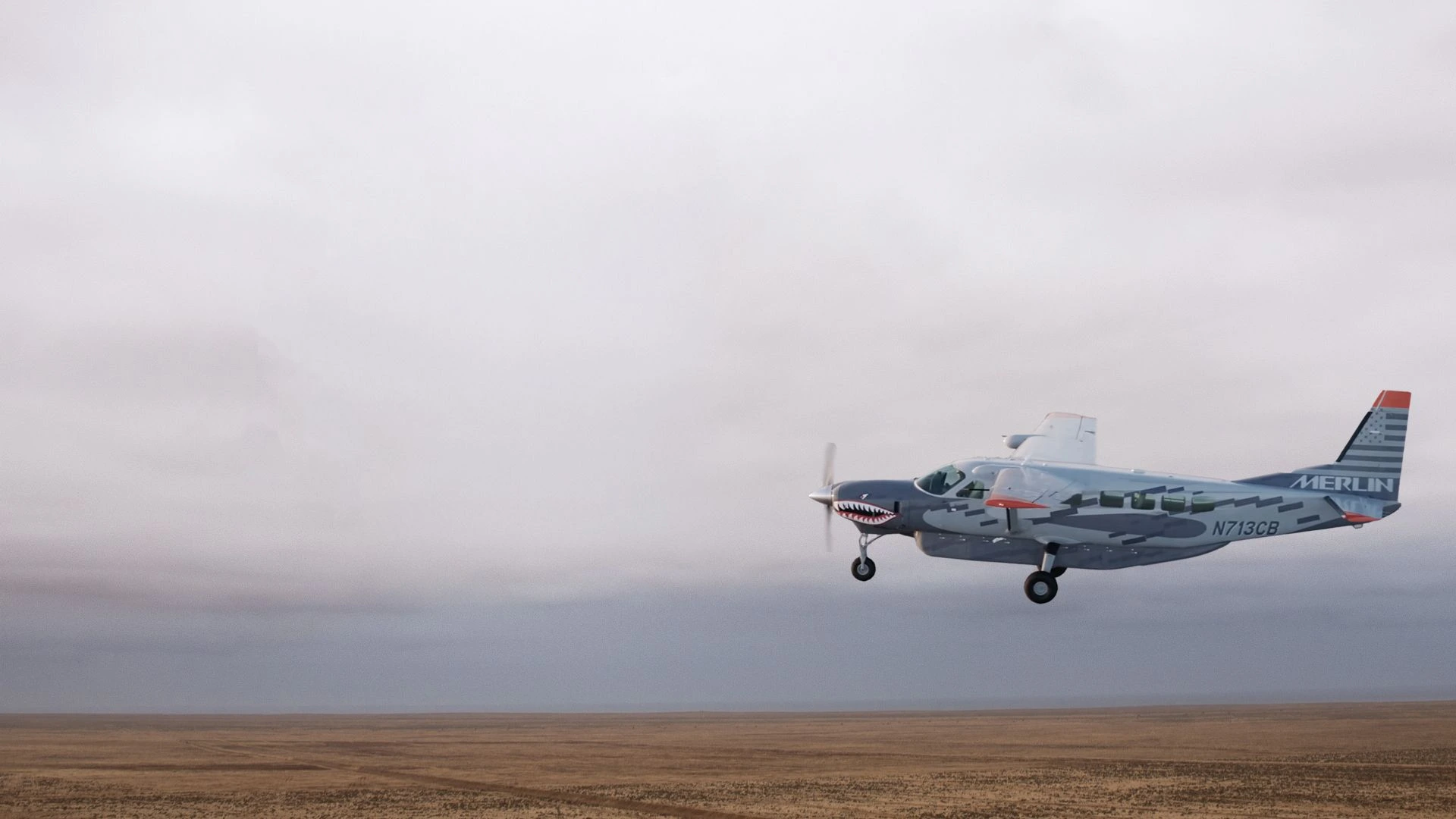
U.S. Africa Command (AFRICOM) has awarded Merlin, Inc. a $500,000 contract to demonstrate an autonomous casualty evacuation (CASEVAC) mission using a Cessna 208B Grand Caravan fitted with the company’s Merlin Pilot system, the Boston-based firm announced on November 11, 2026. The flight, funded under the initial phase of AFRICOM’s Autonomous CASEVAC Industry Technology Challenge, is planned for early December 2026 in Morocco, at the start of U.S. government fiscal year 2027.
The award targets a gap the command has carried for years. AFRICOM, headquartered in Stuttgart, Germany, oversees U.S. military activity across 53 African states, a land mass it describes as three and a half times the size of the United States. Security threats frequently cut off access to nearby medical facilities, stretching patient transport well beyond the 60-minute “golden hour” that trauma specialists associate with the best survival outcomes. The October 4, 2017, ambush near Tongo Tongo, Niger, which killed four U.S. Army soldiers, exposed that vulnerability: the only immediate aerial CASEVAC came from contractor helicopters flying out of Niamey, more than 100 miles away.
Inside the AFRICOM Autonomous CASEVAC Industry Technology Challenge
Conventional casualty evacuation relies on crewed aircraft, which exposes flight crews to the same threats that produced the casualty. Remotely piloted systems remove the crew but depend on persistent command-and-control links that austere or contested environments may not support. AFRICOM’s challenge seeks a long-term, low-risk solution that accelerates access to higher-level care while reducing the number of personnel exposed to risk.
Merlin’s demonstration will cover the complete mission profile. According to the company, the sequence begins with operator tasking and flight planning, continues through autonomous departure and en route flight to an austere casualty collection site, and, after simulated patient loading, ends with an autonomous return flight and landing at the designated location. Merlin says the aircraft will manage the mission without relying on a remote ground station or a flight crew.
At $500,000, the award funds a capability demonstration, not a procurement. The announcement does not specify how many vendors AFRICOM selected for the initial phase, the evaluation criteria, or the structure and funding of any follow-on phases.
Grand Caravan Airframe and Merlin Pilot Onboard Autonomy Architecture
Merlin Pilot is designed to keep flight decisions on board rather than with a remote operator. The company says the system plans an optimal route from an operator’s tasking, replans dynamically around hazards, communicates with air traffic control through natural language processing, and continues along its authorized flight plan if the communications link is lost. That last feature carries the most operational weight: an evacuation aircraft that keeps flying its approved profile through link loss remains usable where satellite or line-of-sight datalinks are unreliable or jammed.
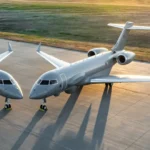
The airframe choice reflects the mission. The Grand Caravan’s large cargo door and flat-floor cabin allow litter loading at ground level without rotor wash, winching, or specialized equipment, a practical advantage over helicopters at improvised landing sites. For the demonstration, the cabin will carry an air ambulance medical module providing oxygen, electrical power, and mounting for patient monitoring equipment.
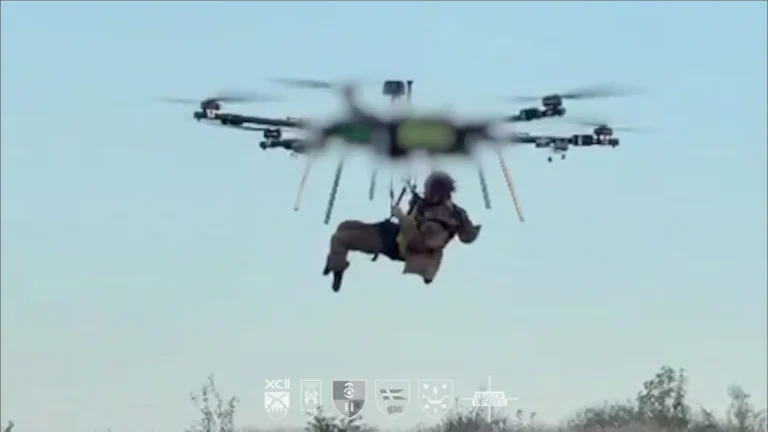
Publicly available specifications for the current-production Grand Caravan EX indicate a single Pratt & Whitney Canada PT6A-140 turboprop rated at 867 shp, a maximum takeoff weight of 8,807 lb, a useful load of 3,532 lb, a maximum cruise speed of 185 knots true airspeed, and a maximum range of 912 nautical miles. Merlin has not specified the sub-variant or engine fit of its demonstrator, so these figures are indicative. They nonetheless describe a regional-scale asset whose reach far exceeds the multirotor evacuation drones Ukraine has used at the front, which operate over much shorter distances.
From Caravan to King Air: Merlin’s Path to Operational Scale
Merlin describes Merlin Pilot as aircraft-agnostic and sees a clear follow-on path to operational scale with a Beechcraft King Air variant. A King Air would add twin-engine redundancy, greater payload, and cabin space for multiple litter patients, medical equipment, and an in-flight attendant. The company says the same architecture could support autonomous logistics and personnel movement between dispersed operating locations.
The AFRICOM effort sits alongside a larger defense portfolio. Merlin holds a C-130J autonomy indefinite delivery/indefinite quantity (IDIQ) contract with U.S. Special Operations Command (USSOCOM) carrying a total ceiling above $100 million, and on November 10, 2026, it announced an $8.9 million task order moving that program from design into integration. The company has also worked on autonomy for the U.S. Air Force KC-135 tanker fleet and, in September 2026, partnered with Textron Aviation on the SkyCourier UX, an uncrewed cargo derivative of the Cessna 408 SkyCourier. Merlin Pilot has logged hundreds of autonomous flights across multiple fixed-wing types, including a recent demonstration at Alliance Airport in Texas.
“Casualty evacuation is ultimately about getting wounded noncombatants and service members to surgical care as quickly and safely as possible,” said Matt George, Merlin’s CEO and founder, adding that onboard autonomy “could help overcome those constraints by accomplishing the CASEVAC mission from end to end, even when communications are disrupted.”
Analysis: The demonstration matters less for the Caravan than for the operating concept. As The War Zone (TWZ) noted, distributed operations in the Indo-Pacific, where the U.S. Marine Corps and U.S. Air Force plan to disperse forces across austere island locations, will face the same tyranny of distance AFRICOM confronts today, in a far more contested environment. An evacuation aircraft that needs neither a crew nor a guaranteed datalink is relevant to both theaters. Yet $500,000 is a small bet against a problem of this scale, while China, TWZ points out, is already flying uncrewed cargo aircraft larger than the Caravan. Until autonomous aeromedical evacuation receives dedicated program funding, it remains an experiment rather than a fielded capability.
The Morocco flight will be the first test of whether Merlin Pilot can execute an end-to-end CASEVAC profile under AFRICOM observation. Open questions include the evaluation metrics, whether lost-link behavior will be exercised live, the number of competing vendors, and the timing of subsequent challenge phases. A King Air-based operational configuration would require separate contracting, and none has been announced.